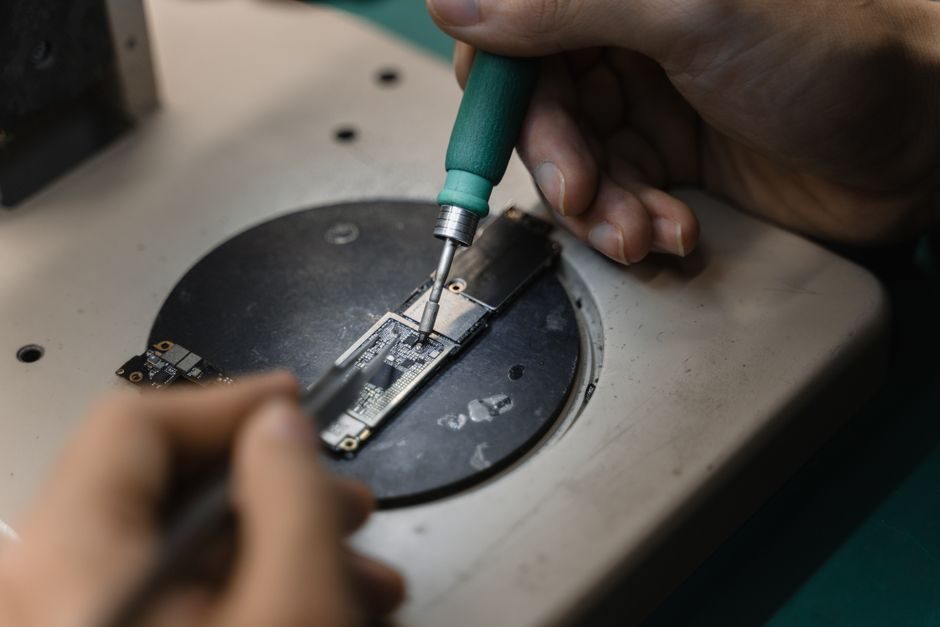
Buyers evaluating MEMS sensor programs must treat OEM and ODM as structurally different engagements, not interchangeable labels: OEM (Original Equipment Manufacturer) means the customer supplies the design, IP, and often the ASIC or mask set, while the factory runs wafer fab, packaging, and test to that specification; ODM (Original Design Manufacturer) means the factory delivers a turnkey reference design — die, package, firmware, calibration coefficients — that the customer rebrands and adjusts cosmetically or parametrically [S5].
Chinese MEMS and sensor ODM/OEM capacity is geographically concentrated in Guangdong, Hunan, Jiangsu, and Zhejiang, with the made-in-china.com supplier base advertising both tracks for IMU, ToF, radar, pressure, load cell, gas, weather, and flow-sensor families [S1][S2][S3][S6]. The same factories also offer own-brand production for buyers who want a finished SKU without redesigning anything [S4].
Decision criteria that actually separate OEM from ODM
Four criteria dominate the OEM-vs-ODM choice for MEMS: IP ownership, NRE cost, time-to-first-sample, and qualification depth. OEM requires the buyer to deliver a GDSII or wafer-level layout, an ASIC datasheet, and a test plan; the factory's job is process execution, not invention, and per-program NRE typically runs higher because mask sets, package tooling, and ASIC tape-outs are charged through. ODM collapses those line items into the unit price because the platform design is amortised across many customers. [S1]
Time-to-first-sample is the single largest differentiator: an ODM platform with an existing 6-axis IMU or pressure die can deliver functional samples in 2-6 weeks, while a wafer-level OEM program runs 12-20 weeks through mask release, wafer fab, dicing, and package qualification. Lead time data on Chinese sensor factory listings shows "Sample Available" as a baseline offer across OEM/ODM/own-brand tracks [S1][S2][S3][S6].
Where OEM wins and where it loses
OEM is the right path when the application requires non-standard proof-mass geometry or process control that the ODM catalogue cannot deliver — for example a tri-axis MEMS motion sensor with a proof mass suspended by flexible springs along orthogonal x, y, z axes, as disclosed in EP3028007A1 [S7], or a dual-capped die with through-hole thin-film routing per US20100193886A1 [S8]. These patents are useful for what they prove structurally: MEMS motion and pressure die stacks typically use 2-3 bonded wafers (device wafer plus top and bottom cap wafers) with controlled cavity pressure, and that geometry is hard to source off-the-shelf.
OEM loses on schedule and unit cost in low-to-mid volume. If annual volume is below roughly 100k units and the spec is "good enough" IMU, pressure, or flow sensor performance, an ODM reference design almost always wins on total cost of ownership. The same OEM factory will often quote the ODM route as a hedge, and buyers should ask for both numbers.
Where ODM wins and where it loses
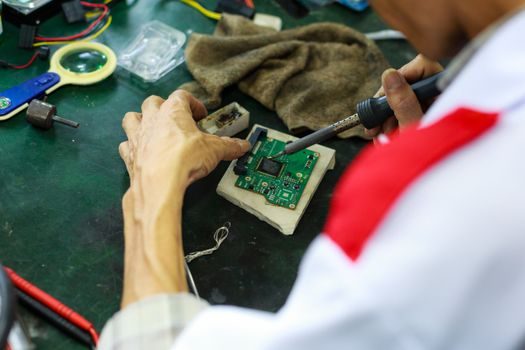
ODM is the right path when the buyer needs a working module, not a silicon platform: weather stations, pH/turbidity/soil sensors, gas detectors, load cells, and auto-flow sensors are heavily ODM-served on Chinese factory listings, with sample service and OEM/ODM both advertised [S2][S3][S6]. The factory calibrates the device, writes the firmware, and ships a tested SKU; the buyer's effort is branding, regulatory paperwork, and distribution.
ODM loses when the application needs a sensing principle the catalogue does not contain, a custom package outline, or qualification under a regime the ODM has not certified for — high-temperature downhole, ATEX/IECEx zone-classified, NACE MR0175 sour service, automotive AEC-Q100, or medical IEC 60601. In those cases the buyer is functionally back to an OEM engagement even if the contract still says ODM, because the qualification work is non-recurring engineering the ODM will not absorb.
Comparison matrix across four decision criteria
Side by side, OEM and ODM line up against cost, lead time, IP control, and qualification depth as follows. Cost at low volume: ODM is lower because the platform NRE is shared; OEM is higher because the customer funds mask, ASIC, and tooling. Lead time to first sample: ODM typically 2-6 weeks, OEM 12-20 weeks, with the gap closing only after the second OEM tape-out. IP control: OEM keeps the design and ASIC IP inside the buyer's wall; ODM the factory retains the reference design and the buyer is licensing a derivative. Qualification depth: OEM is whatever the buyer specs and funds; ODM is whatever the catalogue has been pre-qualified to, and re-qualifying a new package or test limit is charged as NRE. [S1]
For sensor categories that map directly onto the buyer's spec, the ODM path is faster and cheaper. The two hybrid cases — ODM die inside a customer package, or customer ASIC driving an ODM MEMS die — are common in practice and should be specified as such in the RFQ.
Standards, qualification, and what to ask the factory
Ask for the factory's quality system certificates up front: ISO 9001:2015, ISO 45001:2018, and ANSI/ESD are the baseline filters visible on Chinese sensor factory listings [S4]. For automotive programs, AEC-Q100 stress profiles and PPAP documentation must be named in the contract, not assumed. For industrial hazardous-area deployments, the relevant standard is the IEC 60079 series with ATEX 2014/34/EU for the European market and IECEx for the rest; the buyer should specify the exact zone, gas group, and temperature class rather than ask the factory to recommend.
For MEMS-specific process control, request the wafer fab's lot acceptance test (LAT) data, die yield by wafer, and the trim/calibration procedure — die-level laser trim or electronic trim is a hidden OEM cost line that ODM absorbs in the unit price. Buyers running a wafer-to-module program should also review the MEMS sensor production line design map before locking the supply chain, and pair the OEM/ODM choice with a capacity-planning pass that exposes the wafer-start, qualification, and die-trim bottlenecks up front.
Trackable signals for the next sourcing cycle
Two signals to watch before the next RFQ goes out: (1) whether the factory's sample policy is genuinely "Sample Available" with a documented lead time in days, or a sales-driven placeholder, and (2) whether the ODM catalogue is widening into higher-spec packages (hermetic, high-temperature, automotive-grade) or staying in commercial-grade IMU and pressure territory. The first signal is verifiable on the factory's listing; the second is verifiable by asking for a 12-month roadmap under NDA. [S1]
For buyers also evaluating non-MEMS PCB assemblies, the same OEM-vs-ODM logic applies and is worked through in detail in the PCB OEM vs ODM spec map. For process-control deployments where MEMS is one tier inside a larger displacement sensor or inductive sensor stack, the 2026 MEMS-in-process-control spec map is the next reference to pull.