
OEM PCB manufacturing builds to a buyer-supplied Gerber, BOM, and stack-up; ODM manufacturing means the factory contributes the schematic, layout, and sometimes the enclosure, and the buyer puts its brand on the result. The two models sit at opposite ends of an IP and NRE trade-off, and confusing them at the RFQ stage is the single most common source of cost overruns in small-batch electronics [S5].
On the Made-in-China.com supplier directory (snapshot 2025-09 through 2026-03), 8 of 8 sampled PCB and PCBA factories explicitly list OEM service capability, 7 of 8 additionally list ODM, and only the LED-light-engine specialist lists ODM alone with no OEM option [S1][S2][S3][S4][S6][S7][S8][S9]. Guangdong is the dominant province across the sample, with Anhui as the secondary cluster for transformer-style PCB assemblies.
Definition and Scope: What Each Model Actually Buys You
Under OEM, the contract manufacturer executes the buyer's released design and bills for tooling, setup, and piece-part cost only; engineering change control stays with the customer. A representative OEM-only scope is connector and harness production, where FPIC (Guangdong, founded 2003) lists OEM/ODM service alongside automotive, energy-storage, and board-to-board connector lines [S1].
Under ODM, the factory owns the reference design and licenses the buyer to rebrand; the buyer's contribution is application specs, regulatory target, and volume forecast. PCBasic (Shenzhen, 2011) advertises both services with explicit quick-turn PCBA, prototype, and turnkey assembly tiers, illustrating the integrated NPI-to-volume path ODM is meant to compress [S2]. Smart Electronics (13 years in PCB/PCBA) bundles ODM with rigid PCB, FPC, aluminum PCB, and membrane-switch sub-lines under one engineering roof [S3]. The certification baseline the buyer should require on either path is ISO 9001:2015 for the QMS and ISO 14001 for environmental management, both of which appear as the floor on the Anhui transformer-factory entries surveyed in 2025-11 [S6].
Selection Criteria: IP, NRE, Lead-Time, and Tooling
Four criteria separate the two models in practice, and the right ranking depends on whether the buyer's bottleneck is design bandwidth or factory capacity. Criterion 1, IP ownership: OEM keeps all design IP with the buyer; ODM transfers the reference design under a private-label license, so any third-party sale of the same SKU by the factory is contractually possible unless exclusivity is negotiated [S5]. Criterion 2, NRE: OEM NRE covers tooling, fixtures, and test program development; ODM NRE is usually zero or a small engineering fee because the platform is already amortised across other buyers.
Criterion 3, lead-time: ODM wins for prototypes because the reference design is on the shelf — the LED PCB specialist's positioning is "no off-the-shelf products, we partner with clients to create bespoke solutions," meaning every order is a co-design engagement rather than a stock pick [S4]. Criterion 4, tooling and fixture cost: on a transformer-style PCB assembly from the Anhui cluster, unit price bands of US $3.85-3.85 per piece at a 200-piece MOQ demonstrate the ODM-style amortised cost curve that disappears at OEM low-volume runs [S6]. For industrial OEMs sourcing pressure transmitters or flow meters with onboard PCBs, this NRE-vs-volume crossover usually settles in the 500-2,000 piece annual band.
Who Each Model Is For — and Who It Is Not
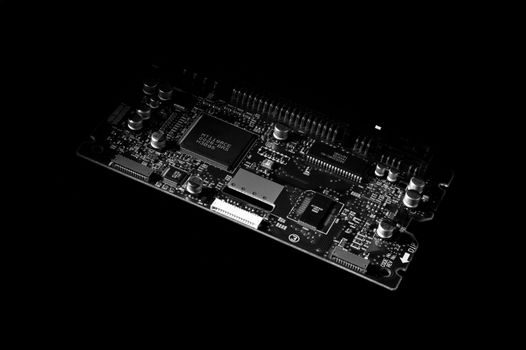
OEM is the correct path when the buyer has a locked schematic, owns the compliance file, and needs the factory to act as a contract manufacturer with no design authority. It is the wrong path for a startup with a concept and no ECAD staff, because every ECO will be billed back as engineering services. ODM is the correct path when the buyer's value-add is go-to-market, regulatory access, or application integration — for example, a sensor brand that wants a reference pressure sensor board pre-tuned for its probe family but does not want to maintain a 4-layer layout library in-house. [S2]
ODM is the wrong path when the end product must carry buyer-controlled firmware, proprietary calibration constants, or a safety case that the factory cannot legally co-sign. LED light engines sold into grow-light or red-light therapy markets are an interesting edge case: the factory is ODM-only and refuses off-the-shelf supply, which is appropriate when each build is matched to a specific photosynthetic or irradiance target that the buyer's application team must validate [S4]. The factory's published scope of LED PCB, LED PCBA, grow-light LED PCB, and red-light therapy LED PCB confirms that the design partnership, not the catalogue, is the deliverable.
Comparison: OEM vs ODM Against Four Decision Criteria
The four-criteria matrix below is the kind of side-by-side an RFQ review board will ask for, and it lines the two models up the way an engineer would, not the way a marketing brochure would. [S1]
On design IP, OEM is buyer-owned and ODM is factory-owned with private-label license. On NRE cost, OEM is high (tooling plus fixture plus test) and ODM is low to zero because the platform is shared. On prototype lead-time, OEM is gated by buyer CAD release and ODM is gated by factory reference-design selection. On minimum order quantity, OEM has no theoretical floor and ODM is typically 200 pieces or one panel, as seen on the Anhui transformer-PCB listing at US $3.85-3.85 per piece with a 200-piece MOQ [S6]. The implication is straightforward: if the buyer's annual volume sits under 500 pieces, ODM almost always wins on landed cost; above 5,000 pieces, OEM wins on unit cost once tooling is amortised.
Real Use Cases in Process and Industrial Electronics
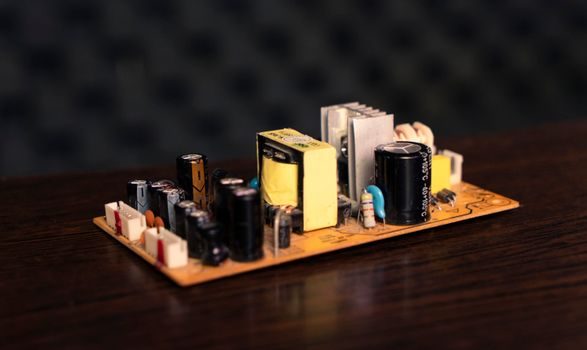
Three concrete scenarios clarify the call. Scenario 1, an industrial sensor OEM needs a 6-layer FR-4 board for a PLC-backed analog front end: the buyer owns the schematic and the safety case, so OEM is the only acceptable model. Scenario 2, a lighting brand wants to enter the horticultural market with a fixed photosynthetic photon flux density spectrum: it lacks the LED binning and thermal layout experience, so ODM with a specialist like the Guangdong LED PCB factory is the lower-risk path [S4]. Scenario 3, a connector supplier is adding PCB-mounted headers to an existing automotive line: the connector design is the buyer's IP and the PCB is a carrier, so a hybrid where the connector is OEM and the carrier PCB is ODM against a reference footprint is increasingly common, as seen in the multi-product factories that list both services [S1][S2][S3].
For cost engineering, the PCB manufacturing cost breakdown 2026 analysis is the most relevant companion read, because it shows which levers (layer count, surface finish, via structure) move the OEM quote independently of ODM's amortised platform cost. For capacity-side planning, the PCB capacity planning reference gives the line-balance math a buyer needs to challenge an ODM factory's quoted lead-time.
Limitations, Constraints, and Failure Modes
Three failure modes recur on both sides. First, certification drift: an ODM factory's ISO 9001:2015 certificate may not extend to a specific product line if the audit scope is narrow; buyers must request the actual certificate PDF with the product category listed, not just the badge on a website [S6]. Second, MOQ distortion: a 200-piece MOQ looks like a low entry point until the buyer realises the price band assumes a standard finish; switching to ENIG or hard gold pushes the MOQ to 500-1,000 pieces on most lines.
Third, the ODM IP trap: if the buyer needs a private, exclusive variant of an ODM reference design, the contract must state that the factory will not sell the underlying platform to a direct competitor in the same geography for the contract term. This is a commercial clause, not a manufacturing clause, and the buyer's sourcing team needs to raise it before the first PO, not after. For industrial buyers using these boards inside regulated industrial valve actuator loops, the traceability file the factory hands over at PPAP must include the ODM reference-design revision, not just the buyer's part number.
Sourcing and Standards Checklist Before RFQ

The minimum diligence packet before issuing an OEM/ODM RFQ on a PCB or PCBA order: ISO 9001:2015 certificate (QMS scope) [S6], ISO 14001 certificate (environmental scope) [S6], a written statement of which model (OEM, ODM, or both) is being bid, the factory's R&D headcount band, and its manufacturing employee band (the PCB enterprises filter on Made-in-China.com exposes 1-500 and 501-1,000 person bands as the relevant cluster markers) [S8]. For ODM, additionally request a redacted reference-design list, a sample of the private-label license template, and the factory's policy on exclusivity windows.
For OEM, additionally request the fixture list, the test coverage matrix (ICT, flying probe, AOI, X-ray for BGA), and a copy of the NDAs already on file. A practical final filter: the factory should be able to name a UL file number if the end product is going into a UL-listed assembly, and a RoHS/REACH declaration that is less than 12 months old. A supplier that cannot produce either is telling the buyer the account is too small to be prioritised, and that is information worth having before the RFQ is released rather than after the first sample fails.
Track these signals over the next sourcing cycle: whether the ODM factory's reference-design list expands into new industrial segments (which would shift the OEM-vs-ODM crossover upward), and whether the Anhui and Guangdong clusters continue to absorb 8+ employee bands into the 501-1,000 person tier on the directory, which is the capacity signal that lead-times will not stretch through 2026-Q4 [S8].