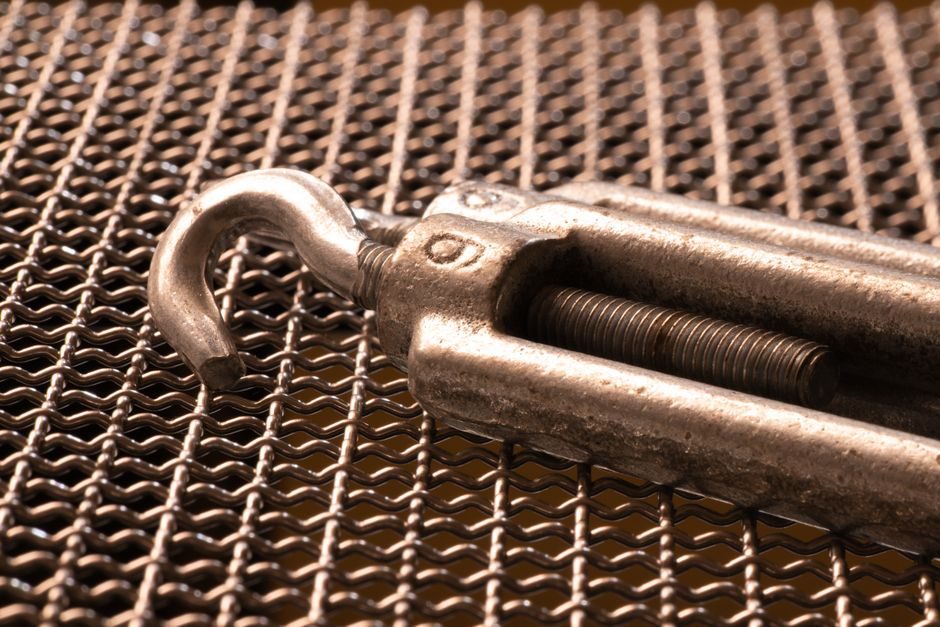
Mesh belt conveyor sourcing in mid-2026 still funnels through a narrow band of Chinese OEM clusters, with Yangzhou, Taixing, Shijiazhuang and Dezhou accounting for the bulk of stainless, carbon and PTFE-coated wire-belt output visible on B2B directories [S1][S2][S3][S6].
The product mix is dominated by four weave families — balanced weave, compound balanced, flat flex (eye link) and flat wire — with unit FOB prices ranging from US$22 for a basic polyester spiral dryer fabric up to US$500 for a balanced spiral woven conveyor belt on published catalog listings [S4]. That price spread is wider than the engineering performance spread would suggest, and it is the first thing a buyer should sanity-check before engaging any of these vendors.
Cluster Geography: Where the Capacity Actually Sits
Four Chinese provinces hold essentially all of the catalog-listed mesh belt capacity surfaced in July 2026: Jiangsu (Yangzhou, Taixing, Suzhou area), Hebei (Shijiazhuang, Langfang), Shandong (Dezhou) and Beijing-municipal listings that physically ship from Hebei [S1][S2][S3][S5][S6][S9]. Yangzhou Leneng Machinery, established 2008-09-11 with 15 employees, lists its Daqiao Industrial Zone address as a generic metal-conveyor mesh-belt workshop [S1].
Hebei NRK Mesh Conveyor sits in the Shijiazhuang development zone and explicitly positions itself as a flat flex wire belt, balanced weave mesh belt, flat wire belting and plate link belt conveyor OEM [S3]. Dezhou Zhigong Machinery broadens the Shandong cluster into spiral net belts aimed at coal-mine waste-residue filtration and multi-layer mesh belt conveyors for food cooling and drying [S5]. KTK in Suzhou (tel +86-512-57562284) is the clearest stainless specialist, naming stainless steel conveyor belt, all spiral mesh belt, compound balanced mesh belt, flat wire belt and balanced weave mesh belt as the five catalog lines [S2].
Spec Bands and Price Floors by Weave Family
The DIYTrade China catalog snapshot gives the cleanest price bands currently published, and they should be treated as floor numbers rather than representative transaction values [S4]. PTFE-coated fiberglass mesh conveyor belt lists at US$4.41 per unit, heat-resistant polypropylene conveyor belt molding fabric at US$4.50, and polyester spiral dryer fabric at US$20 — these are entry-level polymer or coated-fiberglass products aimed at tunnel dryers rather than load-carrying conveyors.
Mid-band metallic products sit at US$22 for polyester square wire mesh, US$50 for heavy-duty rubber conveyor belt mesh, US$250 for PTFE mesh Teflon-in-fiberglass conveyor belts for tunnel dryer machines, and US$300 for honeycomb / flat wire conveyor belt [S4]. The top of the published band — US$500 each for balanced spiral woven conveyor belts and compound balanced weave belts — represents the stainless steel load-carrying constructions buyers usually mean when they say mesh belt conveyor [S4]. For a deeper primer on weave geometry, the steel mesh reference covers the wire-diameter and pitch ranges that drive the price gap.
Material and Application Split: Stainless, PTFE and Polyester
Three material families divide the supplier base cleanly. Stainless steel wire belt makers — KTK, Hebei NRK, Hebei Risen, Beijing Pfm Screen — dominate food, pharmaceutical and high-temperature applications where 304/316 grades and open-area percentage drive selection [S2][S3][S9][S10]. PTFE and PTFE-coated fiberglass specialists cluster in Jiangsu, with Jiangsu Zhongbang Conveyor Belt in Taixing City running PTFE open mesh conveyor belt and PTFE adhesive tape as its main catalog lines [S6].
Polyester and polymer-mesh manufacturers split between industrial filtration and food-drying lines; Beijing Pfm Screen's catalog explicitly lists polyester mesh belt, metal conveyor belt, filter mesh, wire mesh filters and filter cloth as its main products, with ISO 9001 certification [S9]. Yangzhou Leneng's video product is a metal conveyor mesh belt, and Dezhou Zhigong crosses into spiral net belts for waste-residue filtration in coal-mine processing — a non-food application that buyers outside China often overlook [S1][S5].
Selection Gates Before You Engage a Supplier
Four hard gates should be cleared before any commercial conversation. First, define weave family — balanced weave, compound balanced, flat flex eye link, flat wire or spiral — because each supplier typically runs one or two weaves well and subcontracts the rest [S2][S3][S4]. Second, lock the material grade: 304 stainless for general food duty, 316 for chloride exposure, carbon steel for non-corrosive high-temperature, and PTFE-coated fiberglass for sticky or chemical-cleaned lines [S2][S6][S9].
Third, confirm the drive and tensioning interface — belt conveyor frames supplied by these OEMs rarely match imported head/tail pulley geometry, and the belt tensioner arrangement must be specified against the actual frame, not a generic catalog. Fourth, set a realistic MOQ expectation: small Jiangsu workshops (15-person operations like Yangzhou Leneng [S1]) will quote sample-run MOQs in the tens of metres, while larger Hebei and Shandong operations price for full coil lengths. For a procedural walk-through of these gates, the mesh belt conveyor selection guide lays out the same sequence in checklist form.
Supplier Comparison Snapshot: Jiangsu vs Hebei vs Shandong
Buyers comparing the three main clusters should weigh four decision criteria. Capacity and weave depth: KTK (Jiangsu) and Hebei NRK run the broadest stainless weave catalogs with five and four product lines respectively [S2][S3], while Yangzhou Leneng and Jiangsu Zhongbang are narrower specialists [S1][S6]. Application fit: Shandong's Dezhou Zhigong is the only one of the four with a published coal-mine and waste-filtration product line [S5], and Jiangsu Zhongbang is the only PTFE open-mesh specialist with a foreign-trade sales contact named (Ms. Kelly Gu) [S6].
Certification and traceability: Beijing Pfm Screen is the only surfaced supplier with an explicit ISO 9001 listing on its B2B profile [S9], which matters for pharmaceutical and food buyers who need audit paperwork. Price floor: catalog entry points are US$4.41–US$22 for polymer and coated-fiberglass belts and US$300–US$500 for stainless load-carrying constructions [S4], and the Jiangsu and Hebei clusters compete closely at the stainless end while Shandong undercuts on spiral net and waste-handling constructions.
Limitations, Failure Modes and What the Catalog Does Not Tell You
The published catalog data carries three structural gaps buyers must close themselves. None of the surfaced Chinese suppliers publishes cycle-life, maximum continuous operating temperature, or allowable tensile load per unit width for their stainless belts — those numbers are negotiated per RFQ [S1][S2][S3][S5][S6][S9][S10]. Wire diameter, pitch and open area are likewise absent from headline listings, which means the published US$500 stainless belt is not directly comparable to a US$300 flat wire belt without sampling and a drawing review [S4].
A second failure mode is weave-to-application mismatch: spiral woven and balanced weave belts suit light-duty food cooling, but buyers specifying them for heavy part washing or stamping scrap evacuation will see rapid edge failure and stretch. For these higher-shock duties, a flat belt or ribbed belt arrangement, or a chain-driven plate link belt, is the more honest specification. A third gap is after-sales technical support outside China — Alibaba's conveyor-belt-scale directory shows 100 matched suppliers with most revenue in the US$1–2.5 million band [S7], and Indian aggregator Maharashtra Industries Directory lists conveyors manufacturers in Mumbai but does not specialise in mesh belt conveyor lines [S8]. Hebei Risen's English-language site accepts sample photos and dimensions for quotation, which is closer to a workable engagement model for an overseas buyer than a Made-in-China storefront [S10].
Trackable signals for the next sourcing cycle: any new ISO 9001 or ISO 22000 certifications surfacing on Jiangsu and Hebei OEM profiles, and any price movement in the US$300–US$500 stainless belt band over Q3 2026.