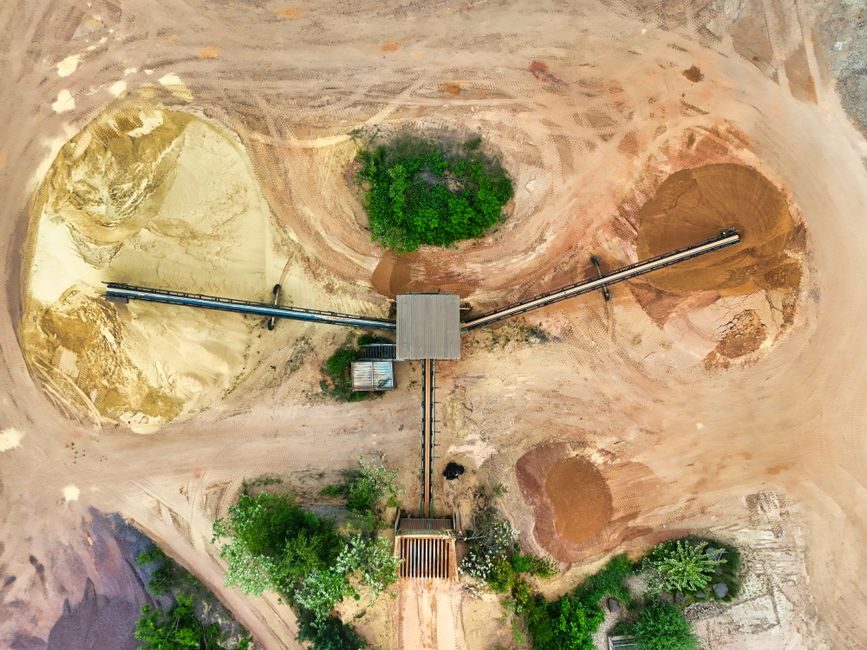
A mesh belt conveyor is selected less by the name on the catalogue page and more by the temperature it must survive, the product it carries, and the way it is driven — and the 2026 supplier landscape still splits cleanly into a metal-mesh family for furnaces and a PTFE/fiberglass family for drying lines [S1][S2].
For an engineer standing in front of a spec sheet, the first decision is material family: stainless steel wire mesh belts, brass or specialty-alloy woven belts, or PTFE-coated fiberglass open-mesh belts — each rated for a different temperature window, chemical exposure and load profile [S1][S2][S6].
Woven Metal Mesh Belts: Weave Patterns That Define the Class
Within the metal-mesh family, weave architecture is the primary classification axis, and the categories listed by Jiangsu Huada Metal Mesh Belt read like a textbook of the genre: balance weave, compound balance, double balance, flat wire, flat flex, rod reinforced, wire ring, chain driven, clinch edge and conventional [S2]. A balance weave pairs a straight wire in one direction with a wavy wire in the other and is the default for general conveying where lateral stability matters; a double balance weave adds a second wavy counter-direction wire, raising mass and tracking stability for heavier loads and longer centres [S2]. Rod-reinforced and chain-driven belts add cross-rods or roller chains to carry the load, which is the typical choice when a furnace line handles pans, trays or stampings rather than free-flowing parts.
Flat flex belts — essentially a single helix of wire flattened against the next — give a smooth carrying surface and a high open area, which is why they dominate food, baking and light-parts freezing lines where cleaning and drainage matter as much as strength [S2]. Edge finish is the second axis: clinch edge (folded back on itself, no raw wire ends) is preferred where snagging or operator contact is a concern, while conventional hooked or welded edges are acceptable on enclosed furnace interiors [S2].
Furnace and Heat-Treat Belts: Solar, Sintering, Continuous Annealing
The single highest-volume application driving metal mesh-belt specification in 2026 is solar-cell firing, where a stainless mesh belt carries wafers through a peak-temperature zone — Jiangsu Huada's catalogue itemises a dedicated "mesh belt for silicon solar cell firing furnace" alongside its general furnace-mesh line [S2]. For dry-ash and similar abrasive applications, the same maker offers a dry-ash conveyor belt, typically a heavier rod-reinforced weave with a higher open area to let fines fall through [S2].
Heat-treatment lines that run continuous annealing, hardening, brazing or tempering call out balance-weave or compound-balance belts in 314, 310 or RA330 stainless, with edge and pitch chosen to match the part-fixture geometry. Spiral conveyor belts — formed from a continuous wire helix with inserted cross-rods — are a separate sub-class used where the belt must wrap a drum tightly or self-track on long, narrow runs; Jiangsu Huada lists them explicitly in its metal-mesh product map [S2]. For wider general reference on the woven metal product class, the steel mesh encyclopedia entry covers the alloy and wire-diameter trade-offs that drive furnace-belt selection.
PTFE-Coated Fiberglass Open-Mesh Belts: The Drying and UV Family
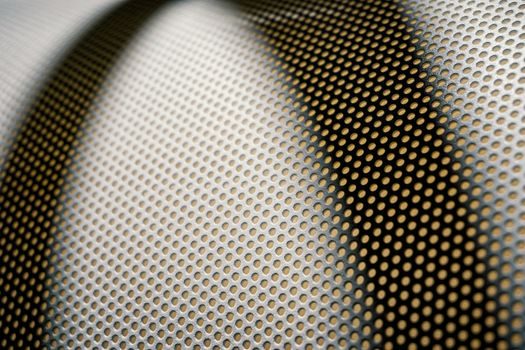
The other half of the market is the PTFE open-mesh belt — a woven fiberglass substrate coated with PTFE, rated for continuous service from -70 °C to +260 °C and able to survive peaks up to +360 °C according to one manufacturer's datasheet [S1]. The same datasheet lists 11 stock models with mesh openings from 0.5 × 1 mm up to 10 × 10 mm, belt weights from 370 g/m² to 600 g/m², and tensile strengths from 290 N/cm (1 × 1 mm) to 900 N/cm (Kevlar-reinforced 4 × 4 mm) [S1]. This is the belt family that shows up in non-woven textile drying, garment shrinking, UV dryer exits, hot-air dryer conveyors, food baking and quick-frozen packaging lines — the supplier's application list maps almost one-to-one onto those process steps [S1].
For specification, the same model line gives a useful comparison: model 6001 (1 × 1 mm fiberglass, 0.5 mm thick, 370 g/m², 310/290 N/cm warp/weft) suits the finest, lightest products; model 6007 (4 × 4 mm fiberglass + Kevlar, 1.2 mm thick, 600 g/m², 895/370 N/cm) is the high-load, high-tension choice; model 6010 (4 × 4 mm all-Kevlar, 1.0 mm, 900/600 N/cm) goes further on tensile but at a price premium [S1]. Width is a real-world differentiator — most PTFE-mesh series top out at 4000 mm, but the heavier 2 × 2.5 mm 6015 model is limited to 3000 mm, which matters on wide textile lines [S1]. For broader background on how a belt conveyor is integrated with tensioning, drives and tracking, the dedicated entry covers the mechanical envelope these belts sit inside.
Drive and Tensioning: Chain-Driven vs Friction-Driven Mesh Belts
How a mesh belt is powered and kept taut is itself a classification axis. Chain-driven mesh belts — listed separately by Jiangsu Huada and typical on heavy furnace lines — use positive engagement with sprockets, which gives fixed geometry, no slip, and tolerance of high loads at the cost of chain wear and the need for periodic sprocket inspection [S2]. Friction-driven mesh belts (the default for PTFE and most balance-weave metal belts) rely on a driven drum or pulley and a belt tensioner to maintain tracking; this is simpler and quieter, but the design must allow for thermal expansion, particularly on long dryer or annealing lines where the belt can grow several millimetres between cold and hot states [S1][S2].
For solar-firing and similar high-temperature continuous lines, the practical difference is significant: chain-driven metal belts tolerate heavier parts and higher tension without slip but need lubrication and chain-sprocket maintenance; friction-driven PTFE belts are silent and clean but are limited to the temperature window of the coating and the fiberglass substrate, roughly -70 °C to +260 °C continuous with a 360 °C peak [S1][S2]. Choosing the wrong drive class is one of the more common ways a mesh-belt retrofit fails early.
Comparison Table: Selecting Between the Main Mesh-Belt Sub-Classes
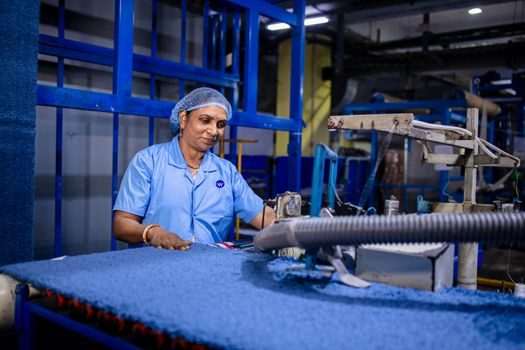
Four criteria separate the major sub-classes cleanly for spec work: maximum continuous temperature, open area (which drives airflow, drainage and drying efficiency), load capacity and tensile strength, and chemical compatibility [S1][S2][S6]. The table below lines up the four families most engineers will be choosing between on a 2026 RFQ.
For temperature extremes above the PTFE window, metal-mesh variants are the only option; for drying efficiency and release properties at moderate temperatures, the PTFE mesh range offers finer mesh openings and verified non-stick behaviour [S1]. For the broader framework of when a mesh belt conveyor is the right machine class versus a flat-belt alternative, the related encyclopedia entry walks through the application boundaries.
Specialty and Composite Belts: Dupont-Type, Flat-Flex and Duplex Weaves
Outside the two main families sit several specialty constructions that appear in supplier catalogues in 2026 and are worth naming. The flat-flex belt — a flattened single-helix weave — gives a smooth, snag-free top surface and is widely used in food, baking, washing and light-parts freezing lines [S2]. Duplex mesh belts add rod reinforcement to a round-wire woven structure for higher load and impact resistance; one Made-in-China listing specifies a stainless-steel duplex mesh belt rated at 5000 m²/month production capacity and a 2 m² minimum order quantity, which gives a sense of the standard commercial offering in that class [S6].
Polyester mesh belts and filter-mesh belts are a separate, much lighter category used in paper, dewatering and filtration — Beijing Pfm Screen's product range explicitly includes "Polyester Mesh Belt, Metal Conveyor Belt, Filter Mesh" alongside wire-mesh filters, confirming the segregation between conveyor mesh and filter mesh in the 2026 supply base [S4]. For conveyor applications specifically, the differentiation between a flat flex belt and a balance weave — and how each interfaces with a flat belt drive when a hybrid line is built — is one of the spec points most often left unresolved at the RFQ stage.
Failure Modes and Sourcing Constraints in 2026
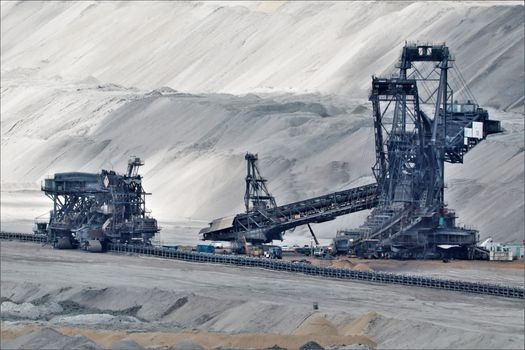
Three failure modes dominate field reports for mesh belt conveyors and should be priced into the spec. First, thermal degradation of the PTFE coating: continuous operation above the 260 °C continuous / 360 °C peak window accelerates coating breakdown, and datasheets publish these limits explicitly because they are the commonest cause of premature PTFE-mesh replacement [S1]. Second, edge failure on woven metal belts — clinch edges resist unravelling, conventional hooked edges do not, and a high-temperature furnace cycle stresses the edge wire far more than the body of the belt [S2]. Third, drive-class mismatch: a friction-driven PTFE mesh on a long, high-tension dryer line will track poorly if a belt tensioner sized for a flat belt is retrofitted without re-checking wrap angle and drum diameter.
Sourcing in mid-2026 still flows overwhelmingly through Chinese manufacturers — Jiangsu Huada (Yangzhou), Beijing Pfm Screen (Langfang), Taixing Yongfang (Jiangsu) and similar suppliers — with US Conveyor-type integrators providing US-built shredder-infeed and recycling belt conveyors up to 200 ft long with 96″–104″ effective skirt widths and capacities from 40 to 350 ton-per-hour, a band that signals where the metal-mesh conveyor line ends and the heavy recycling belt line begins [S2][S3]. A 2010–2016 vintage Made-in-China listing for a PTFE mesh belt still appears in current 2026 supplier indexes with a 50 m² minimum order, which is a useful indication of how stable the supply base for the standard PTFE products has been.
Trackable signals for the rest of 2026: continued solar-firing-furnace belt demand from China-based stainless-mesh suppliers, and a steady PTFE-fiberglass replacement cycle on non-woven and food-baking lines where the 260 °C continuous ceiling is rarely challenged but the 360 °C peak is hit on shutdown transients [S1][S2]. Engineers specifying new lines should pin the weave pattern, alloy, edge type, drive class, and continuous-versus-peak temperature window in that order; price, lead time and minimum-order quantity follow, not lead, the technical spec [S1][S2][S4].
For related coverage, see Fiber-Reinforced Concrete: Trade-offs Across Steel, PP and Glass.