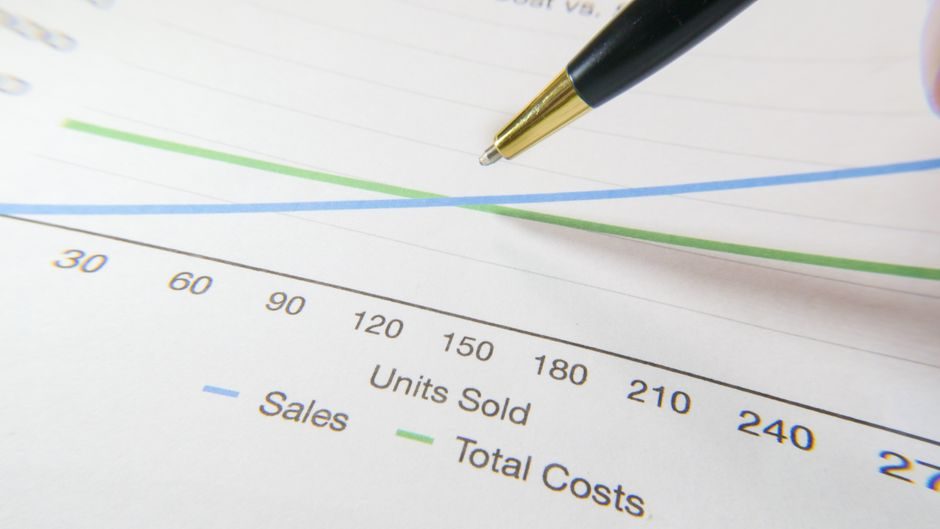
Roller conveyor total cost of ownership is a use-phase problem, not a procurement problem: on a typical 10-year horizon for a 200 m powered roller line, acquisition covers roughly 15-30% of lifetime spend while energy and maintenance together consume 55-70%, with the remaining slice split between installation, downtime, and end-of-life disposal [S2].
The TCO logic is borrowed from production-machine lifecycle research, where energy and maintenance have repeatedly been identified as the dominant cost drivers that static acquisition-only quotes cannot capture — a finding that maps directly onto conveyor systems because the rollers, drives and bearings run continuously for 16-24 h/day in most distribution, parcel and food plants [S2]. Roller conveyor engineering basics are summarised in our roller conveyor encyclopedia entry, and this article extends that reference into a quantified TCO model.
Cost Structure: What Actually Hits the P&L Over 10 Years
Field studies on production equipment show that energy and maintenance costs are stochastic, dynamic, and dominated by the use phase — not by the purchase order [S2]. Translated to a roller conveyor, the typical cost stack looks like: acquisition 15-30%, installation 5-10%, energy 25-40%, preventive + corrective maintenance 20-35%, downtime 5-15%, decommissioning 2-5% [S2]. The exact split shifts with duty cycle, but the ranking is stable: a buyer who optimises only the unit price of rollers and drives is buying into a higher lifetime bill, not a lower one.
For belt conveyors serving palm oil and bulk-port applications, Malaysian engineering practice specifies CEMA Class E or F bearings as standard to push the use-phase cost down, because heavier bearing classes extend mean time between failure (MTBF) and lower the maintenance share of TCO at the cost of a higher unit price [S1]. The trade-off is concrete: a Class D bearing rated for continuous duty at belt speeds up to 3.5 m/s typically costs 30-60% less than an equivalent Class E unit, but cuts the calculated bearing L10 life by roughly a factor of 2-3 in the same duty profile, which more than cancels the acquisition saving once you add labour and line stoppage [S1].
Energy Cost: Motorised Drive Roller (MDR) vs. Externally Driven Lines
Motorised drive rollers (MDRs) — 24 V DC or 48 V brushless rollers with a gearbox integrated into the tube — dominate the low-to-mid speed zone (typically 0.1-0.6 m/s) and have reshaped the conveyor energy equation because they accumulate zero-energy zones (ZED) where only the rollers under load spin [S1]. A 50-station MDR gravity-accumulation line running 16 h/day, 250 days/year at 50 W per active roller will draw roughly 10,000 kWh/year, against 35,000-50,000 kWh/year for a comparable externally driven (V-belt or chain-driven) line with a centrally motorised drum [S1].
The MDR advantage scales with accumulation duty: distribution-centre and parcel-handling applications that throttle zones individually can realise 60-80% energy savings versus a fixed-speed central drive, which is the single largest TCO lever in the use phase [S1]. Spec the wrong drive topology — for example, a continuously spinning central drive on a line that is empty 70% of the time — and energy alone can double the 10-year TCO, even with cheaper hardware. The same rule applies to roller bearing selection on idler rolls, where premium sealed-for-life units cost 2-3× a shielded budget unit but eliminate the annual re-lubrication labour cost that the budget unit forces on the maintenance budget.
Maintenance Cost: Bearing Failure, Sealed-for-Life and Lubrication Cycles
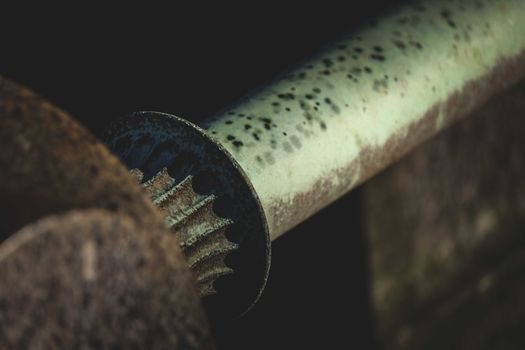
Bearing failure is the number-one maintenance event on roller conveyors and a primary TCO driver, and the dominant failure mode is contamination ingress through worn or inadequate seals — not fatigue [S1]. In a tropical 80-95% RH environment, unsealed pressed-steel bearings in standard idlers show visible corrosion and pitting inside 12-18 months, while sealed-for-life 2RS variants in the same duty routinely clear 36-60 months [S1]. On a 1,000-roller line, that delta is the difference between replacing 250 bearings/year and replacing 40 bearings/year, which compounds directly into TCO once you fold in the labour hours and the line-stoppage minutes.
Lubrication policy is the second maintenance lever: greaseable bearings require 2-4 service visits per year per roller row, typically 8-15 minutes per station, and a missed lubrication cycle is the most common precursor to a seized roller and a mistracked belt [S1]. Sealed-for-life bearings, by contrast, run until end-of-life with no scheduled service, which removes the entire preventive-maintenance line item from the TCO model in exchange for a higher unit price. The CEMA bearing class system — C (light intermittent), D (standard continuous to 3.5 m/s), E (heavy high-speed or high-load continuous), F (extreme duty: underground mining, heavy bulk) — exists precisely to let buyers trade acquisition cost for use-phase cost, and a defensible TCO model must be class-aware [S1].
Selection Criteria by Application: Where Each Roller Type Earns Its Keep
Roller type is a TCO decision as much as a mechanical one. The eight primary conveyor roller types — carrying idlers, return idlers, impact rollers, gravity rollers, motorised drive rollers, anti-buildup rollers, guide/training idlers, and rubber-lagged pulleys — each carry a different acquisition-versus-use-phase cost profile [S1]. Gravity rollers (unpowered, 60-89 mm tube, typically 1.5-3 mm wall) are the cheapest per unit but force a longer conveyor or a steeper decline to move product, and they cannot accumulate, so they often lose to MDR on a 10-year basis whenever the duty cycle exceeds 8 h/day.
Impact rollers with rubber discs at transfer points cost 2-4× a flat return roller but absorb the drop energy of lump material and protect the belt from cover damage — a damaged belt cover is a single-event maintenance hit that can exceed the entire impact-roller upgrade cost on a high-tonnage line [S1]. Anti-buildup rollers with polyurethane lagging or scraper geometries are non-optional in sticky bulk applications (fertiliser, sugar, palm fibre) and routinely pay back inside 18 months through avoided carryback cleaning. For a deeper spec-driven pass through the selection logic — drive, load, roller and frame — see our roller conveyor selection map and the gains, limits and spec gates buyers miss companion piece.
Roller Type vs. TCO Lever: A Decision Comparison
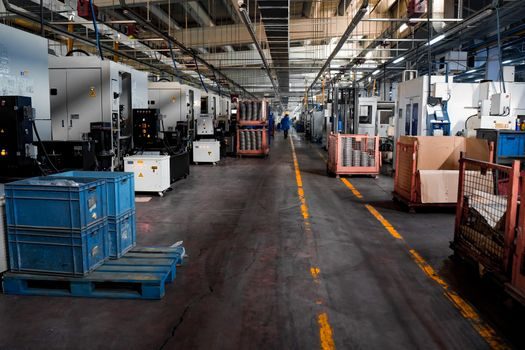
Four roller-driven options stack up against the dominant TCO levers as follows. (1) Light-duty gravity rollers on a 16 h/day line: lowest acquisition, highest labour, poor TCO unless the line is genuinely short and downhill. (2) Flat-return pressed-steel idlers: cheap, but push maintenance and downtime up in humid or dusty service [S1]. (3) Sealed 2RS / CEMA Class E idlers: 2-3× the unit price, 30-50% lower 10-year TCO in continuous duty. (4) MDR accumulation zones: highest unit price per station but the only topology that converts accumulation duty into an energy saving; the right pick for parcel, DC and zone-controlled assembly lines [S1].
The decision criteria for any given line are: duty cycle (h/day), accumulation required (yes/no), environment (humidity, dust, washdown, temperature), belt speed class (sub-1.5 m/s light, 1.5-3.5 m/s standard, >3.5 m/s heavy), and load per idler station calculated from CEMA tables that factor belt width, material density, lump size and idler spacing [S1]. Material matching follows environment: tropical and washdown plants specify galvanised or stainless shafts and sealed bearings; cleanrooms (semiconductor, pharma) specify low-particle-emission engineering polymers and ESD-conductive tubes; high-temperature kilns specify heat-resistant steel and graphite-impregnated bushings instead of standard rolling-element bearings [S1].
Standards, Sourcing and Where the Model Breaks
CEMA (Conveyor Equipment Manufacturers Association) is the working standard for idler load, bearing class, and trough geometry in most North American and Asia-Pacific conveyor builds, and CEMA tables remain the reference against which roller-station loads are calculated [S1]. For ISO 5048 / DIN 22101 belt-conveyor calculations, the safety-factor and load conventions differ numerically but converge on the same bearing-class ranking for a given duty. The TCO model in this article is anchored on production-equipment research, which found that over a decade, energy prices in major industrial economies have risen by roughly 30% — a non-trivial sensitivity that flips the optimal bearing/drive choice on long-life assets because the use-phase share dominates [S2].
Where the TCO model breaks: (a) very short-life or single-shift lines where acquisition dominates and the energy/maintenance tail is too short to amortise premium components; (b) lines with highly variable load profiles where stochastic maintenance is hard to predict, requiring a Monte Carlo overlay rather than a deterministic TCO sheet [S2]; (c) applications where spare-parts logistics dominate (remote sites, export-restricted regions), where local availability of sealed-bearing replacements can outweigh CEMA class. For broader TCO methodology applied outside conveyors, the NI TCO framework (linked here as a methodology reference, not a product) and biomedical/medical-equipment TCO literature reinforce the same three cost drivers — energy, maintenance, downtime — as the dominant use-phase contributions [S3][S4][S6].
Trackable signals for the next planning cycle: published CEMA revision notes on Class E/F bearing L10 factors, MDR 48 V brushless efficiency curves, and tropical-humidity corrosion-rate data on zinc-flake versus hot-dip galvanised shaft finishes. Buyers preparing a 2026 TCO bid should lock CEMA class, seal type, and drive topology in the specification document — not in the commercial one — because the 10-year answer is set in those three lines.