Industrial metal powder TCO sits in a narrow band dominated by six line items: feedstock ore or revert, atomization or reduction energy, gas-atmosphere handling, classification and quality-control yield, packaging and inert storage, and end-of-life scrap reclamation.
The US Postal Service Supplying Principles define TCO as the full life-cycle cost of an item — purchase, use, maintenance, support, and disposal — and frame it as a tool to expose hidden costs missed during budget planning [S3]. Apply that frame to metal powder and the unit price on the PO is rarely more than 40-55% of the five-year spend.
Feedstock and Reduction Route: The Largest Single Lever
Metalysis claims its solid-state electrolysis route reduces metal oxides with a 50% energy saving versus traditional methods, and that traditional melting routes lose up to 64% of input material as melting yield loss [S2]. For a high-titanium or tantalum powder line, that gap reshapes the TCO curve: lower energy, near-net-shape powder, and a markedly different scrap-recovery bill.
For commodity stainless and Fe-Si grades, the route is still gas atomization; for refractory carbides such as TiC (CAS 12070-08-5) [S1] and NbC, the route is carbothermic or metallothermic reduction. The route sets both the energy line and the yield line, which together dominate the five-year TCO.
Energy and Atmosphere Control: Hidden Cost Stack
Atomization (gas or water), vacuum induction melting, and plasma rotating electrode processes all carry large kWh-per-kg footprints, and each requires argon or nitrogen cover gas that recurs as a line item every month the cell is hot.
Metalysis positions its solid-state process as a 50% energy reduction over the baseline [S2], which translates to a step-change in the variable cost component. For titanium and aluminum-scandium powder specifically, that step-change is the single largest TCO lever documented in 2024-2026 supplier disclosures [S2].
Buyers who ignore atmosphere control (purity, dew point, recirculation losses) routinely see a 6-12% TCO penalty over a five-year window because of oxidation-driven rework, sieve blinding, and inert-storage over-runs.
Yield, Classification, and Sieving: The Quality Tax

Cut-size and PSD (particle size distribution) spec — typically -45 µm for MIM, 15-53 µm for laser-bed AM, 45-105 µm for binder jet — decides how much of the atomized batch is saleable prime powder versus recoverable fines or reject.
Spec-driven trade-offs are mapped in Metal Powder Advantages and Disadvantages: Spec-Driven Trade Map, which pairs morphology, flow, and PSD cost lines against part-cost outcomes for buyers.
Packaging, Storage, and Shelf Life
Reactive powders (Ti, Zr, Al, Mg, Nd-Fe-B) require sealed inert packaging — typically argon-purged foil-laminate pails or double-bag drums with O<sub>2</sub> and H<sub>2</sub>O monitors — and that packaging cost is non-trivial per shipment [S1].
Storage life is finite even under argon: surface oxide and moisture pick-up degrade flow and oxygen content, so the carrying cost of inventory above 6-12 months is effectively a hidden obsolescence charge. Powders with tighter PSD or higher surface area (e.g., sub-20 µm Ti for cold spray) carry the shortest usable shelf life.
Material selection by grade — Zr (CAS 7440-67-7), V (CAS 7440-62-2), Hf (CAS 7440-58-6) — also dictates storage class, with reactive and nuclear-grade powders commanding the most stringent packaging lines [S1].
End-of-Life and Reclamation
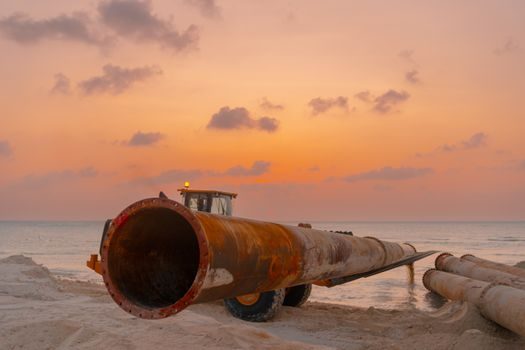
Reclamation, the largest often-ignored TCO line, covers unsintered AM powder recovery, spent bed-powder sieving, and revert remelting back to ingot for re-atomization.
After 3-5 cycles, powder must be downgraded, blended, or scrapped, which sets the practical end-of-life cost.
Metalysis frames its single-stage solid-state route as a feedstock-flexible alternative that improves overall metal recovery and supports rare-earth and critical-metal security [S2]; that recovery profile materially changes the reclamation line for Ta, Sc, and Ti programs.
Who TCO Matters For, and Where It Doesn't
TCO modeling pays off for any powder line above 10 t/yr, any reactive or refractory grade, any AM/MIM line with sieving-recovery loops, and any program locked into a single supplier for 3+ years. It is the right tool for procurement teams comparing atomization routes, ESG-conscious buyers tracking kWh/kg, and aerospace or medical buyers with tight PSD and oxygen specs [S1][S2].
It does not add much for one-off R&D batches under 100 kg, for low-spec Fe or Cu grades bought on spot, or where the powder line is captive and the only cost-of-poor-quality driver is yield. In those cases, unit price plus a 10% contingency is sufficient.
Comparison Matrix: Production Routes on Cost Drivers
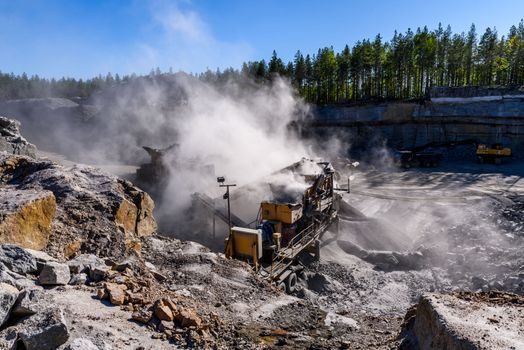
Three production routes dominate the supplier base: gas atomization (Fe, Ni, Co superalloys), water atomization (Fe, Cu, bronze), and solid-state electrolysis (Ti, Ta, Al-Sc, HEA) [S1][S2].
On energy per kg, gas atomization is the highest baseline, water atomization sits lower, and Metalysis's solid-state process reports 50% energy reduction versus the traditional baseline [S2]. On feedstock yield, gas atomization typically loses 20-35% of input as oversize and fines; water atomization loses 15-25%; the solid-state route claims up to 64% melting-loss elimination [S2]. On alloy capability, gas atomization covers 15-20 elements, water covers 8-12, and solid-state spans 49 elements of the periodic table [S2]. On capital intensity, gas atomization is the highest, water is moderate, and solid-state is positioned as a single-stage lower-CapEx alternative.
Trackable Signals and Watch Items
Watch the kWh/kg line on supplier PIDs and any disclosed argon recirculation rate; both move the variable-cost component of TCO. Track the next round of ESA and UK critical-metal funding awards — Metalysis secured a €1M ESA award for sustainable titanium in 2024-2025 [S2], and follow-on awards will move the Ti powder TCO curve.
The underlying component specifications are covered under total station, and metal curtain wall panel.