
Metal powder catalogues segment material first by base alloy family (Fe, Cu, Ni, Co, Ti, Al, refractory) and second by production route (gas-atomized, water-atomized, plasma-atomized, mechanical/centrifugal), per the alloy taxonomy published by Sandvik's Osprey metal powder line for additive manufacturing [S1].
Specification work inside each family further sorts powders by particle-size distribution, morphology (spherical vs irregular), Hall flow rate, apparent density, and oxygen/nitrogen content, with titanium and superalloy grades demanding the tightest chemistry windows because of downstream fatigue and creep risk [S1][S3].
Base-Metal Families and Their Stock Alloy Grades
The iron-based family covers low-alloy steels (e.g. 4140, 4340, 4605, 8620), maraging steels (18Ni300, MAR-50, MAR-60), austenitic stainless (304L, 316L, 316Ti, 904L, 1.4882), martensitic stainless (410, 420, 440B, 440C), ferritic stainless (430, 430L, 434, 441, 446), duplex stainless (2205, 2507, 2707, 3207, 1.4091), and precipitation-hardening grades such as 17-4 PH and 15-5 PH variants, all listed as Osprey stock alloys for AM [S1].
Copper-based powders sit in their own bracket: Makin Metal Powders in Rochdale, UK runs air- and water-atomized copper, bronze, tin, and infiltrant grades, supplying precision components for sintered bearings, friction parts, and diamond-tool matrices [S2]. The nickel and cobalt bracket (Ni, M-400, K-500, Ni625, Ni718, Co90, Co212, Co502, CoCr F75) covers corrosion service and biomedical implants, while titanium is split between Grade 5 (Ti-6Al-4V) and Grade 23 (ELI Ti-6Al-4V) for medical and aerospace duty [S1][S3].
Production Routes and the Morphology They Produce
Gas atomization (VIGA, EIGA) yields near-spherical particles with satellites and high tap density, the default for laser powder bed fusion (LPBF) and electron-beam melting; water atomization is cheaper, gives irregular/angular particles preferred for press-and-sinter PM, and is the workhorse route at copper-powder plants such as Makin in Rochdale [S2].
Plasma atomization and plasma rotating electrode process (PREP) produce highly spherical, low-oxide titanium and reactive-metal powder at premium cost, while mechanical crushing/milling and centrifugal atomization fill niche roles for master alloys and hard-facing grades (e.g. Osprey M2/MA, 17-4 PH/MA, 4140/MA, 316L/MA) where chemistry homogeneity matters more than morphology [S1]. For complex metal powder selection, a spec-driven map of atomization routes against flowability and oxygen content is usually the first filter an engineer applies.
Additive-Manufacturing Sub-Categories by Process
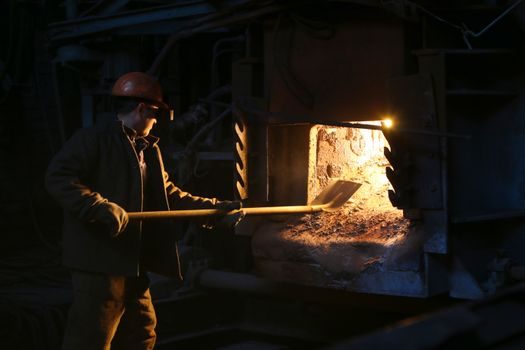
Continuum Powders (OptiPowder line) lists seven AM-aligned process windows on its application menu: laser powder bed fusion, metal binder jetting, hot isostatic pressing feedstock, laser cladding, direct energy deposition, and powder coating, each imposing a different particle-size window (LPBF typically 15-45 µm, DED 45-150 µm, binder jet 5-30 µm) and packing-density target [S3].
Continuum's OptiPowder portfolio covers Ni718, Ti64 Gr 23, Ti64 Gr 5, C964 (70/30 Cu-Ni), C715 (70/30 Cu-Ni), CoCr F75, Ni625, NiCu 400, SS17-4PH, and the M247LC nickel superalloy, all produced from recycled feedstock through the company's Greyhound melt-to-powder platform [S3]. For non-AM, sintering and thermal-spray grades, the metal curtain wall panel supply chain shares the same powder-metallurgy upstream, so the same morphology and PSD controls cascade into architectural applications.
Purity Verification: Density, Porosity, and Oxygen
Anton Paar's July 2026 application report "Using Solid Density to Assess Metal Powder Purity and Open Porosity of Metal Extrusions" recommends gas-pycnometry solid-density measurement as a first-pass purity screen, because entrained gas porosity and entrapped oxide inclusions both shift measured density below the alloy's theoretical value [S4].
For AM titanium the typical spec ceiling is oxygen at 0.13-0.20 wt% depending on grade (Gr 5 vs Gr 23 ELI), while nickel superalloys such as Ni718 and M247LC require nitrogen below 100 ppm for aerospace LPBF service; Sandvik's Osprey line publishes per-alloy datasheets with Hall flow, apparent density, and PSD values to anchor procurement [S1][S3]. Independent solid-density cross-checks of incoming lots catch lot-to-lot drift before it consumes build-plate time [S4].
Trade-Off Comparison: Choosing Among the Major Routes
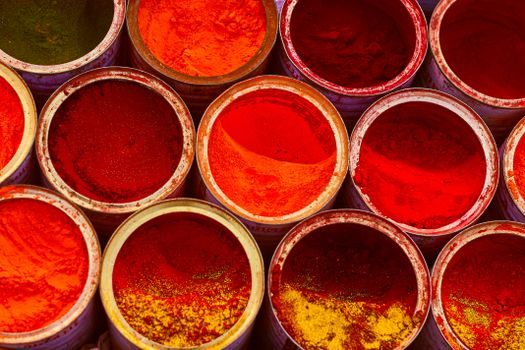
For a side-by-side spec view, gas-atomized spherical powder leads on flowability and AM density but costs 3-5x water-atomized equivalent, while water-atomized irregular powder wins on press-and-sinter economics and green strength but fails LPBF spreading tests [S1][S2].
Plasma/PREP titanium beats both on oxygen control and satellite count, important for fatigue-critical aerospace parts, but capacity is constrained and lead times run 12-20 weeks versus 4-8 weeks for gas-atomized lots; recycled/reclaim routes (Continuum's Greyhound) sit between the two on cost, with measured chemistry held within virgin-spec windows for the listed OptiPowder grades [S3]. When the flow meter or pressure transmitter downstream needs a corrosion-resistant alloy powder for laser cladding, the choice narrows to Ni625, CoCr F75, or Cu-Ni 70/30 depending on media chemistry.
Standards, Sourcing, and Lot-Acceptance Gates
Reception testing on metal-powder lots usually combines laser-diffraction PSD (e.g. Mastersizer), Hall flow per ASTM B213, apparent density per ASTM B212, and gas-pycnometry density against the theoretical value, with chemistry by ICP-OES or LECO for C/N/O [S4]. Makin Metal Powders operates under ISO 9001, ISO 14001, and ISO 45001, with full REACH compliance for its copper, bronze, tin, and infiltrant lines exported to Europe, the Americas, and Asia [S2].
Continuum Powders' published portfolio is the present-day reference for recycled-content AM powder that still meets virgin-grade chemistry windows, and Sandvik's Osprey line remains the reference for the breadth of alloy coverage in one catalogue, with cobalt-chrome, superalloys, master alloys, and expansion alloys (Alloy 36, Fe29Ni17Co) all in stock [S1][S3]. For buyers building a multi-supplier shortlist, the practical tracking signal over the next quarter is lot-level certificates of analysis for oxygen, nitrogen, and PSD, because recycled-content feedstock volumes continue to grow against virgin atomization capacity, and the pressure sensor and industrial valve industries absorb powder for laser-clad repair at the same pace as new AM builds.
See also our earlier report, Bag Filter Access Spec: Door, Chamber, Clearance, and Inspection Map.