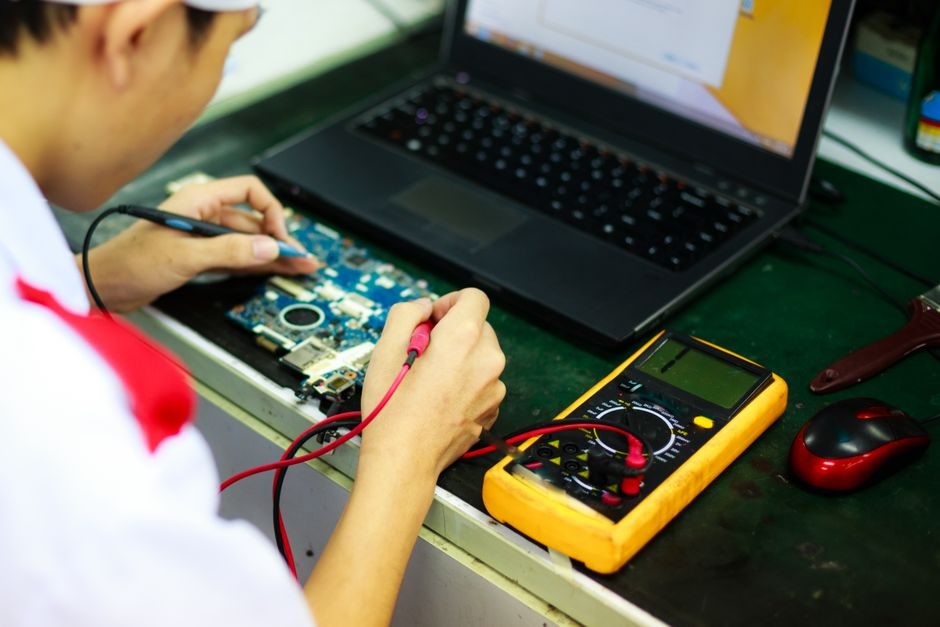
A micro-ohmmeter is a low-resistance instrument that drives a controlled DC current through a test object and resolves the resulting voltage drop in micro-ohms, typically via a 4-wire Kelvin configuration, while a high voltage tester (also called a high voltage insulation resistance tester or 兆欧表/摇表) forces a regulated DC test voltage across insulation and reports the leakage resistance in megaohms or teraohms [S5].
The two instruments answer different engineering questions: a micro-ohmmeter tells you whether a bolted joint, breaker contact or bus-bar weld is mechanically sound, and a high voltage tester tells you whether the dielectric around a winding, cable or insulator can hold off operating stress. Specifying one for the other's job is one of the most common test-bench mistakes in substations and motor-repair shops.
Measurement Principle and Typical Ranges
Micro-ohmmeters operate at low test voltage (commonly below 6 V DC) with a forced DC test current that often ranges from 100 A to 600 A on heavy units; DV Power's RMO-C series is rated for unlimited test duration at 200 A DC, with the RMO300C and RMO500C models additionally capable of 300 A output for 10 minutes [S3]. Resolution on portable units is routinely in the 0.1 µΩ to 1 µΩ band, and the goal is to defeat lead and contact resistance by using a four-terminal Kelvin connection.
High voltage insulation resistance testers apply a regulated DC high voltage to the device under test and read the resulting leakage current; the Sogou-cited reference describes test voltages of 500 V, 1000 V, 2500 V, 5000 V and up to 10 000 V, with insulation resistance ranges of 0–19 999 MΩ and 0–200 000 MΩ depending on the model [S5]. The DC high-voltage section is typically generated by a dedicated high-voltage generator feeding the measurement bridge, with the displayed value updated once the reading has stabilised.
What a Micro-Ohmmeter Tests (and What It Cannot)
Micro-ohmmeters are specified for non-inductive test objects, which is why they are paired with substation primary plant: medium- and high-voltage circuit breakers, disconnecting switches, high-current bus-bar joints, and protective bonding conductors [S1][S3]. A portable micro-ohmmeter with both-sides grounded (BSG) capability, such as the RMO-G, is intended for situations where the test object cannot be de-energised and racked out, so the operator can stay clear of induced voltages while the contact resistance is still measured [S1].
A micro-ohmmeter cannot tell you anything meaningful about winding insulation, cable jackets or surge arrester blocks, because those assets need a dielectric stress test, not a low-voltage milliohm check. For those assets, you need a high voltage tester or a megohmmeter rated for the asset's working voltage.
What a High Voltage Tester Tests (and What It Cannot)
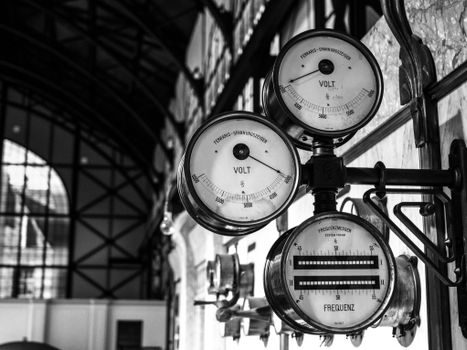
High voltage insulation resistance testers are used on transformers, motors, cables, switchgear, electrical apparatus and insulation materials, which is the standard use case in the Chinese reference instrument description [S5]. Test voltage is selected from a fixed ladder (50 V, 100 V, 250 V, 500 V, 1000 V, 2500 V, 5000 V and up to 10 kV on the largest models) and the instrument is built around three functional blocks: a DC high-voltage generator, the measurement loop, and a display stage [S5].
A high voltage tester will not detect a loose bolted joint or a pitted breaker contact, because those defects present as a few micro-ohms of extra copper-to-copper resistance, well below the µΩ to MΩ overlap. The instrument is also typically a single-channel, time-averaged reading at a single stress level, so it is not a substitute for dynamic contact-resistance measurement, which is a separate test mode on a micro-ohmmeter when used with a circuit breaker analyzer.
Decision Matrix: Micro-Ohmmeter vs High Voltage Tester
When the asset is a bolted bus-bar joint, a circuit-breaker main contact, a disconnecting switch or a protective bonding conductor, choose a micro-ohmmeter, because the defect is a few µΩ of extra metal-to-metal resistance that only a 4-wire Kelvin reading at 100–600 A can resolve [S3]. When the asset is a transformer winding, motor stator, power cable or bushing, choose a high voltage tester, because the defect is leakage current through a dielectric that only appears at 500–10 000 V DC stress [S5].
Cost-of-entry differs: a portable micro-ohmmeter such as the RMO-G is a higher-cost specialist instrument designed for substation work, while benchtop high voltage insulation testers are widely available at lower cost and often part of a general electrical-safety kit. Lead time also differs; Advanced Energy markets its micro-ohmmeter line specifically on precision and speed in manufacturing environments, indicating that micro-ohmmeter procurement is typically a planned engineering purchase rather than an off-the-shelf item [S2].
Standards, Sourcing and Field Integration
Substation acceptance tests lean on IEC 62271-100 (high-voltage switchgear and controlgear) for coil and contact resistance, on IEC 61010-1 for protective bonding, and on IEC 60076-1 for transformer winding resistance; vendor application matrices for the RMO-G and RMO-C list these exact standards next to each test method [S1][S3]. Insulation resistance work on the same site maps to IEC 60076-x and IEC 60364, with the high voltage tester set to the test voltage appropriate to the asset's insulation class (500 V DC for ≤ 1 kV systems, 1000–2500 V DC for 1–6 kV systems, and 5000 V DC or higher for ≥ 6 kV systems as a working rule of thumb that the user should validate against their own standard).
Advanced Energy's positioning of micro-ohmmeters as the precision instrument of choice for production-line resistance measurement indicates that procurement teams are increasingly splitting the two roles across the asset lifecycle: micro-ohmmeters for vendor acceptance, factory routine tests and commissioning, high voltage testers for periodic insulation-condition checks on in-service equipment [S2]. Practitioners moving between the two should keep both instruments on the same earthing and lead-management plan, because the micro-ohmmeter's hundreds of amps will saturate any shared ground reference that the high voltage tester's megohm bridge depends on.
Common Failure Modes and Operator Pitfalls
On a micro-ohmmeter, the most common misread comes from failing to use all four Kelvin leads, which adds lead resistance directly to the reading and can mask a joint that has actually loosened since last test. A second common error is testing an inductive object at full current, which saturates the power supply and trips the protection; both RMO-G and RMO-C are explicitly limited to non-inductive loads for this reason [S1][S3].
On a high voltage insulation tester, the most common pitfall is selecting a test voltage above the asset's rating, especially on aged XLPE cables or on rotating-machine windings that have been dried out, where over-voltage stress can puncture insulation that was otherwise serviceable. The Sogou reference also notes that the regulated DC test voltage must be generated cleanly; ripple on the high-voltage rail directly translates to noisy insulation readings and to inconsistent comparison between campaigns [S5].
Track these signals going forward: published updates to IEC 62271-100 acceptance criteria for substation primary plant, and updates to IEC 60076-1 winding-resistance guidance, which together govern when each instrument is mandatory on a given asset class [S1][S3].
Detailed specification references: deadweight tester.
This topic is covered further in Mining Dozer Selection: 2026 Spec Map for Crawler vs. Wheel Units.