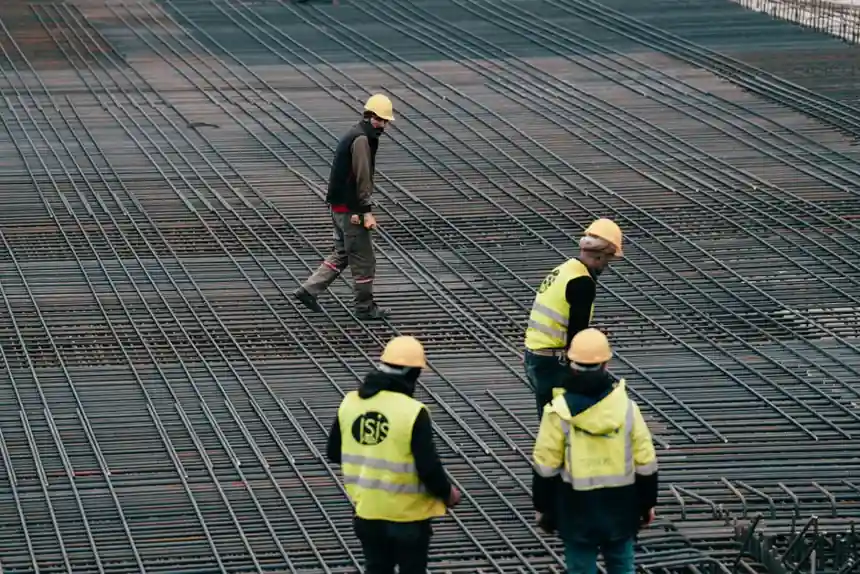
The dominant mistake on elevated worksites is specifying garments by comfort, not by the layered hazard: a harness-and-lanyard user still needs a garment that resists the same arc, chemical splash, or weld spatter the task carries, and CEN/TR 15419:2017 [S1] walks the documented selection flow that the European Committee for Standardization approved on 29 October 2017 through Technical Committee CEN/TC 162.
Work at height adds a second failure surface the standard does not name directly: the harness interface. A garment that bunches under a dorsal D-ring, snags on a lanyard, or melts onto skin during an arc event defeats every certificate on the label, so selection must integrate fall-arrest hardware compatibility with the chemical/thermal/mechanical criteria in clause 4.6 of CEN/TR 15419:2017 [S1].
Layered Hazard Map: What Height Actually Adds to Garment Spec
Working above 2 m off a fixed reference, per most EU national interpretations of Directive 2001/45/EC, the primary hazard is arrest trauma and impact; the secondary hazards (arc flash, chemical splash, welding spatter, biological contamination) are inherited from the trade, not the altitude, and they are what drive the garment spec, per the four-hazard matrix in CEN/TR 15419:2017 clause 4.6 covering chemical barrier, mechanical, ignition resistance, and additional considerations [S1]. BS EN ISO 11611:2015 [S7], a 2015 BSI publication referenced inside the CEN selection flow, sets the Type 1 and Type 2 welding-protective-clothing classes against spatter, radiant heat, and limited flame spread.
For a tower crew doing structural welding, the binding spec is ISO 11611 Class 2 (heavier fabric, higher gram weight, wider seam coverage) plus a fall-arrest harness that can be donned without unlacing the jacket front, and both layers must tolerate the same cleaning agent, because a decontaminated harness over a non-decontaminated coverall, or vice versa, is a documented cross-contamination pathway in chemical-protective-clothing use [S1].
Selection Flow: From Risk Assessment to Donned Garment
CEN/TR 15419:2017 clause 4.3 sets risk assessment ahead of garment choice, and clause 4.4 then forces a written product specification covering chemical barrier (4.6.2), mechanical (4.6.3), and ignition resistance (4.6.4) before any vendor shortlist [S1]. For height work this means the assessor must record: maximum free-fall distance, predicted arrest force on the body (typically 4-6 kN peak through a modern energy absorber), the chemical inventory at the worksite, and the heat/arc exposure budget for the shift.
The flow then requires clause 4.5 additional considerations covering supplier quality assurance, logistics, garment material criteria, manufacturer obligations under 4.7.1, and usability/compatibility with other PPE under 4.7.4, and usability is where the harness/garment conflict is resolved: chest-ascender routing, dorsal D-ring access, and lanyard parking points must all be reachable through or over the chosen coverall [S1]. Skipping 4.7.4 is the single most common audit finding when a worker falls and the post-incident inspection finds a hood drawcord wrapped around the lanyard hook.
Garment Types Versus Use Case: A Decision Comparison
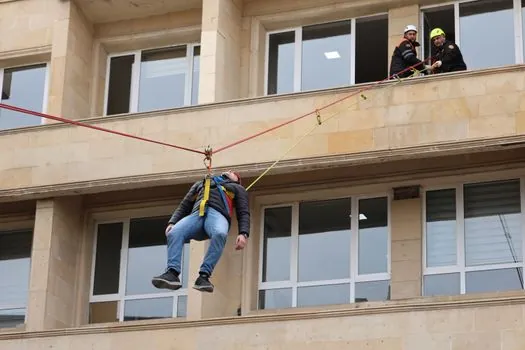
Three garment families dominate height-work PPE: Type 6/4 chemical coveralls (limited spray/spray-tight per EN 13034 / EN 14605, with sealed seams), ISO 11611 Class 1 or Class 2 welding jackets, and EN 343 rain shells rated for foul-weather tower work, and the choice is driven by which secondary hazard leads [S7]. Type 4 sealed-seam chemical coveralls are the right pick for petrochemical scaffold work where hydrocarbon mist is present, while ISO 11611 Class 2 is the right pick for hot-work on structural steel, and EN 343 Class 3 shells (water column hydrostatic head ≥ 20 000 Pa before washing per the standard) are the right pick for outdoor transmission-tower maintenance in winter storms.
The wrong pick is a Type 5/6 disposable coverall under a harness during a welding task: the synthetic non-woven melts at roughly 130-160 °C and fuses to the harness webbing, which converts a fall-arrest into a thermal-contact burn, a failure mode ISO 11611 was written to prevent [S7]. A correct layered pick is a flame-resistant base layer (EN ISO 14116 index 2 or 3), an ISO 11611 Class 2 outer, then the harness worn over the outer so the D-ring sits on intact fabric, and a chin-strap helmet to chin-strap interface that does not ride up under the hood.
Compatibility, Training, and Inspection: The 4.7.4 Trap
Clause 4.7.4 of CEN/TR 15419:2017 requires explicit verification that the chosen CPC is usable with other equipment, and for height work this means the harness must be donned, adjusted, and connected to an anchor while the worker is wearing the actual garment, not a sample, and the test must include reach to the dorsal D-ring, parking of the unused lanyard hook, and operation of any descent device [S1]. Clause 5 then mandates training, with 5.3 covering the documented donning/doffing sequence and 5.4 the documentation trail, and the European Society of Protective Clothing, founded in 1997 in Denmark, runs the European Conference on Protective Clothing (ECPC) on a 2-3 year cycle to circulate this kind of integration test data across member states [S3].
Inspection under clause 7.2 forces a written ageing-factor log: UV exposure degrades polyester webbing and aramid shell fabric, repeated flexing at the knees/elbows opens seam stitching on Type 4 coveralls, and chemical exposure can plasticize polyurethane seam tape, so the typical retirement ceiling on a height-work coverall is 25-30 donning cycles or one chemical-exposure event, whichever comes first, per the maintenance section of CEN/TR 15419:2017 [S1]. Garments past the ceiling must be cut and destroyed, not downcycled to groundskeeping duty, because the same fabric that blocks a hydrocarbon mist on a scaffold also carries the contaminant back into the office.
Standards Reference Sheet: What to Cite on the Spec Sheet
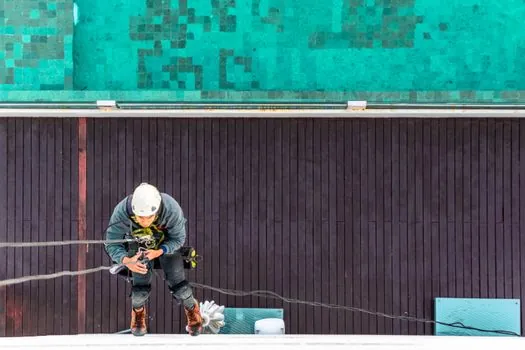
For procurement engineers writing the line item, the cited standards should be CEN/TR 15419:2017 for the selection methodology [S1], BS EN ISO 11611:2015 for welding-class garments [S7], EN 13034 for Type 6 limited-spray chemical coveralls, EN 14605 for Type 4 spray-tight, EN 343 for foul-weather shells, and EN 361 for the fall-arrest harness itself, with the harness listed as a separate line item and verified compatible per the 4.7.4 usability check, not bundled into the garment spec. For U.S. sites, the equivalent selections are ANSI/ISEA 107 for visibility, NFPA 70E for arc-rated garments (with an ATPV or EBT rating in cal/cm² documented on the label), and ANSI Z359.11 for the full-body harness.
Healthcare-adjacent height work, such as ambulance loading-bay fall hazards or hospital scaffold maintenance during COVID-era retrofit work, draws on the disposable-coverall guidance in the medical PPE literature, where the documented difference between a Type 4B biological coverall and an isolation gown is barrier grade plus seam construction, with protective clothing specified for one-way isolation of the wearer and isolation gowns for two-way isolation in patient-contact areas [S5]. The same material-density logic (≥ 60 gsm SMS or ≥ 80 gsm microporous film laminate) that separates a medical coverall from an isolation gown also separates a wind-shell from a foul-weather shell on a tower.
Failure Modes and Limitations: Where the Spec Stops Working
CEN/TR 15419:2017 is a Technical Report, not a normative standard, so its selection flow is guidance, not law, and the binding obligation sits in product-specific EN standards (ISO 11611, EN 13034, EN 14605, EN 343) plus the user's national working-at-height regulations [S1]. A common limitation: the TR's chemical-barrier tables assume single-substance exposure, while real tower work in a refinery often involves mixed hydrocarbon/amine/acid mist, and the only honest answer is to test the candidate fabric against the actual mixture, not the SDS-listed single substance.
A second failure mode is heat-stress: a Type 4 sealed-seam chemical coverall over an ISO 11611 Class 2 jacket over a full-body harness on a summer tower can push core temperature into the 38 °C range within 30-40 minutes of moderate work, and the right answer is work-cycle rotation plus a cool-down rest station at the base, not a lighter garment that fails the chemical-barrier spec. For a related but distinct selection problem on welding-only tasks, the ISO 11611 Class 2 fabric-weight and seam spec map walks the gram-weight and seam-tape choices in more detail. For wildland-adjacent crews who also work at height, the ISO 15384 spec gates and 2026 field markers covers the flame-resistance interface. Food/pharma elevated maintenance that needs a different contamination model is covered in the food-processing hazard-zone selection map, and a foundational reference page for garment types and test methods is the protective clothing encyclopedia entry.
Track two signals through the rest of 2026: any revision activity on CEN/TR 15419 (the 2017 edition still shows no published amendment, and the next maintenance review at CEN/TC 162 is the natural trigger), and the post-2026 enforcement pattern on harmonized EN ISO 11611 factory certificates, which has tightened since the 2024 market-surveillance sweep. Both are citable in your next PPE review board and are the cheapest way to defend the spec line at audit.
For component-level specifications, see height gauge, and aerial work platform.