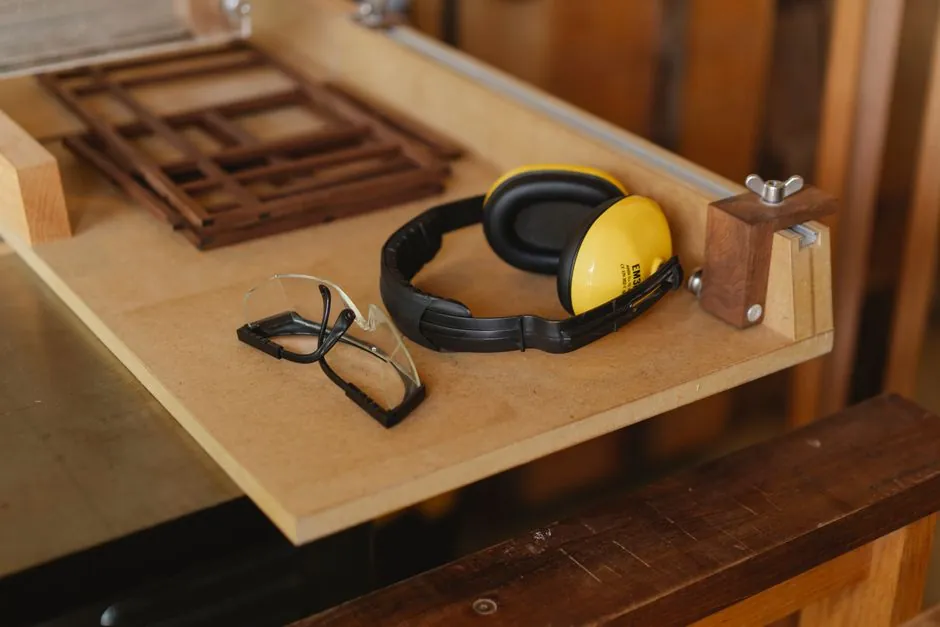
Construction-site hearing protector selection is a wear-time problem, not a noise-reduction-rating problem: a protector that scores 33 dB NRR on the bench but gets pulled out after 20 minutes delivers a calculated dose almost identical to no protection at all, because OSHA's 5 dB time-intensity exchange means removing a device cuts protected time in half for every 5 dB [S1].
This spec map targets site safety officers, OEM PPE coordinators, and rental-house procurement staff buying for concrete, steel, and road crews in 2026, with a focus on the comfort, hygiene, and climate factors that decide daily compliance [S1]. A baseline of hearing protector types and their attenuation classes is the entry point before any brand is named.
Five comfort factors that decide effective attenuation on site
3M's selection guidance ranks comfort factors in this order: pressure against the ear canal or headband, physical size of the earplug relative to the canal, foam softness, weight of muffs versus banded plugs, and ambient temperature at the workstation [S1]. Each one is a wear-time gate: if a worker pulls the plug out to relieve pressure, the OSHA 5 dB halving rule means protected exposure time drops sharply. Polyurethane foam plugs, such as the E-A-Rsoft line, are softer to the touch than standard PVC foam and are typically the first choice for shift-long comfort [S1].
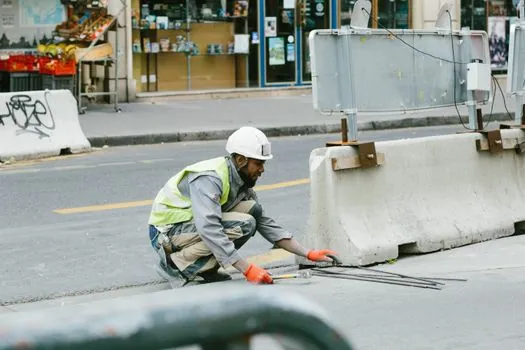
Weight and size trade off directly against attenuation. Higher-NRR muffs use larger, heavier ear cups, and the extra mass is a known reason operators in hot or overhead work (concrete finishing, rebar tying, scaffold erection) prefer banded or pod-style plugs to muffs [S1]. Cold, windy sites invert that preference: muffs trap heat and block convective cooling on the pinna, so winter road crews and northern steel erectors tend to standardize on muffs rather than foam plugs [S1].
Hygiene, dirty hands, and the glove compatibility problem
Rolling a foam plug between thumb and forefinger before insertion is the textbook fit step, and on a rebar tying deck or formwork crew that step fails almost every time because gloves are wet or dusty [S1]. Push-to-fit and reusable plugs with stems or handles let a worker seat the tip without touching the foam face, which directly raises the achieved seal on dirty-hand tasks. 3M's Cord Control System (CCS) and helmet-mounted muffs are the two fielded answers to "I took my muffs off to talk, now they're on the ground" [S1].
Construction PPE commonly stacks eye, head, and hearing protection on one operator. Helmet-mounted muffs and CCS-connected plugs are explicitly designed to keep construction tools and accessories compatible with eye and head protection so workers do not have to choose between hard hat, glasses, and plugs at the start of shift [S1]. For a deeper look at how those accessory chains interact with tool selection, the Rebar Threading Machine Selection for Concrete Work: 2026 Spec Map article covers the adjacent PPE-tool interface on concrete sites.
Climate-driven choice: hot humid pours versus cold windy decks

Earmuffs in hot, humid conditions become uncomfortable within minutes as sweat collects inside the cup; lightweight banded HPDs and washable reusable plugs are the documented substitutes for summer concrete pours, bridge deck work, and tunneling [S1]. PVC-foam plugs such as the E-A-R Classic family are specified because the foam resists moisture absorption from sweat, which would otherwise swell the plug and raise canal pressure over a shift [S1].
Cold and windy conditions invert the rule: muffs are preferred because they add a windbreak on the pinna and trap body heat, and banded plugs lose favor because the metal or plastic band conducts cold directly to the temple. Crews rotating between indoor fit-out and outdoor structural steel typically carry both and switch by zone, rather than standardizing one SKU across the project [S1].
Communication, alarms, and the situational-awareness trade-off
Overprotection is its own hazard on a live site. A plug or muff that flattens forklift backup alarms, crane hoist signals, or radio calls forces workers to remove the device to identify the source, which collapses the protected time to near zero during the alarm event [S1]. The selection guidance is to match the device's attenuation to the actual measured noise of the task, not the worst-case L_eq of the entire site, so communication channels remain audible [S1].
Uniform-attenuation muffs and banded plugs with flat attenuation curves (rather than steep high-frequency roll-off) are the typical answer on rigger and spotter crews who need to keep verbal commands and whistle cues intelligible. The same logic explains why PA11 vs PA12 for oil and gas: 2026 spec selection map rates chemical compatibility alongside mechanical properties: each material choice is a stack of constraints, not a single score.
Comparison of main hearing protector types for construction
Foam earplugs, push-to-fit earplugs, banded earplugs, and earmuffs are the four classes a site procurement plan needs to compare on the same axes. Foam plugs (PVC or PU) deliver the highest NRR per dollar and the smallest pack size, but require clean hands and a roll-down step that fails on dirty or gloved tasks [S1]. Push-to-fit plugs trade a few dB of NRR for stem-handle insertion, which raises real-world fit rate on rebar and formwork crews [S1]. Banded plugs sit in a sleeve around the neck when not in use, cutting the "I lost my plug" replacement cost that erodes PPE budgets on multi-trade sites [S1]. Earmuffs deliver consistent attenuation regardless of ear canal size and cannot be lost as easily, but heat load, weight, and helmet/hard-hat clamp compatibility become the limiting factors above 30 dB NRR [S1].
The procurement gate for any protector on a construction site should score four criteria: achieved NRR after the dirty-hand fit test, comfort in the worst climate on the project, compatibility with hard hat and safety glasses, and the unit cost per protected hour (replacement plugs versus reusable muff cushions). Devices that pass all four are the ones that survive in the lockered PPE cage; the rest are written off as floor stock within a quarter.
Selection criteria by crew type and noise source
Concrete finishing and screed work (85-95 dB(A) zone): washable reusable plugs with a moderate NRR, chosen so crew members can still hear pump-truck reverse signals. Structural steel and bolt-up (95-105 dB(A) zone): muffs or high-NRR foam plugs, with muffs favored in cold weather and plugs in summer [S1]. Pile driving and demolition (105-115 dB(A) zone): dual protection (plugs plus muffs) is the common specification, and 3M notes that combining a plug and a muff typically adds 5-7 dB of effective protection over the higher-rated device alone [S1]. Road milling and asphalt paving: banded plugs, because operators move in and out of cabs and need to dock the device on a collar rather than pocket it [S1].
Crane riggers and signalers are the exception to the "more attenuation is better" rule: they need to hear the operator's whistle and radio clearly, so a flat-response muff with a moderate NRR is specified over a high-NRR plug-and-muff combo. The trade-off is documented in the 3M guidance as the tension between hazard protection and the need to "hear and communicate on the job" [S1].
Limitations, failure modes, and what the spec sheet hides
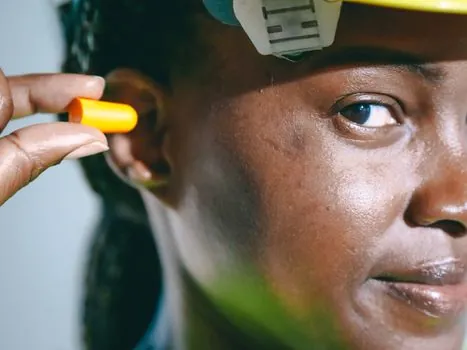
Lab-rated NRR is achieved on trained subjects in a quiet room; field studies routinely show real-world attenuation is 30-50% below the labeled value because of partial insertion, worn foam tips, and intermittent wear [S1]. The two most common failure modes on construction sites are partial insertion of foam plugs (worker rolls but does not seat the tip) and broken headband tension on muffs after a six-to-twelve-month drop cycle, both of which silently halve the achieved protection.
Comfort-related removal is the third failure mode and the hardest to audit. 3M's guidance is explicit that even the best protectors "aren't as likely to be used if they aren't convenient and compatible with the work being done" [S1], which is why a procurement plan that buys on NRR alone tends to underperform a plan that buys on wear-time drivers. For adjacent PPE decision logic on a different hazard class, How to Select Laboratory Protective Clothing by Hazard Class and EN Standard applies a similar constraint-stack method to a different PPE category.
Standards, sourcing, and procurement check list
U.S. construction projects hearing-conservation programs are anchored on OSHA 29 CFR 1926.52 occupational noise exposure limits and the 5 dB time-intensity exchange that is built into the OSHA dose calculation, with hearing protectors rated under ANSI S3.19-1974 (NRR) for U.S. labeling and EN 352 / SNR for European-market product [S1]. Dual-certified product, marked with both NRR and SNR/EN 352, is the practical procurement line for multinational contractors who move crews between jurisdictions [S1].
Trackable signals for the next 6 months: any update to the EU PPE Regulation (EU) 2016/425 guidance on EN 352 revision, ANSI/ASA S12.6 revision activity on real-ear attenuation measurement, and site-level dose-trend data from OSHA's noise-imaging citations. Site safety managers should watch the NRR-versus-SNR dual-label trend on 2026 product data sheets, because it is the leading indicator of which suppliers are ready for cross-border crews.
Component reference pages worth checking: motor protector.