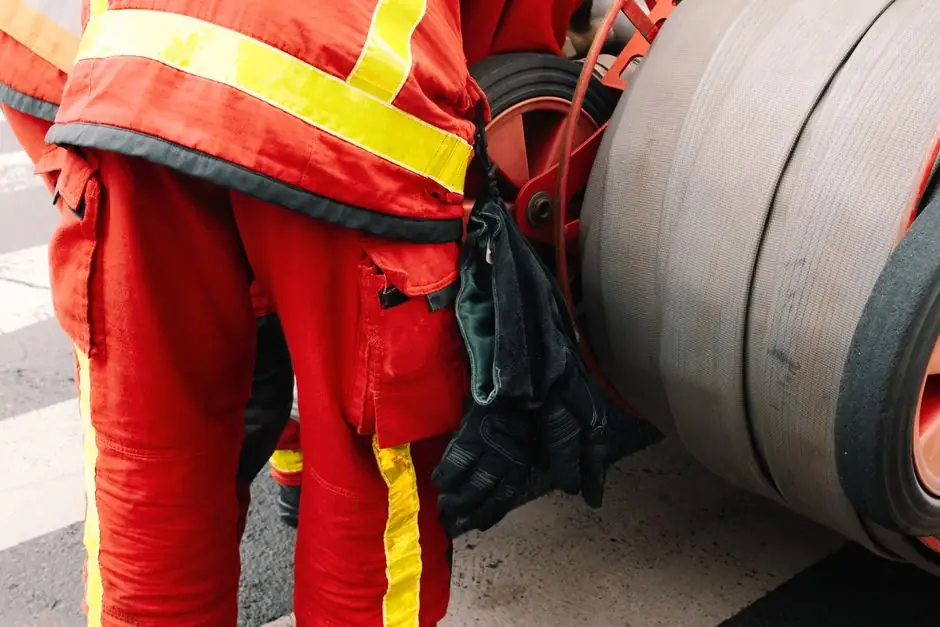
Wildland firefighting clothing is governed by ISO 15384:2018, the 14-page Edition 2 standard confirmed current by ISO in 2026 and now at stage 90.92 (to be revised), which sets minimum performance for the body garment worn during wildfire suppression and explicitly excludes head, hands, feet, and respiratory protection [S2].
The standard's scope is intentionally narrow: it does not cover structural firefighting (EN 469, ISO 11999-3), rescue operations (ISO 18639), high-infrared-radiant-heat exposure (ISO 15538, EN 1486), chemical, biological, electrical, or radiation hazards, nor chain-saw mechanical risk [S2]. Procurement teams who treat ISO 15384 as a universal firefighter standard will routinely over- or under-spec the wrong garment for the wrong call type.
ISO 15384 Lifecycle: From 2003 Withdrawal to 2026 Confirmation
ISO 15384:2003 (Edition 1, published 2003-04, ICS 13.340.10) was withdrawn and superseded by ISO 15384:2018, with the 2018 edition last reviewed and confirmed in 2026 and currently flagged for revision at stage 90.92 [S1][S2]. An amendment, ISO 15384:2018/Amd 1:2021, is sold separately at CHF 18 and is not bundled with the base text [S2]. A DIS-stage draft, ISO/DIS 15384 (CHF 67), is also in the catalogue, signalling that the next edition is in the committee-draft phase rather than at enquiry or approval [S2].
Korea adopted the standard domestically as KS K ISO 15384-2023, which carries the identical scope of laboratory test methods and performance requirements for wildland firefighting clothing and was published in 2023 [S4]. For specifiers sourcing from Korean or trans-Pacific suppliers, KS K ISO 15384-2023 is the local-language equivalent and traces directly back to the ISO 15384 lineage, not a parallel regional standard [S4].
Adjacent Standards: EN 1486, EN 469, ISO 11611
EN 1486:2007 (French transcription NF S74-534:2007) covers reflective clothing for specialised fire-fighting, including material properties, structural design, heat resistance, flame retardancy, reflective visibility, marking, packaging, transport, and storage under simulated fire exposure [S7]. The standard is referenced inside ISO 15384:2018 only as an exclusion: ISO 15384 does not apply where high infrared radiation is expected, which is precisely the EN 1486 use case [S2][S7].
For structural fire calls, EN 469 and ISO 11999-3 govern; for welding or cutting adjacent to fire crews, ISO 11611 Class 1 or Class 2 applies, and the class gating differs sharply from ISO 15384's wildfire heat-and-flame envelope [S2]. Spec writers should treat the four standards as non-overlapping envelopes and pick by call profile, not by stacking certifications on one garment.
Selection Criteria for Wildland PPE: Design, Material, Test Method
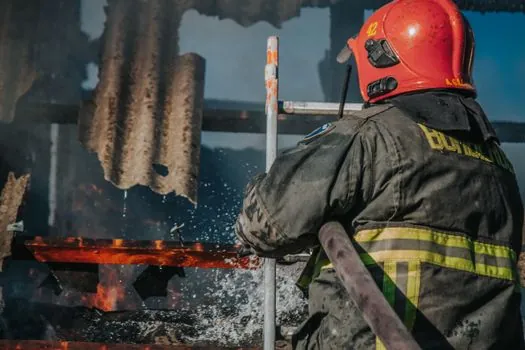
ISO 15384:2018 governs three explicit gates: general garment design, minimum performance level of the materials used, and the test methods used to determine those levels, with the body as the protected surface and the head, hands, and feet covered by separate standards [S2]. The clothing is not intended to provide protection during fire entrapment, a hard exclusion that procurement contracts should mirror verbatim to prevent liability drift [S2].
For adjacent call types, fabric weight and seam construction are the usual differentiators. Welding PPE selection under ISO 11611, for example, hinges on Class 1 versus Class 2 with corresponding fabric weight and seam-spec gates, a decision tree that does not transfer to wildland garments Welding PPE spec gates. Likewise, electrical-arc PPE selection runs on ATPV/arc-rating values in cal/cm², a metric family that ISO 15384 does not address Electrical-arc PPE spec gates. Conflating the three families is the most common spec error in mixed-hazard departments.
Wildland vs Structural vs Proximity-Fire: Criteria Comparison
On four decision criteria, the three garment families diverge cleanly. Hazard envelope: ISO 15384 = wildfire radiant heat and flame contact outside the entrapment zone; EN 469 / ISO 11999-3 = interior structural attack with higher thermal load; EN 1486 = proximity fire fighting with high infrared radiant load [S2][S7]. Body coverage: ISO 15384 = torso, arms, legs (head/hands/feet excluded); EN 469 = full structural turnout including outer shell, moisture barrier, thermal liner; EN 1486 = reflective over-garment for radiant-heat work [S2][S7]. Certification mark: ISO 15384 = ISO 15384:2018 label; structural = EN 469 or ISO 11999-3; proximity = EN 1486:2007 reflective-clothing mark [S2][S7]. Lab test gating: ISO 15384 = its own test methods for wildland fabric; EN 469 = structural thermal-manikin and heat-transfer tests; EN 1486 = reflective-clothing-specific tests including simulated fire exposure [S2][S7].
The comparison is binary at procurement: a tender for wildland PPE that lists EN 469 as the primary standard is mismatched and will pull in turnout gear heavy enough to impair mobility on a 12-hour wildfire line, where ISO 15384's lighter envelope is the correct anchor [S2].
Field Sourcing Markers: 2026 Vendor and Market Signals
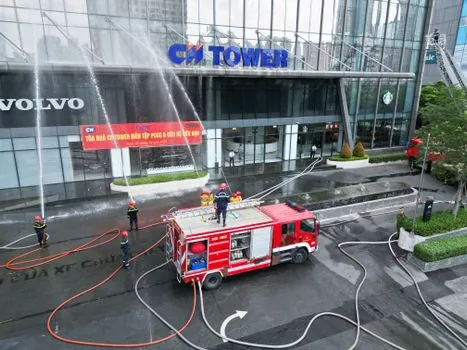
Bergeron Protective Clothing, a US-based PPE distributor operating for over 40 years and serving MA, ME, NH, and VT departments, offers a three-tier program (Patriot, FLIR) that combines turnout gear, SCBA, rescue tools, breathing-air compressors, stabilisation equipment, and NFPA-compliant turnout-gear extractors under one contract vehicle [S3]. The tiered structure is a procurement signal: smaller departments without dedicated PPE staff get a single-source package, while larger departments can mix and match [S3].
On the Chinese export side, Made-in-China.com lists fire-fighting clothing in the flame-retardant-clothing category at US$ 50.00-76.00 per piece with a 10-piece MOQ, including marine firefighting and fireman protective safety apparel, with on-time-delivery ratings around 5.0/5.0 from suppliers such as NINGBO MERCE TECHNOLOGY CO., LTD. [S5]. That price band is materially below US and EU structural-turnout pricing and is broadly consistent with ISO 15384-class wildland garments rather than full EN 469 structural kits, though specifiers should still demand the ISO 15384:2018 test report rather than relying on the flame-retardant label alone [S2][S5].
Use Cases, Failure Modes, and Lifecycle Limits
ISO 15384:2018 is built around four use-case boundaries: wildfire suppression and associated activities, with explicit non-coverage of structural attack, rescue, proximity fire, chemical-biological-radiation hazards, and chain-saw work, and it does not cover the head, hands, feet, or respiratory system, which are addressed by other International Standards [S2]. The 2018 edition's wear-and-tear envelope is constrained: useful-life research on firefighter protective clothing has tracked how repeated laundering, UV exposure, and thermal cycling degrade material performance well before visible wear, a degradation curve that is not captured by a single pass/fail lab test [S6].
Failure modes that surface in field data include seam breakdown under repeated machine washing, loss of radiant-heat reflectance on EN 1486 proximity garments after abrasion, and shrinkage-driven fit loss on wildland garments laundered above the standard's temperature gate [S6]. Departments that buy on initial certification alone, without a documented inspection and retirement schedule tied to ISO 15384's test method, tend to over-service the garment's stated useful life by a wide margin.
Specification Checklist and Sourcing Trail
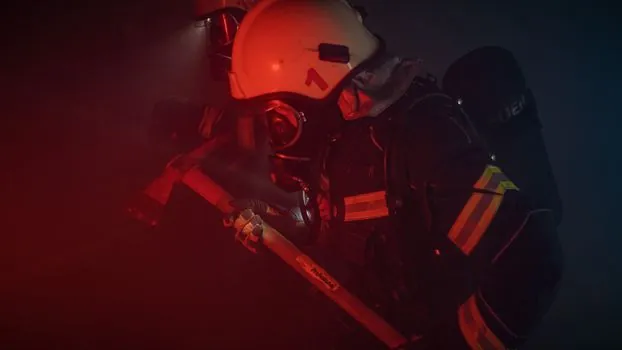
A clean ISO 15384:2018 specification should list: Edition 2 (2018-06) reference, ISO 15384:2018/Amd 1:2021 if the amendment applies, the 14-page base text or the 18-page combined package, the 13.340.10 ICS code for cross-referencing, the explicit non-coverage of entrapment, and a side reference to EN 1486:2007 only if a proximity-fire over-garment is also being procured [S2][S7]. Lab test reports should be traceable to ISO 15384's test methods, not generic flame-retardant certificates, and the contract should state that the head, hands, feet, and respiratory PPE are sourced under their own standards.
Trackable signals over the next 12 months: publication of the ISO 15384 revision currently at DIS stage, any update to the 2026 systematic review outcome, and the Korean KS K ISO 15384-2023 adoption cadence in trans-Pacific tenders [S2][S4]. For laboratory environments, the laboratory PPE hazard-class selection guide is the parallel reference for non-fire chemical-biological garment choice.
Spec-level background on the components involved: protective clothing, pressure transmitter, and flow meter.