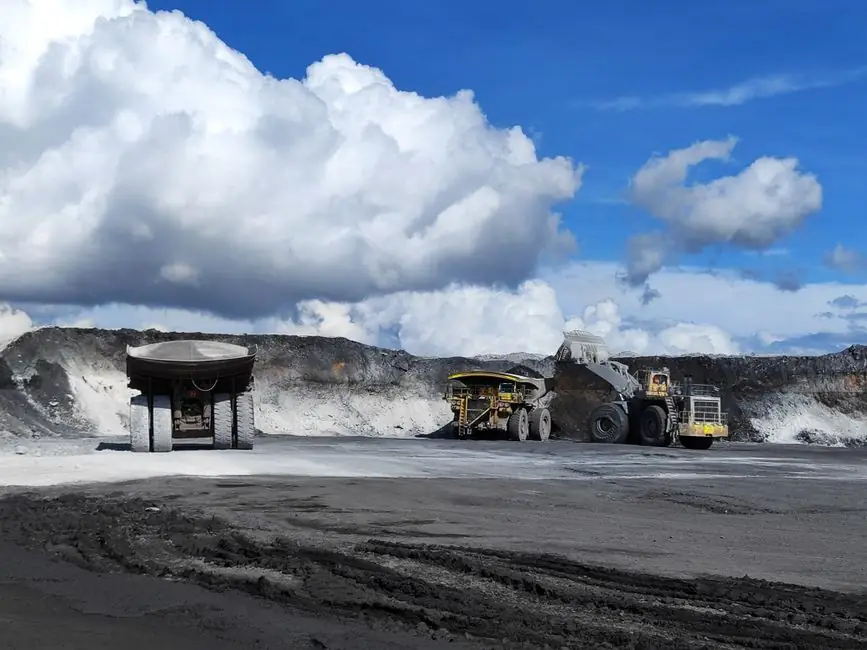
Mining service rejects about 30% of linear bearing failures to contamination, not fatigue, so seal design and shaft hardness dominate the spec before load rating is even written down [S3].
Round-rail ball bushings remain the default for haul-truck steering linkages, drill feeds, and conveyor take-ups because 52100 steel shafting can be induction-hardened to 60+ HRC and paired with sealed, caged recirculating sets [S1][S3].
Round Rail vs Profile Rail: Mining Cost/Rigidity Trade
Square profile rail carries roughly 2 to 3 times the dynamic load of an equivalently sized round-rail bushing at the same accuracy class, but it also costs more per metre and demands machined datum faces, which a field-repaired shovel cannot always guarantee [S3]. Plain polymer bushings on unhardened shafting handle only about 20% of the load of a comparable ball bearing, but they survive aluminium and 316 stainless shafts, which matters for weight- and corrosion-sensitive underground carriers [S3]. A typical engineering split is profile rail on boom pivot and bucket tilt (high moment, high cycle) and round rail on latches, grease tracks, and door slides (low speed, high contamination).
Shafting, Hardness, and Diameter for Haul Trucks and Shovels
Thomson-class round-rail ball bushings are produced in 0.25 to 4 inch (roughly 6 to 100 mm) bore diameters and routinely handle 5,000 lbf dynamic load at the precision steel fixed-plate geometry, with conforming-groove floating plates rated about triple that [S3]. PBC Linear's induction-hardened special-alloy rails are ground on long-bed CNC grinders, with hardness controlled to a defined case depth so the running track stays above 60 HRC after decades of dust-laden strokes [S1]. For a 100-ton class mining dump truck steering ram or a rotary drill feed, 50 to 80 mm case-hardened shafting paired with twin caged ball bushings per rail is the most common working envelope, and the linear bearing catalog range is dense in that size band.
Sealing, Lubrication, and Contamination Strategy
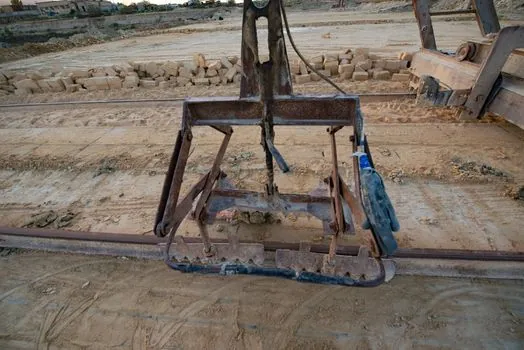
Caged runner blocks with internal reservoirs plus pop-in longitudinal wipers cut airborne noise by up to 84% and lift load capacity by up to 19% versus uncaged sets, with no relube interval in many medical-class cases [S1]. That same end-seal geometry is what mining buyers want, because once the wipers are specified for IP54 dust, the internal oil reservoir handles the long relube interval on shovel crowd arms. In washdown or slurry-adjacent service the white-paper guidance moves toward stainless hardware and polymer plain bushings, which are unaffected by the caustic chemistries that attack nitrile seals [S1]. YTP's nickel-plated and steel-cage LM…KH series are explicitly aimed at the same harsh, hard-to-relubricate niche, with the 3D parts library released to support model exchange in OEM design [S4].
Plain Polymer Bushings Where Loads Stay Light
Plain polymer bushings typically cap out at about 11,000 lbf static and 2,023 lbf dynamic, with a 0.05 to 0.25 coefficient of friction and a 100 fpm (about 0.5 m/s) speed ceiling, which fits operator-cab slides, door latches, and small conveyor guides but not crowd or hoist duties [S3]. Because the contact patch is distributed, they run cleanly on unhardened 304/316 stainless or aluminium shafts, which solves the magnetic and corrosion problems that rule out 52100 steel in some underground electrics. Specifying them is a deliberate choice, not a cost cut: they fail in overload, not in dust, so the load case must be closed before the polymer is signed off [S3].
Standards, Suppliers, and Model Exchange
GB/T 19673.2-2025 governs linear bearing attachment dimensions in the Chinese national system, and YTP is a primary drafting unit for that revision, with ISO 9001:2015 quality certification across the LM, KH, and flanged lines [S4]. Thomson's portfolio runs from Ball Bushing bearings and RoundRail shafting through Profile Rail Linear Guides, and is held to the same ISO/AS quality system that mining OEMs audit under [S2]. PBC Linear's washdown white paper is the cleanest published reference for moving from a clean-room spec to a slurry- or chemical-washdown spec by changing seal material, shaft material, and bushing type rather than oversizing the bearing [S1]. For adjacent motion hardware, a linear actuator selection often drives the same load/cycle envelope and should be reviewed in parallel.
Failure Modes the Spec Must Close
Three failure patterns dominate mining return tickets: brinelled shafts from impact shock with the wipers already compromised, raceway spalling from water ingress past failed end seals, and polymer cold-flow in plain bushings mounted on misaligned soft shafts. The fix is not a higher dynamic-load rating, it is case depth above 1.5 mm, double-lip wipers with metal backers, and a realignment of the polymer bushing's housing bore to within 0.05 mm. Field data consistently puts the seal and shaft-finish decisions ahead of the load-class decision on the cost-of-ownership curve, and that ordering is what separates a working mine spec from a catalog copy-paste. Bearings specified against GB/T 19673.2-2025 and supported by the linear guide datasheets from the same supplier keep the dimension chain auditable [S4].
Watch the next 90 days for: (1) revision drafts of the linear bearing classification national standard that YTP is helping drive, and (2) any new Thomson round-rail caged versions aimed at IP65/IP67 mining washdown, signalled through their Ball Bushing product line [S4][S2]. For a related selection workflow, see the thrust bearing selection for material handling conveyors and lifts spec map.