Modified bitumen membrane (MBR) buyers in 2026 should anchor every RFQ to four spec gates — modifier chemistry (SBS vs APP), carrier mat (polyester, fiberglass, composite), thickness (commonly 3 mm, 4 mm, 5 mm) and surfacing (PE film, sand, mineral granule, aluminum foil) — because each lever swings both unit price and service life, with the global segment tracked at USD 8.95 billion by 2025 after a 5.59% CAGR through the forecast window per IndustryArc [S1].
Production lines from Chinese OEMs such as CBMA Suzhou Institute (established 1984, ISO 9001) typically run 1–20 million m² per year of output at 1 m roll width, with line configurations covering polyester, composite and fiberglass bases in 2–5 mm gauges [S2]. For a direct comparison of chemistry, carrier and test thresholds, see the Modified Bitumen Membrane Selection Criteria: SBS vs APP, Carrier, Spec Gates reference page.
SBS vs APP modifier chemistry: cold-flex vs heat-flow
Styrene-butadiene-styrene (SBS) is the elastomeric modifier of choice when the membrane must stay flexible at low service temperatures; an SBS-PYPE 4 mm sheet with polyester fiber reinforcement and PE film surfacing is a standard commercial-roofing SKU on Alibaba and Okorder catalogs, typically torch-applied or self-adhered [S6]. Atactic polypropylene (APP) is the plastomeric alternative, marketed for torch-on applications where higher softening point and UV resistance outweigh cold-flex demand; APP-modified lines run on the same calendered base as SBS, with mineral granule or aluminum-foil facings used for exposed finishes [S5].
For roofing specifiers weighing the two, the rule of thumb is straightforward: pick SBS where winter low-temp flexibility and foot-traffic resistance matter (most North-European and northern-China flat-roof builds), and pick APP where high surface temperature, UV exposure or torch-on speed dominate (Mediterranean, Middle East, exposed industrial roofs). The waterproof membrane encyclopedia entry lays out the broader chemistry taxonomy for context.
Carrier mat, thickness and surfacing — the three numeric gates
Polyester (PET) mat gives the highest tear and puncture resistance and is the default under heavy ballast or vehicular traffic; fiberglass mat gives dimensional stability at lower cost but lower puncture resistance; composite PET/glass carriers split the difference and are common on mid-tier SKUs [S2][S6]. Thickness brackets are 2 mm, 3 mm, 4 mm, 5 mm — production data from Chinese line builders cite 2–5 mm capability, with 3 mm and 4 mm the two highest-volume SKUs for low-slope commercial roofing [S2][S5].
For a broader primer on how MBR sits next to EPDM, TPO, PVC and liquid-applied waterproofing coating systems, see the related 2026 buying guide.
Mechanical thresholds buyers should pin into the PO
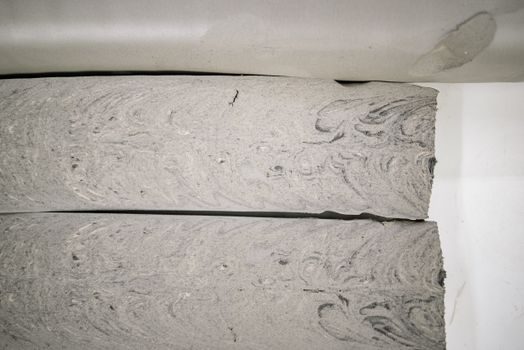
For a 4 mm SBS-PYPE polyester-reinforced sheet, the typical procurement data sheet calls out tensile strength (longitudinal and transverse, N/50 mm), elongation at break (%), low-temperature flexibility (°C, usually −20 °C or −25 °C for cold-region grades), heat resistance (°C, often 90 °C or higher), and tear strength (N). The modified bitumen membrane encyclopedia page collects the canonical EN 13707 / EN 13969 / ASTM D6162-D6164 family of test methods that govern these values; buyers should always quote the test standard alongside the numeric threshold in the RFQ, not the bare number. [S1]
Two further gates frequently missed: dimensional stability (%) and watertightness at a hydrostatic head (kPa or m of water column). Both are tie-breakers on long-run exposed roofs and on below-grade tanking applications. A 3 mm/4 mm/5 mm nominal thickness tolerance of ±0.2 mm is typical and should be pinned as a rejection criterion; do not accept nominal-only thickness language.
Application routing: torch-on, self-adhered, cold-applied, hot-mop
Torch-on remains the dominant application for APP and heavy-duty SBS capsheets in commercial and industrial roofing, with the 1 m wide roll standard across most Chinese and European lines [S5]. Self-adhered (peel-and-stick) SBS sheets with release film are the fastest-growing sub-segment for residential and occupied-building re-roofing because they eliminate the open-flame risk and the asphalt smell — important on hospitals, schools and food plants.
Cold-applied (adhesive or self-adhesive on a primed deck) and hot-mop (mopped oxidized or modified asphalt with felt) are the legacy methods; both still appear on retrofit specs, but new Chinese OEM catalogs are pushing peel-and-stick and cold adhesive as the modern defaults. Below-grade uses (basement tanking, plaza decks, subway tunnels) usually specify a 4 mm SBS sheet with PE film on both faces, dual-layer lapped, with detailing strips at penetrations — a modified bitumen system is still the highest-tonnage below-grade waterproofing chemistry in many emerging markets.
Who MBR is for, and who should pick a different system
MBR is the right answer on low-slope (≤ 1:40) commercial roofs, plaza decks, below-grade foundation walls, parking decks, and tunnel/waterproofing works where redundancy, multi-ply torch detailing and proven 20-30 year service life matter more than single-ply speed. It is the wrong answer on large-span exposed roofs where a single-ply TPO/PVC/EPDM sheet gives faster install and lower labor cost, on architectural steep-slope roofs where visual variety matters, and on projects demanding a no-flame, low-odor interior retrofit. [S2]
For the latter cases — large-box retail, logistics warehouses, LEED-targeted new builds — a 1.2–1.5 mm TPO/PVC mechanically-attached or fully-adhered single-ply system, or a continuous liquid-applied waterproofing coating on a prepared deck, will usually beat MBR on cost per m² installed. Specifiers should run a 10-year lifecycle cost comparison, not just a unit-price comparison, when the call sits between MBR and single-ply.
Sourcing map: Chinese OEM capacity, MOQ and price levers
China is the dominant manufacturing base, with line builders such as CBMA Suzhou Institute (state-owned, founded 1984, ISO 9001) offering 1–20 million m²/year capacity lines and merchant roll suppliers trading 4 mm SBS-PYPE at standard 1 m × 10 m rolls [S2][S5]. Alibaba supplier data shows the top exporters reporting US$50M–US$100M aggregate revenue with 86% domestic market share and 5% Southeast Asia / 3% Eastern Asia split — useful as a sanity check on lead times and shipping lane availability.
HS-code reference for import declarations sits under chapter 3403 lubricating preparations sub-line for certain cutback variants, while the bituminous roofing membrane rolls themselves typically clear customs under 6807 (articles of asphalt or of similar material in rolls) [S4]. Practical levers a buyer can pull in negotiation: roll length (7.5 m vs 10 m vs 15 m), min order qty (full 20'GP container ≈ 1,500–2,000 rolls of 4 mm), packaging (naked pack vs shrink-wrapped pallet), and shipping terms (FOB Qingdao vs CIF).
Specification template and rejection gates
A tight 2026 RFQ should read: “4 mm ±0.2 mm SBS-modified bitumen membrane, polyester fiber reinforcement ≥180 g/m², top face mineral granule (or aluminum foil / PE film as alternates), bottom face PE film, tensile strength ≥800 N/50 mm (long.) and ≥600 N/50 mm (trans.), elongation ≥40%, cold-flex ≤−20 °C, heat resistance ≥90 °C, watertightness ≥60 kPa, roll size 1 m × 10 m, supplied on pallets.” Pinning the test methods (EN 13707 / ASTM D6162 / D6163 / D6164) and the tolerances removes 80% of the room for dispute. [S3]
For projects with a 2-ply redundancy requirement (basements, plaza decks, tunnels), specify a 3 mm SBS base sheet plus a 4 mm SBS mineral-granule capsheet, both with PE-film underside and the top face dictated by exposure. For exposed single-layer torch-on roofs in hot climates, go 4 mm APP with mineral granule, and pair the field sheet with a 3 mm SBS base sheet for redundancy at parapets and details.
Trackable next signals for buyers evaluating the segment in late 2026: (1) the IndustryArc full report refresh for the 2025–2030 forecast window [S1], and (2) the CBMA Suzhou Institute annual capacity update, since line-build capex is the leading indicator of MBR price direction in China and the wider export market.
For component-level specifications, see linear guide.