
Modified bitumen is a factory-made, polymer-reinforced asphalt sheet used as a 2-ply or 3-ply system, and its built-in redundancy makes it the preferred multi-ply waterproofing for prefabricated industrial and modular roofs [S1].
Planning lifespans sit in the 10–30 year range depending on APP vs SBS chemistry, number of plies, climate, and maintenance, against roughly 15–30 years for traditional built-up roofing (BUR) [S2]. Both modifiers are widely specified: SOPREMA's 2026 building envelope portfolio includes SBS-modified bitumen, APP-modified bitumen, PMMA/PMA liquid-applied membranes, synthetic PVC, STPE, and PU systems side by side [S3].
What Modified Bitumen Is and Why Prefab Specs It
Modified bitumen is a hybrid system that combines the waterproofing strength of asphalt with polymer modification for flexibility, durability, and performance, delivered as factory-manufactured reinforced sheets rather than field-assembled plies [S1][S2]. The two dominant polymer modifiers behave very differently under load and climate.
APP (Atactic Polypropylene) is torch-applied and produces a stiff, UV-stable membrane with strong heat resistance, fitting jobs where torch work is acceptable and high-temperature exposure is a concern. SBS (Styrene-Butadiene-Styrene) is cold-applied or heat-applied and gives a flexible, elastic sheet that handles both high and low temperature extremes, making it the typical choice for cold-climate modular builds [S1]. The base sheet is mechanically fastened to the deck and overlaid with one or two cap sheets, so a localised top-layer failure still leaves a secondary waterproofing layer underneath; this redundant, multi-ply geometry is the system's defining structural advantage over single-ply [S1]. For broader context on how this category fits in flat-roof waterproofing, see the modified bitumen membrane encyclopedia entry.
APP vs SBS vs BUR: A Decision Comparison
Specifiers working on prefabricated construction typically weigh four criteria: installation method, climate tolerance, redundancy, and lifecycle cost. The table below lines up the three realistic options for an asphalt-based low-slope roof assembly, using the [S2] BUR vs modified bitumen comparison as the base and the [S1] modifier chemistry detail to differentiate APP from SBS.
APP-modified bitumen: torch-applied, stiff, UV-stable, high heat tolerance, multi-ply redundancy, suits warm-climate and high-temperature modular plants where open-flame work is permitted. SBS-modified bitumen: cold-adhered, self-adhered, hot-asphalt, or heat-applied, elastic, performs across temperature extremes, suits cold-climate and freeze-thaw exposed modular builds. BUR: hot-asphalt, multi-ply with bitumen and reinforcing felts, strong multi-ply redundancy and robust construction, but higher labour and traditionally longer install windows [S1][S2]. Lifespan spans sit at roughly 10–30 years for modified bitumen and 15–30 years for BUR, with actual service life driven by membrane configuration, drainage, UV, traffic, and underlying assembly condition [S2].
Where Prefab Construction Pushes the Spec Toward Modified Bitumen

Industrial plants and manufacturing facilities demand heavier mechanical loading than typical commercial roofs: process fans, cooling towers, large HVAC units, vibrating compressors, plus routine maintenance foot traffic. Modified bitumen's stiff, multi-layer assembly handles localised stress and resists the fatigue cracking that single-ply membranes develop at points of repeated flexion [S1].
Rooftop chemical exposure is another driver. PVC remains the preferred membrane for direct chemical contact, but modified bitumen with a granule-surfaced cap sheet outperforms EPDM in moderate chemical exhaust environments, including kitchen ventilation and industrial process exhaust, because the granules act as a physical sacrificial barrier that slows chemical attack on the asphalt below [S1]. The cap sheet itself, defined as a durable, weather-resistant layer made from modified bitumen or asphalt and installed as the top surface of a multi-ply low-slope roof, is the component doing that work [S5]. For modular plants with complex geometry (multiple levels, numerous penetrations, varying slopes, difficult transitions), torch-applied APP gives installers the flexibility to form custom-fitted waterproofing details that single-ply sheets struggle to match [S1].
Selection Criteria for Modular and Prefab Specifiers
Roof stress profile comes first. A small modular office with limited traffic does not need the same puncture resistance as a manufacturing plant with daily HVAC service; the wrong call here shortens service life and inflates lifecycle cost [S4]. Climate fit is the second filter. In a four-season market, SBS-modified bitumen is the safer pick for cold movement, snow load, and repeated freeze-thaw, while APP remains defensible where heat and UV dominate [S1][S4].
Installation logistics on prefab sites tend to favour systems with multiple application options. Modified bitumen can be torch-applied, cold-adhered, hot-asphalt, or self-adhered depending on the chosen system, giving the general contractor more scheduling flexibility than BUR, which is traditionally hot-asphalt and crew-intensive [S2]. Repairability is the third filter: bituminous systems are easier to patch in place than welded single-ply, which matters once the building is operational and a leak shows up at a penetration. For decision support, the SBS vs APP for high-rise modified bitumen membrane spec piece walks through modifier-level trade-offs in more depth, and the modified bitumen membrane selection for cleanroom sub-floors article shows how the same chemistry behaves under a tighter contamination-control envelope. On-site handling also matters, and the construction tools encyclopedia covers the torch rigs, cold-adhesive rollers, and hot-asphalt kettles that the four installation methods each require.
Limits, Failure Modes, and Where Not to Use It
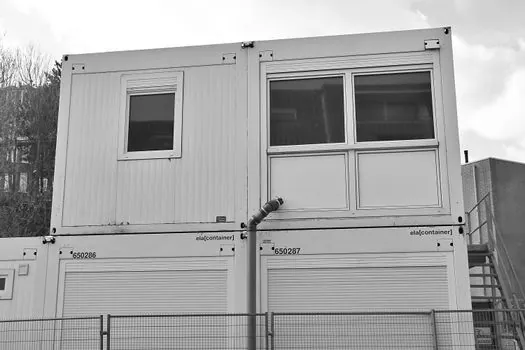
Modified bitumen is not a universal default. Single-ply TPO, PVC, and EPDM dominate new commercial construction because they are cost-effective, fast to install, and carry strong manufacturer warranty programs, and on a clean, low-traffic modular box they remain the rational spec [S1]. Open-flame torch application of APP is also restricted or prohibited on many prefabricated steel and timber decks, which forces the spec toward cold-adhered or self-adhered SBS, or away from modified bitumen entirely.
Common failure modes concentrate at details, not in the field. A flat roof usually fails at transitions, seams, drains, curbs, and flashing details before it fails in the middle of the membrane [S4]. For modified bitumen specifically, the [S1] source flags fatigue cracking on single-ply alternatives at points of repeated flexion, and the [S2] source ties real-world service life to drainage, UV exposure, traffic, and the condition of the underlying assembly rather than to the cap sheet alone. In chemically aggressive settings, PVC stays the preferred membrane for direct contact, with modified bitumen only rated for moderate exhaust [S1]. Energy behaviour is the other trade-off: dark modified bitumen absorbs more heat than white reflective TPO or PVC, which can shift cooling load in hot-climate modular builds unless a reflective coating is added [S2][S4].
Standards, Verification, and 2026 Manufacturer Context
The product category is mature and competitive. SOPREMA's 2026 Experts' Choice Innovative Product Award, presented at the International Roofing Expo for the Mini Macaden installation equipment, recognised a building envelope portfolio that explicitly includes SBS- and APP-modified bitumen alongside PMMA/PMA liquid-applied, synthetic PVC, STPE, and PU systems, confirming that major manufacturers continue to treat modified bitumen as a current, not legacy, technology [S3]. The same product line covers roofing, protected membranes, foundation waterproofing, walls, balcony and pedestrian surfaces, parking decks, civil engineering, and indoor applications, so the same SBS chemistry can follow a modular building from roof to foundation.
Specifier verification should always come back to the data sheet: confirm modifier type (APP or SBS), reinforcement (polyester, fibreglass, or composite), thickness per ply and total system thickness, installation method, and the manufacturer's published warranty terms against the planned service environment. Cap sheet selection is the visible wear layer, and its composition drives both UV resistance and traffic performance [S5]. For broader waterproofing context beyond the cap sheet, the waterproof membrane encyclopedia entry maps where modified bitumen sits against liquid-applied, single-ply, and built-up alternatives, and the industrial coating selection for construction 2026 spec map covers the protective coatings that are often specified alongside the membrane at penetrations and terminations.
Trackable next signals: the next IRE product award cycle for any new SBS or APP system, and any manufacturer update that adds a self-adhered SBS variant rated for cold-climate modular decks without torch work.