Modular remote I/O and IP67 block I/O solve the same wiring problem from opposite ends of the cabinet: a modular rack mounts in the IP20 panel next to the PLC and aggregates many channels, while a block-I/O device mounts on the machine in an IP67 housing and lands sensors through sealed M12 connectors [S1][S2].
The right choice is driven by three numbers: the channel count per node, the cabinet-to-machine distance, and the washdown or particulate rating of the cell. Banner's DXMR line, for example, exposes 8 female M12 IO-Link master ports, dual D-code M12 multiprotocol Ethernet ports for EtherNet/IP, PROFINET, or Modbus/TCP, and 4 A or 8 A pass-through power on L-code M12 [S3]; that footprint is a useful benchmark for a mid-size IP67 block.
Architecture and Channel Density
Modular remote I/O is a backplane-based assembly: a network adapter (EtherNet/IP, PROFINET, Modbus/TCP) plus snap-in digital, analog, safety, or specialty slices, expandable slice-by-slice inside the cabinet [S1]. Rockwell Automation groups these as Input/Output Modules under hardware, sitting alongside condition monitoring, signal interface, and safety products on a single architecture [S1]. Channel density is the headline figure: a 1719 Ex I/O or POINT I/O slice can carry 8 to 32 points per module, and adapters commonly daisy-chain to cover 256 to 512 points on one Ethernet node.
IP67 block I/O is a sealed brick with a fixed I/O map: the comms adapter, power, and all channels live in one housing rated for direct machine mounting, with M12 A-coded or D-coded connectors for sensors and bus [S2][S3]. Turck's IP67 block with 4 IO-Link Class A and 4 IO-Link Class B ports splits sensor power (Class A) from actuator power (Class B) on the same device [S2], a useful pattern when the block has to drive both 24 V sensors and small valves or stacks of lights without an extra power brick.
For an in-depth primer on how I/O blocks feed a controller, see the remote I/O module reference page.
Environmental Ratings and Cabinet Boundary
The IP20 vs IP67 split is the line that should drive the first cut. Modular remote I/O is, by design, an IP20 panel product: it lives in a cabinet, on a DIN rail, behind a closed door, and the field wiring is typically a multi-conductor cable or a cordset that exits the cabinet through a gland. Block I/O in the IP67 form factor is rated for direct exposure to coolant, dust, and hose-down, and is intended to be bolted to the machine frame, skid, or robot base [S3][S4].
That rating is not marketing; it changes the wiring rules. Banner's DXMR90 and DXMR110 IP67 controllers carry 4 to 8 female M12 ports and 1 to 2 M12 D-code Ethernet ports, with M12 A-code or L-code power in and out so daisy-chained devices can share up to 8 A without a separate power drop [S3]. A modular rack in the cabinet, by contrast, will normally use terminal-block terminations or pre-wired cable, with field cabling run back to the panel through conduit or cordset.
Signal Mix and Protocol Support
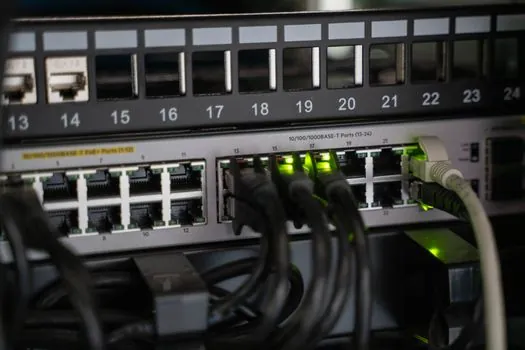
Modular racks are the right place for mixed-signal panels: 4-20 mA analog in, RTD/thermocouple, high-speed counters, serial, and safety can all ride the same backplane without burning a second network drop [S1]. IP67 block I/O is overwhelmingly digital, IO-Link, or simple analog; the housing and connector count limit the variety. Turck's IP67 safety block described in [S2] is a clean example: 4 Class A and 4 Class B IO-Link ports, decentralized safety, and bus comms, all in one field-mountable housing.
Protocol support is converging on multiprotocol Ethernet. Banner's DXMR110-8K explicitly lists EtherNet/IP, Modbus/TCP, and PROFINET on the same two M12 D-code ports [S3], and Turck's multiprotocol Ethernet line covers PROFINET and EtherNet/IP from a single part number [S2]. For older serial systems, Modbus RTU over RS-485 is still common on IP67 IO-Link masters, and most modern blocks expose both serial and Ethernet at the same time [S3].
Use Cases: When Each Form Factor Pays Off
Modular remote I/O pays off in a large central panel where one Ethernet drop has to cover hundreds of mixed I/O: process skids with lots of analog, automotive body-in-white cells with high-density discrete, or any line where the I/O list is still being edited. The PLC Talk practitioner thread makes the same point in plain language: block I/O is a single-piece device that integrates the comms adapter and the I/O in one housing, designed for a "ready-made, hook-up-and-go" installation, often out in the field with conduit entries or IP67 connectors for every connection, while modular I/O is assembled from a network adapter plus add-on slices in the cabinet [S4].
IP67 block I/O pays off on modular machine builders, robotic cells, conveyor sections, and food-and-beverage or pharma lines where the cabinet is on the machine, not in a back room. Mounting the block on the machine frame cuts the average sensor-to-I/O cable from 10-30 m (back to the cabinet) to 1-3 m, and the IP67 rating removes the need for a separate enclosure [S3][S4]. Banner's DXMR190-8K is positioned for exactly this case: 8 IO-Link ports, dual Ethernet, L-code power at 8 A, and a housing that "simplifies installation in any location by eliminating the need for a control cabinet" [S3].
Comparison: Modular Rack vs IP67 Block Across Four Decision Criteria
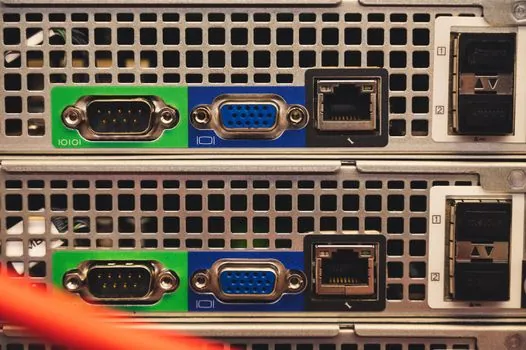
On channel density, a modular rack routinely scales past 64 points on one node by stacking slices on a shared backplane, while an IP67 block typically caps at 8 to 16 M12 ports per device [S1][S3]. On environment, modular is IP20 and cabinet-bound; IP67 block is rated for direct machine mounting, hose-down, and oil exposure [S2][S3]. On field-cable length, a modular rack can sit tens of meters from the sensors over multi-conductor cable, whereas an IP67 block is usually 1-5 m from the sensors and uses M12 cordsets to keep the wiring short and sealed [S3][S4]. On cabinet and panel cost, modular consumes panel space, DIN rail, and a network adapter; IP67 block trades cabinet space for more on-machine M12 drops and a higher per-channel unit cost, but typically shortens install labor on modular or skid-mounted equipment [S1][S3][S4].
Failure Modes, Limits, and Sourcing
The dominant failure mode for an IP20 modular rack is heat and contamination inside the cabinet; if the panel is sealed and the door stays shut, the rack will outlast the sensors. The dominant failure mode for an IP67 block is connector wear and seal degradation: every M12 cycle is a leak path, and coolant ingress at the power port will take out the whole block, not just one channel [S3]. On large modular machines, the practical limit is the network cycle time, not the I/O count: PROFINET and EtherNet/IP both have device-count and update-time ceilings per scanner, and adding remote I/O without checking the cycle-time budget is a common commissioning surprise [S1][S2].
For sourcing, the mainlines are Rockwell Automation (Allen-Bradley 1719, FLEX I/O, POINT I/O) for modular, Turck for fieldbus and IP67 multiprotocol blocks including IO-Link and decentralized safety, and Banner Engineering for IP67 IO-Link masters and wireless I/O [S1][S2][S3]. Standards worth tracking: IEC 61131-9 for the single-drop digital communication interface (IO-Link), and the IP rating definitions in IEC 60529 for the IP20 vs IP67 vs IP69K envelope. The IO-Link port classes (Class A and Class B) cited by Turck are defined in the IO-Link interface standard, not in a generic sensor datasheet [S2].
For a wider lens on how IO-Link compares to legacy analog on signal density and diagnostic depth, this IO-Link coverage comparison on a different sensor family (PID lamps) is a useful read on the diagnostic gap between point-to-point analog and a digital, parameterised bus.
Trackable signals to watch over the next 12 months: IO-Link Wireless product releases from the major IP67 vendors, expansion of safety-over-EtherNet/IP or PROFIsafe onto decentralized IP67 blocks like the Turck example, and PROFINET 2.4 / EtherNet/IP DLR cycle-time improvements that will raise the per-scanner I/O count ceiling and push modular rack density even higher [S2][S3].
For component-level specifications, see o ring, and pallet rack.