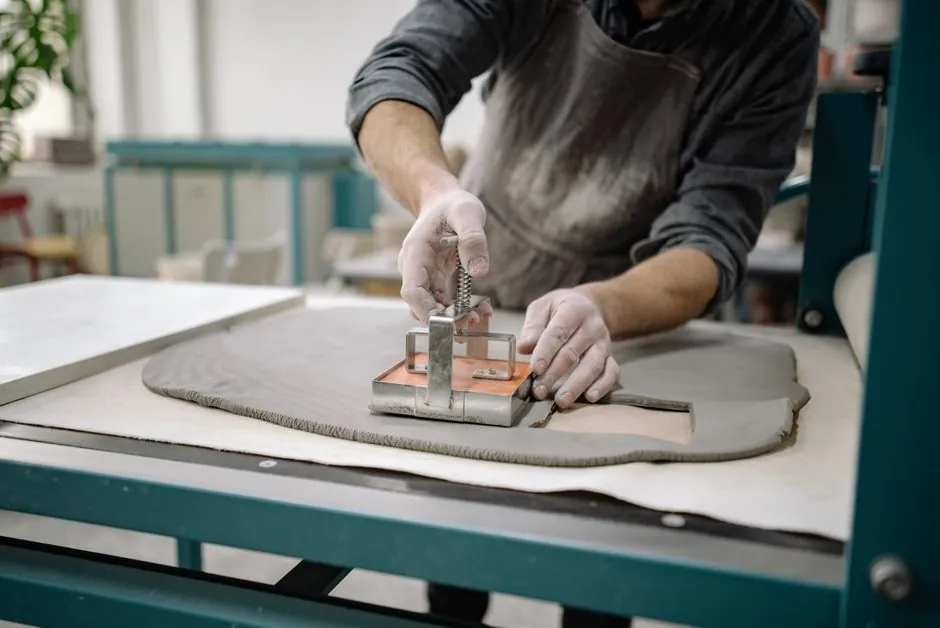
Low-volume injection molding occupies a defined band of 100-10,000 parts, with prototyping drops as small as 10-100 pieces and pilot runs extending to roughly 5,000, where mold cost and lead time still dominate the project budget [S3]. The first decision is not cavity count or gate type, it is the mold base material and the structural frame that will hold inserts through a short, possibly evolving production run [S1].
For prototype runs, three base families compete: machined aluminum (7075-T6 and similar), soft or pre-hardened steel (typically P20, H13, or S7 at 30-36 HRC), and 3D-printed insert systems paired with a conventional steel or aluminum frame [S2][S7]. Each maps to a different life expectancy, surface-finish tier, and unit-cost curve, and each interacts with the casting mold and sand casting mold terminology only loosely, because injection tooling uses hardened cavity inserts seated in a standardized bolster set rather than a one-piece die.
Aluminum vs Soft Steel vs 3D-Printed: Decision Criteria
Aluminum tooling cuts machining time by roughly 30-50% versus pre-hardened P20 and delivers a typical mold life of 5,000-10,000 shots, which is sufficient for pilot runs under 5,000 parts when the resin does not exceed glass-filled or abrasive compounds [S4][S5]. Soft-steel bases (P20 or pre-hardened variants around 30-36 HRC) extend life into the 50,000-100,000 shot range and tolerate glass-filled nylons, PC, and abrasive compounds that would accelerate wear on aluminum [S2]. 3D-printed inserts, usually printed in maraging or stainless tool steel and then mounted in a conventional frame, push the fastest path to first shots, with some shops quoting functional parts in 1-5 business days, but the printed cores are limited in size, draft, and surface polish [S7].
Selection resolves to four criteria: (1) target shot count versus resin abrasiveness, where glass-filled nylon on aluminum will gall within a few thousand cycles; (2) required surface finish, since SPI/PM-F0 (as-machined, showing visible tool marks) is the cheapest and PM-A2 diamond polish is a multi-step process steel handles better than aluminum; (3) dimensional tolerance, where steel holds ±0.025 mm more reliably than aluminum at the same cavity depth; and (4) lead time, where aluminum and 3D-printed paths typically undercut pre-hardened steel by 1-3 weeks [S1][S5]. A practical rule: aluminum for under 5,000 shots in neat resins, soft steel for 5,000-100,000 shots or any glass-filled grade, and 3D-printed inserts only when geometry is complex but volume is under 500 pieces.
Modular Frame Systems and Interchangeable Inserts
Modular mold bases, sometimes called "standard frame" or "MUD" (multi-use die) systems, separate the structural bolster, clamping plate, support plate, and cavity retainer from the part-specific cavity and core inserts [S2][S5]. This lets a buyer reuse the frame across multiple part numbers, swapping only the cavity and core blocks when design changes land, which is the core economic argument for prototype tooling that may pivot before pilot production [S8]. MUD frames typically follow DME or Hasco footprints in the 150-400 mm bolt-window range, with standardized ejector pin patterns, sprue bushings, and locating rings, so off-the-shelf standard parts replace most custom machining [S2].
Standalone (unit) dies skip the modular frame and dedicate a complete mold to one part, which lowers per-cavity machining cost for a single SKU but forfeits the insert-swap advantage if the part evolves [S2]. For prototype runs where the design is roughly frozen, a unit die in aluminum can undercut lead time by 3-7 days versus a modular build, but if a second iteration is likely within the same program, the modular frame pays back the extra week in setup [S8]. For shops without in-house toolrooms, the modular approach also reduces dependence on custom CNC time, because the frame components are catalog items [S5].
Surface Finish, Tolerances, and Part-Cost Trade-offs
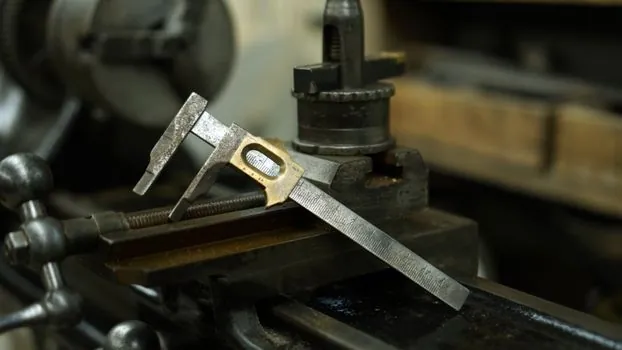
Surface finish on prototype tools is graded against the SPI/PM finish scale, where PM-F0 is as-machined (visible tooling marks, lowest cost), PM-F1 is a fine stone finish, and grades F2-F3 are progressively polished before any diamond buffing [S1]. A non-cosmetic PM-F0 finish is the least expensive option and is appropriate for internal components, functional testing, and under-hood automotive prototyping where appearance is secondary [S1]. Cosmetic parts intended for customer-facing enclosures typically require PM-A2 or finer, which adds 2-4 polishing steps and is generally specified only on steel cavities because aluminum polishes unevenly and holds the finish poorly over repeated cycles [S1].
Tolerance on prototype tooling is commonly held at ±0.05 mm for critical dimensions on aluminum, with ±0.025 mm achievable on steel when the cavity is properly heat-treated and supported [S2]. Draft angles below 1° are possible on steel but risky on aluminum at high shot counts because the softer material galling at the parting line. For tight-tolerance features, pressure transmitter calibration analogies help: just as instrumentation specs include both reference accuracy and thermal drift, prototype mold specs must distinguish first-shot tolerance (acceptable) from end-of-run tolerance (degrades with aluminum wear).
Standards, Certifications, and Supplier Vetting
Low-volume mold shops are typically certified to ISO 9001 as a baseline, with medical programs requiring ISO 13485, aerospace work calling for AS9100D, and automotive production under IATF 16949 [S4]. These certifications do not certify a specific tool but do certify the quality system that built it, so a prototype mold for a medical device should be sourced from an ISO 13485 shop even on a 200-piece pilot run. DFM feedback from the molder, ideally delivered in under 48 hours on a quote, is the single most useful gating signal: shops that provide automated DFM analysis on upload tend to catch wall-thickness and draft issues before steel is cut [S4].
Buyers should confirm the mold-life class in writing (shots guaranteed, not just "expected") and ask whether the same tool can carry into higher-volume production, because re-cutting a new steel mold for the same part at 50,000 shots is the most common cost overrun on prototype programs [S4]. A useful side question is whether the supplier runs an integrated plant or routes to a partner network, since the lead-time and traceability implications differ: integrated shops hold consistent quality systems, while marketplaces widen capacity but vary visibility shop to shop [S4]. For buyers using on-demand platforms, the quoted lead time is the best-case floor, not the median.
Comparison: Aluminum, Soft Steel, and 3D-Printed Insert Bases
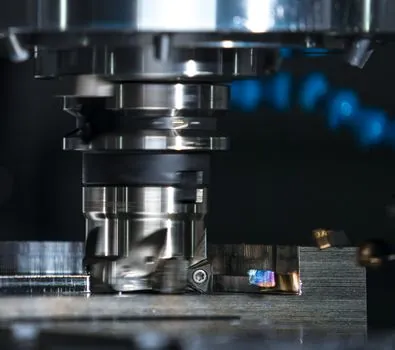
On four decision criteria, the three base families line up as follows: (1) shot life, aluminum 5,000-10,000, soft steel 50,000-100,000, 3D-printed insert under 1,000; (2) lead time, aluminum 2-3 weeks, soft steel 3-5 weeks, 3D-printed 1-5 business days for first samples; (3) cost, aluminum lowest, soft steel 1.5-3x aluminum, 3D-printed variable but competitive for very small runs; (4) cosmetic finish ceiling, aluminum PM-F2, soft steel PM-A2 or finer, 3D-printed PM-F1 with as-printed texture [S1][S2][S5][S7]. This matrix is the working reference for the engineer's first spec call.
For programs that may scale to 10,000+ parts, the cheapest path is often an aluminum prototype mold for the first 1,000-2,000 parts followed by a steel production mold for the remaining 8,000-50,000, rather than one oversized steel tool from the start [S4][S8]. For programs stuck under 500 parts with complex geometry, a 3D-printed insert in a standard frame wins on lead time and cost, but the buyer accepts visible layer lines and a constrained material menu [S7].
Tooling-Path Pitfalls and Failure Modes
Aluminum tooling fails predictably: galling on glass-filled resins, parting-line wear after 3,000-5,000 shots in neat polypropylene, and ejector-pin hole elongation on deep ribs [S2][S5]. The mitigation is a P20 or S7 cavity insert in an otherwise aluminum bolster, which gives steel wear surfaces in the high-stress zones while keeping the frame cheap. Soft-steel tooling fails through cracking at sharp internal corners and through-hardening skip when the heat-treat specification is not enforced, so a written HRC range (commonly 30-36 for P20) is part of the purchase order [S5].
3D-printed inserts fail through layer adhesion under injection pressure, porosity at the gate area, and difficulty in polishing internal features, so they are restricted to low-pressure, low-shot-count applications and are not suitable for glass-filled or abrasive compounds [S7]. Hand-loaded undercuts are a common cost lever on prototype tools, but they raise labor and cycle time, and should be reserved for features that genuinely cannot be drafted [S2]. Cooling channels in aluminum and 3D-printed inserts are typically straight drilled lines, whereas soft-steel bases can carry conformal cooling, which can cut cycle time by 20-30% on parts with thick sections [S5].
For teams that already use AI-driven parameter tuning, AI process parameter optimization for injection molding ties directly into base selection, because a soft-steel base with conformal cooling exposes more optimization levers than an aluminum block, and the optimizer's recommendations only apply within the mold's thermal envelope. Buyers running cyclic or abrasive resins should also budget for cavity re-polishing every 5,000-10,000 shots on aluminum, versus every 30,000-50,000 on pre-hardened steel.
Trackable signals going forward: published shot-life guarantees (aluminum shops moving from 5,000 to 10,000 cycles as 7075-T6 and copper-beryllium alternatives mature), AS9100D and ISO 13485 adoption rates among short-run molders, and 3D-printed insert material menus expanding from maraging steel into higher-hardness tool-steel alloys. A useful next node for engineers is to request a mold-life class letter alongside every prototype quote, so the aluminum-versus-steel decision is anchored to a numeric cycle count rather than a vendor's verbal estimate.