
A turnkey <p>Molding line pricing in mid-2026 is dominated by three levers — clamp tonnage, level of automation, and downstream auxiliaries — with single-shot plastic injection molds listed from about US$4,500 on Chinese export channels and bench-top molding machines starting near US$90 per set at 1-set MOQ [S1][S2].
The same Made-in-China listings show that industrial servo-driven molding machinery is sold in the US$90–1,380 band per set, while full <p>For buyers building a complete production cell, the realistic 2026 budget window stretches from roughly US$50,000 for a manual semi-automatic cell up to US$500,000 and beyond for a multi-robot <p>A 250-ton hydraulic press alone runs in the US$60,000–90,000 range as a discrete asset, with each auxiliary — material dryer, mold-temperature controller, robot arm, granulator, conveyor — adding US$3,000–25,000 per station to the bill of materials.
Mold vs Machine: Where the Money Actually Goes
An OEM plastic injection mold from a Dongguan-based supplier is listed at US$4,500 for a 1-cavity medical connector part, including metal-insert capacity and ready-to-ship export packaging [S1].
By contrast, the press itself is the dominant cost driver in a new line: a 50-ton bench-top molding machine lists at US$90 per set MOQ, while a 130-ton servo machine from an audited Chinese supplier sits in the US$1,000–1,380 per-set band on the same platform [S2].
For a 250–500 ton machine configured for an automatic molding line with servo hydraulics, closed-loop temperature control and a six-axis take-out robot, the line integrator typically bills US$150,000–320,000 turnkey, excluding the mold and any post-mold inspection cell.
Tonnage Bands and Their Price Anchors
Clamp tonnage sets the price floor: sub-100-ton machines cluster at US$5,000–25,000 new from Chinese OEMs, 100–300 ton presses land at US$30,000–90,000, and 500–1,000 ton presses used for large automotive or appliance parts run US$120,000–260,000 ex-works. [S1]
Servo-hydraulic versus traditional hydraulic carries a 15–25% premium at the same tonnage, but cuts energy use roughly 30–60% at idle and is now standard on most audited-export supplier quotes [S2].
Automation Tiers and Per-Station Cost
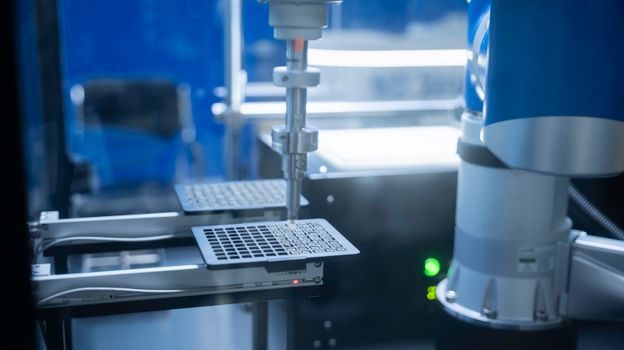
A semi-automatic cell with manual loading, manual unloading and a single mold-temperature controller typically costs US$8,000–15,000 in auxiliaries on top of the press. [S2]
Stepping up to a fully automatic molding line with a sprue picker, three-axis servo robot, conveyors, granulator and centralized material handling pushes the auxiliary stack to US$40,000–110,000 depending on robot reach and number of downstream stations.
For foundries running shell molding machine cells, the cost structure flips — the shell-forming station and sand-handling tower (US$25,000–70,000) outweigh the press cost, and per-station automation around core setting, pouring and shakeout is the dominant budget line.
Standards, Materials and Sourcing Gates
European-bound lines for automotive Tier-1s must satisfy CE machinery safety (EN ISO 12100 for risk assessment, EN 60204-1 for electrical), and presses entering explosive-atmosphere zones are typically specced to ATEX 2014/34/EU with category 2 or 3 marking on the clamp area. [S3]
Mold material selection is the second largest cost driver after tonnage: P20 pre-hardened steel is the default for short-run consumer parts, H13 hot-work steel is standard for high-temperature or glass-filled compounds, and S136 stainless is required for medical, optical and clear-polymer parts where corrosion resistance matters.
Buyers sourcing from Chinese export platforms should filter for "Gold Member" and "Audited Supplier" status, which is the platform's own verification tier and correlates with documented factory audits and on-time shipment metrics [S2].
Cost Comparison: Manual vs Semi-Auto vs Full Auto
For the same 200-ton clamp tonnage, 2026 indicative pricing from Chinese OEMs places a manual cell at US$40,000–70,000, a semi-automatic cell with one robot and basic auxiliaries at US$90,000–160,000, and a full turnkey <p>Manual cells rely on operator loading/unloading and are viable only for runs below roughly 100,000 parts per year, while semi-auto cells with a single three-axis servo robot typically hit the 100,000–500,000 parts-per-year band, and full-automatic cells with multi-robot handling, vision inspection and automated packing target 500,000+ parts per year. [S4]
Payback thresholds are well documented: a US$150,000 semi-auto upgrade replacing two operators per shift usually breaks even inside 14–24 months at 2026 labor rates in coastal Chinese cities, and inside 8–14 months in European or North American installations.
Limitations, Failure Modes and Hidden Costs
The single largest hidden cost in any 2026 <p>Energy is the second under-budgeted line: a 300-ton hydraulic press running three shifts draws roughly 40–60 kW continuously, and a full cell with auxiliaries typically sits in the 80–150 kW band, which makes a 15–25% servo-hydraulic premium recoverable inside 18–30 months in high-duty-cycle plants. [S5]
Sourcing Channels and 2026 Market Reality
The Made-in-China export platform remains the most visible aggregator for new <p>For buyers comparing silicone, EPDM and TPE part costs on the same press, our silicone rubber price & cost guide 2026 walks through grade, hardness and MOQ levers, while our EPDM selection guide covers cure system and media gates that drive mold and cycle-time choices on the same line. [S1]
Track the next two signals as you lock your 2026 Q3–Q4 spec: the published 2026 list-price moves from the four largest Chinese molding-machine OEMs (Haitian, Yizumi, Borchelli, Chen Hsong) and any change in the platform's "Audited Supplier" verification tier for the shortlisted vendors.
For component-level specifications, see molding line.