
A molding line is an integrated process cell that takes raw material — thermoplastic pellets, molten chocolate, foundry sand, or a parison — and converts it into a demolded part via clamping, forming, cooling, and ejection stations working in a fixed sequence. Industrial molding lines split into four process families — injection molding line, blow molding, static-pressure molding machine-based foundry systems, and casting/depositor confectionery systems — each with its own classification grammar and tolerance profile [S2][S6].
Specifiers should classify the line first by process family, then by class/grade within that family. The Society of the Plastics Industry (SPI) mold classification 101–105 governs injection-mold build quality; blow molding splits into Extrusion (EBM), Injection (IBM), and Stretch (SBM); foundry molding splits by sand-binding chemistry; and confectionery lines are graded by throughput in kg/h and mold footprint [S3][S4][S6]. Picking by family first prevents the common error of quoting a 101-class tolerance on a 105-class prototype tool.
Injection Molding Lines: SPI 101–105 Build Classes
SPI mold classifications 101 through 105 are the de facto quotation grammar for injection tools up to roughly 400 tons clamp force, defining expected mold life, surface finish, steel grade, and unit cost [S2][S3]. Class 101 specifies hardened tool steel (typically H-13, S-7, or 420SS at 48–58 R/C), a guaranteed mold life of one million cycles or more, and is built for abrasive or glass-filled resins in 24/7 production [S5].
Class 102 drops the steel spec to P-20 inserts (30–32 R/C) and targets around 500,000 to one million cycles for general-purpose thermoplastics — the default build for most contract molders [S2]. Class 103 is built for shorter runs of 100,000 to 500,000 cycles, often using aluminum or pre-hardened inserts, and trades mold life for lower lead time. Class 104 covers limited-production tools of under 100,000 cycles, typically with softer components and simplified cooling. Class 105 is the prototype / bridge-tool class, usually aluminum or soft steel, under 500 cycles, used for design validation and short market tests [S3][S5].
Steel selection follows a 10 R/C point hardness-difference rule between wearing details to prevent galling, and surface finish follows the SPI mold finish guide (SPI #1 diamond polish through #12 matte stone) [S2]. A standard build typically uses A-series DME mold bases in #2 steel (28–30 R/C), tunnel or edge gates, and Jiffy-Plug water connectors — deviations from this spec push the tool out of its class bracket [S2].
Blow Molding Lines: EBM, IBM, and SBM Process Split
Blow molding splits into three process variants, each driving a different line layout. Extrusion Blow Molding (EBM) extrudes a hollow parison between two mold halves and inflates it with compressed air; Continuous EBM keeps extrusion running during part ejection, while Intermittent EBM batches the parison — Continuous EBM favors high-volume bottles, Intermittent EBM favors larger industrial containers [S6].
Injection Blow Molding (IBM) injection-molds a preform on a steel core, transfers it to a blow station, then to an ejection station — a three-station layout giving the tightest neck tolerances of the three. Stretch Blow Molding (SBM) reheats an injection-molded preform and stretches it axially and radially with a stretch rod before blowing, and is the standard process for PET carbonated-beverage and water bottles because biaxial orientation raises tensile strength and barrier performance [S6]. Across all three, a conveyor sorting line is typically coupled downstream to route reject parts from finished goods, and the choice between EBM, IBM, and SBM is driven by material (HDPE vs PET vs PP), neck tolerance, and annual volume rather than by machine footprint.
Foundry Molding Lines: Shell, Static-Pressure, and Green-Sand
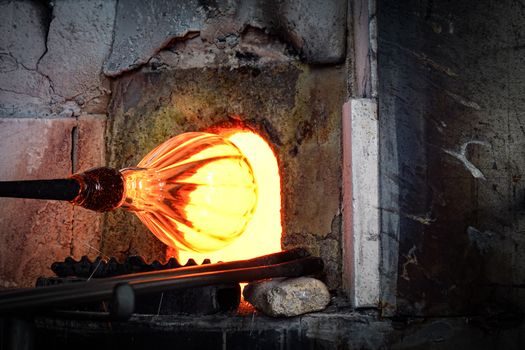
Foundry molding lines are classified by sand-binding method, not by SPI classes. Shell molding uses a thermoset resin-coated sand cured against a heated pattern (typically 250–320 °C) to produce a thin, high-dimensionally-accurate shell — a shell molding machine cell typically achieves ±0.2–0.5 mm dimensional tolerance and is the choice for small-to-medium steel and iron castings where surface finish and repeatability matter [S2].
Static-pressure molding (also called flaskless or vertical-flask squeeze) compacts resin-bonded sand by air or hydraulic pressure in a sealed chamber without a traditional flask, giving uniform hardness across the mold cross-section and supporting an automatic molding line layout with no flask handling. Green-sand molding — clay-and-water-bonded sand compacted by jolt-squeeze or high-pressure squeeze — remains the highest-volume process globally and is the lowest-cost route for cast-iron engine blocks, gear housings, and similar rough-tolerance parts. Selection is driven by casting tolerance requirement (shell ±0.2–0.5 mm vs green-sand ±0.5–1.5 mm), alloy pouring temperature, and annual tonnage.
Confectionery and Casting Lines: Throughput-Graded Systems
Confectionery molding lines are not classified by SPI; they are graded by throughput (kg/h), mold size (mm), and degree of automation. A bench-scale mini chocolate molding line such as the MML100 runs 50–100 kg/h with 175 × 275 mm molds and an elevator cooling tunnel, while a mid-range semi-automatic machine such as the NGOSD16SV-ML runs 200–500 kg/h with a one-shot servo depositor on the same mold footprint [S4].
At the top end, a chocolate molding line such as the SML500 uses 205 × 600 mm molds and is fully automated through demolding, while dedicated roller depositors (e.g. RD600) form chocolate lentil centers between cooled drums at roughly 200 kg/h for filled-pellet products [S4]. Decrystallization tube CHE500 is a typical auxiliary that reheats the tempered chocolate return stream before tank re-entry, controlling the crystallization curve that drives snap and gloss on the finished bar. Selection between mini, semi-automatic, and full-scale lines is driven by SKU count (smaller molds = faster changeover), annual tonnage, and whether one-shot or depositor forming is required.
Selection Criteria and Failure Modes
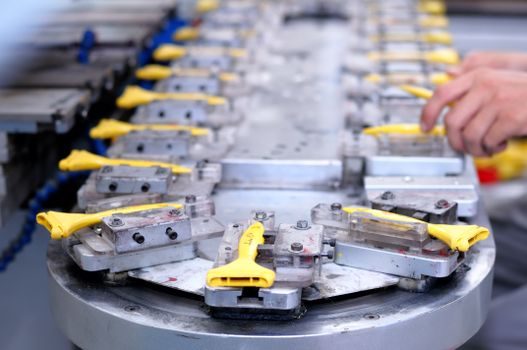
Line selection should be driven by five decision criteria: material (thermoplastic vs thermoset vs metal vs food), annual volume (cycles per year), tolerance band, surface-finish class, and capex breakeven against part price. A SPI 101 injection tool is the right answer when abrasive glass-filled resin, >1 M cycle life, and tight cosmetic finish converge; a SPI 105 prototype tool is the wrong answer for the same job despite a 60–80% lower tooling cost, because the tool will fail before breakeven [S2][S3].
Common failure modes include galling on like-steel wearing details when the 10 R/C hardness-difference rule is ignored, vent fouling on glass-filled resin when machine-cut vents are replaced with hand-ground vents, and parting-line flash when parting lines are swedged down with fit-press tonnage instead of being ground or blue-fitted [S2]. For blow lines, the typical failure is parison sag on long tools in Continuous EBM, which forces a switch to Intermittent EBM or to IBM. For foundry lines, the dominant failure is sand-mold deformation during pouring, which is mitigated by moving from green-sand to shell or static-pressure compaction when dimensional consistency is required [S2].
Sourcing, Standards, and Audit Trail
Three standards bodies govern molding-line specification in practice: the SPI Moldmakers Division (now part of the Plastics Industry Association) for injection mold classes 101–105 and finish grades; the SPI Blow Molding Division for EBM/IBM/SBM process definitions; and the VDI 3400 surface-finish standard for European mold-texture reference, often cross-referenced against the SPI finish guide [S2][S3]. A quotation should always reference the SPI class number, the cavity-steel grade with R/C hardness, the expected cycle count, and the surface-finish grade (SPI #1 through #12 or VDI 3400 reference number) to keep the buyer and the toolmaker on the same page [S2][S3].
Comparable product-level standards include ASTM A681 for H-13 tool-steel chemical composition and ISO 6753-1 for injection-mold base plate dimensions, both of which the buyer can call out in the RFQ. For procurement teams, the practical next steps are: confirm the SPI class and surface-finish grade in the RFQ template, lock the steel-grade list (P-20, H-13, S-7, 420SS) with hardness callouts, and require a SPI mold data sheet with every quote [S2]. Related reference maps — including the NBR grades and selection boundaries for elastomer tooling and the wrapping machine class spec map for downstream packaging integration — follow the same class-driven sourcing logic and can be pulled into the same procurement spec.