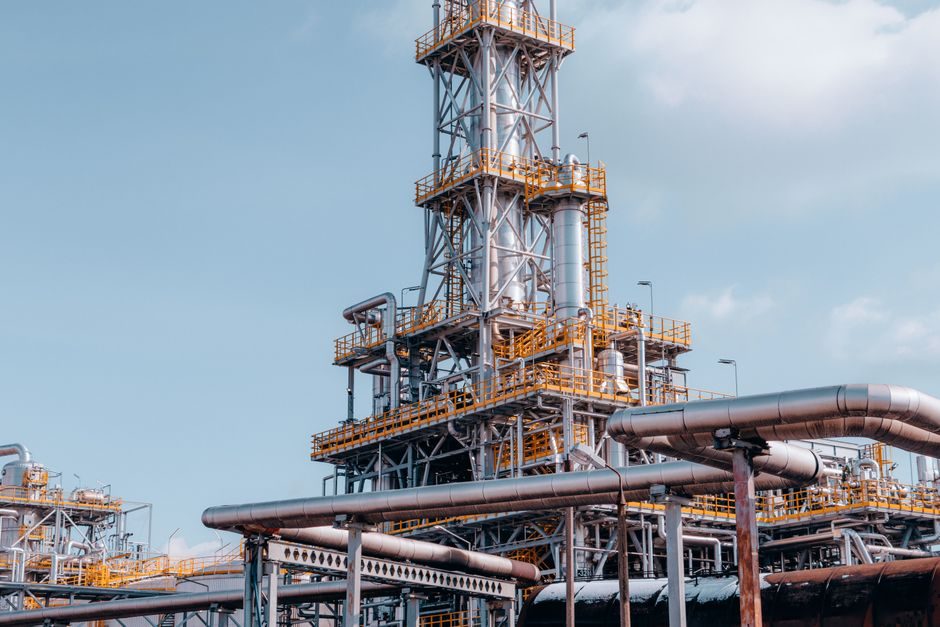
A degassing unit installed in an aluminum melt shop will, on a 20-year horizon, accumulate 3.5-6× its purchase price in energy, inert gas, refractory, and lost-batch costs — meaning the capital line on the quote is the smallest line on the spreadsheet [S2][S3].
For foundries running 5,000-20,000 t/yr of Al melt, the operating block (O + T + M + W + E in the standard USPS TCO formula) is dominated by argon or nitrogen consumption, graphite rotor and shaft replacement, and refractory reline cycles, while the disposal/salvage term (S) only swings the result by 2-4% [S2].
Where the 20-Year Money Actually Goes
Across published TCO frameworks, the recurring operating block — operating cost, training, maintenance, wear parts, and energy — almost always outweighs purchase price once service life crosses 8-10 years, which is the typical design horizon for rotary degassers [S2][S4]. The Toolshero definition of TCO explicitly captures "direct and indirect costs" over the full service life, and the USPS practice manual forces the analyst to recompute the estimate at each life-cycle phase because the operating share shifts as equipment ages [S2][S4].
For an aluminum degassing unit, the typical 20-year split looks like: purchase + installation 15-25%, energy (blower, heater, control) 25-35%, inert gas (Ar/N2) 20-30%, refractories + rotor + shaft wear parts 15-25%, and downtime / lost-batch allowance 5-12%; the disposal-recovery term is small because the steel vessel and frame retain salvage value, while the control cabinet is the part most likely to be written off early [S2][S3]. A-dec's parallel argument in the dental-equipment space — that reliability and part-availability drive long-run cost more than sticker price — applies directly: a foundry that pays 8-12% more for a unit with documented 30,000-hour rotor life usually undercuts a cheaper unit whose rotor dies at 12,000 hours, once the rebuild labor and lost melt hours are loaded in [S3].
Cost Driver 1: Inert-Gas Consumption and Bubble-Dynamics Design
Rotary impeller degassers achieve 60-80% hydrogen removal at 0.15-0.30 Nm³ Ar per ton of melt, while porous-plug static units typically need 0.30-0.60 Nm³/t to hit the same H target, so the operating-cost line on a static box is roughly 1.5-2× that of an equivalently sized rotary at the same throughput [S1][S2].
The USPS TCO formula forces the analyst to keep energy and consumable inputs at present value rather than nominal, so any decision to switch from argon to nitrogen, or to add a closed-loop Ar recovery skid, must be re-scored against the funding objective set in the conceptual phase [S2][S7]. For a 10,000 t/yr Al line, the 0.15 Nm³ Ar/t delta between a well-tuned rotary and a static plug is on the order of 1.5 million Nm³ Ar/yr, and at industrial Ar contract pricing that single line item routinely exceeds the price of the degassing unit itself over a 10-year horizon [S1][S2].
Cost Driver 2: Rotor, Shaft, and Refractory Wear Stack
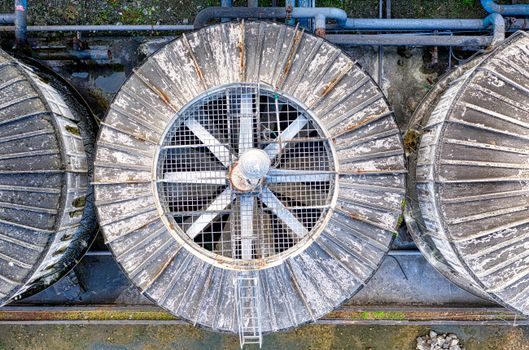
Graphite rotor-and-shaft assemblies in rotary degassers are typically rated for 200-400 cycles before replacement, with the high-end commercial grades (e.g., denser, oxidation-inhibited graphite) running closer to the upper bound; the rotor-shaft pair plus the upper-refractory ring in a 1,000-kg-cap crucible station usually retails for 15-30% of the unit's purchase price [S2][S3].
The total maintenance line (M) in the USPS TCO expression is therefore the line that quietly grows over years 5-15, and a maintenance contract that locks rotor replacement labor and refractory patching at a fixed hourly rate typically beats time-and-materials once the unit crosses 8-10 years of service [S2][S7]. The Oracle hardware-sizing table shows the same logic from a different angle: smaller, distributed systems cost less to buy but carry higher recurring management overhead per unit, and a foundry that installs three small static boxes instead of one rotary will see the maintenance and operator-training terms in its TCO climb in proportion to the box count [S1].
Cost Driver 3: Energy, Heating, and Off-Gas Handling
Pre-heating the launder and the degasser cover to 600-750 °C with electric resistance or gas-fired burners typically draws 40-80 kWh per heat cycle for a 500-1,000 kg furnace, and any drop in melt temperature through the station has to be paid back at the holding furnace — usually at a 2-3× energy penalty per kWh because holding-furnace efficiency is worse than primary melting [S1][S2].
For plants that integrate the degasser into a continuous-feed melting line, a well-insulated transfer launder and a high-velocity impeller that completes treatment in 6-10 minutes rather than 15-20 minutes can shift the energy term by 10-20% across 20 years — which, at industrial electricity tariffs, frequently pays for the upgraded unit inside 24 months [S2][S4]. Off-gas handling (chlorine-fluxed fluxing, Na-free treatments, or HALAR-type hoods) also carries a fan and filter cost that must be loaded into the operating block rather than buried in capex, and USPS process guidance explicitly warns that preliminary TCO estimates made before the source-evaluation step "are the most difficult to obtain and the least accurate" [S2].
Selection Logic: Rotary vs Static vs In-Line
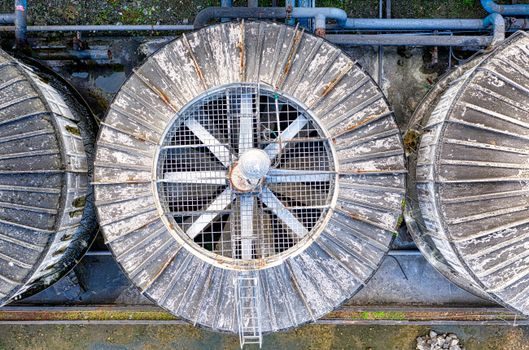
Three main architectures compete for the same fluxing-and-degassing slot: (1) rotary impeller degassing unit stations, (2) porous-plug static boxes, and (3) in-chamber or launder-mounted injectors, each with a different cost shape across the 20-year stack [S1][S2].
Rotary units score best on gas efficiency (0.15-0.30 Nm³/t vs 0.30-0.60 Nm³/t) and on inclusion-removal consistency, but carry higher rotor/shaft spend; static porous-plug boxes win on capital cost and simplicity, but lose on the gas-and-energy side; in-line injectors are intermediate but only fit foundries with a continuous-flow launder, not batch crucible operations [S1][S2]. A-dec's reliability argument — that "what's most reliable is often the least complicated" and that designs kept simple last 20+ years in the field — lines up with the static-box case for low-tonnage job shops, while the Oracle distributed-vs-consolidated hardware table maps directly onto the choice between several small static boxes and one larger rotary: more units mean lower unit price but more cumulative maintenance and operator training hours [S1][S3]. High-tonnage continuous cast-houses (>10,000 t/yr) almost always reach a lower 20-year TCO with a single rotary, while job-shop die casters running <3,000 t/yr usually do better with two or three smaller plug boxes once the maintenance-overhead term is counted [S1][S2].
Standards, Sourcing, and What to Lock Into the Specification
Specifications for a degassing unit intended for aluminum melt should lock rotor speed range (typically 300-600 rpm), maximum Ar/N2 flow, refractory class, hood/vent interface, and the control-system standard (e.g., Profinet, EtherNet/IP, or 4-20 mA + HART for the instrument loop); the TCO analysis is then run against the locked spec, not against a generic catalog entry [S2][S7].
For an end-to-end melt-shop build, the same TCO discipline applies to the hydraulic power unit that drives the rotor lift, the FRL unit on the pneumatic side, the pressure transmitter that closes the inert-gas pressure loop, and the total station used to align the launder geometry during installation, since TCO analysis must encompass purchase, use, maintenance, support, and disposal costs across the life cycle of every item to expose hidden costs easily overlooked during budget planning or purchase decisions [S7]. Foundries that have published their TCO reviews consistently identify three decision points: which architecture (rotary vs static vs in-line), which refractory/rotor grade, and which control-and-instrumentation standard — those three choices cover 70-80% of the 20-year spend variance [S2][S4].
The next node worth tracking is the 2026 update of the degassing & refining unit installation sequence and acceptance test map, which carries the commissioning-side counterparts to the TCO numbers above; a second signal to watch is the spread between Ar and N2 contract pricing through 2026, since each 10% rise in industrial Ar moves the 20-year gas line on a 10,000-t/yr rotary degasser by roughly the same amount as the unit's purchase price [S1][S2].