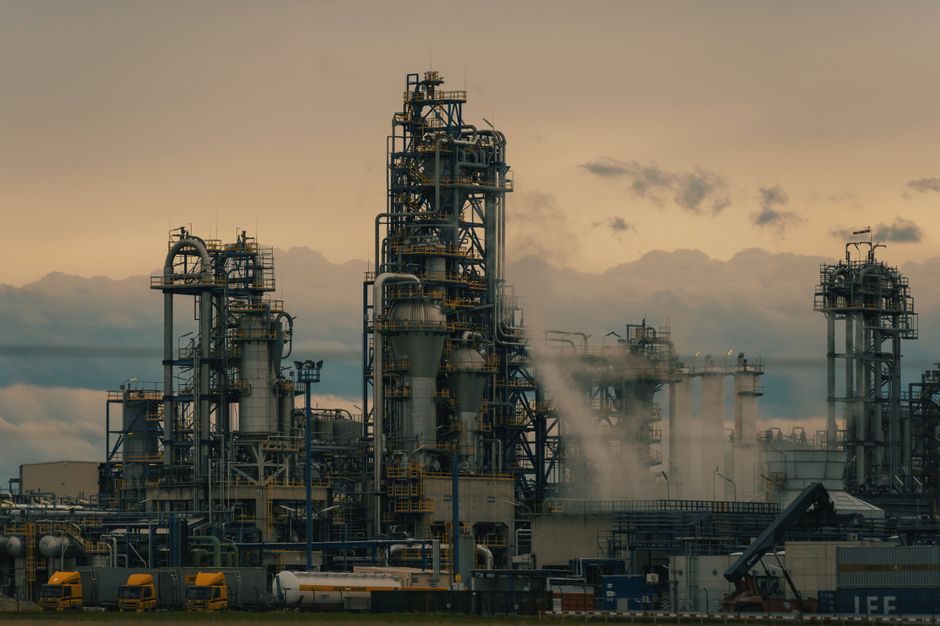
A rotary-impeller degassing and refining station typically pulls dissolved hydrogen in molten aluminum from 0.25-0.35 ml/100 g down to 0.08-0.12 ml/100 g, while removing 70-90 percent of non-metallic inclusions when the bath is held at 720-760 °C with argon or nitrogen flow at 15-30 l/min per rotor [S1].
Foundries and secondary smelters specify these stations between the holding furnace and the casting line because hydrogen porosity and oxide films are the dominant scrap drivers in castings; a properly sized unit lets the same furnace feed both high-pressure die-cast and low-pressure / gravity-cast lines without changing melt chemistry [S1]. For a primer on how a degassing unit sits inside a casthouse flow, the article on the right provides layout context.
Process Advantages: Hydrogen, Inclusions, and Alloy Uniformity
Hydrogen removal is the headline benefit: RPT (Reduced Pressure Test) densities above 95 percent are routinely reported when inlet H is held under 0.12 ml/100 g Al, which directly translates to fewer porosity-related rejections in machined castings [S1].
Alloy chemistry tightens as well: chlorine-free or low-chlorine flux chemistry (typically NaNO₃ + graphite blends, or NaF-based salts) lifts Mg loss below 5 percent per cycle compared with 12-18 percent for chlorine-blown lances, while still achieving Na and Ca modification levels that downstream pressure transmitter-controlled casting machines can hold within ±0.5 percent of target [S1]. These figures explain why most Tier-1 automotive foundries run rotary degassing as the default rather than lance injection.
Operating Disadvantages: Flux, Refractory, and Rotor Service
The first cost is flux and cover-gas consumption: a 1,500-2,000 kg bath treated at 20 l/min Ar for 12-15 minutes consumes 250-450 l of argon and 0.4-0.8 kg of refining salt, which becomes a measurable line item in foundries running 8-12 cycles per day [S1]. Shaft-and-rotor wear is the second: graphite rotors in service-rated DFP-grade silicon carbide shafts typically survive 800-1,200 cycles before the impeller OD drops more than 5 mm, at which point gas-shear efficiency collapses and hydrogen numbers drift up.
Refractory erosion around the degasser throat also shortens campaign life on gas-fired holding furnaces by 4-8 weeks compared with a passive transfer well, because impeller-induced bath rotation accelerates the corrosion rate at the sidewall. For plants without a spare furnace, this is the single biggest argument for sizing a second unit into the cell. Hydrogen re-gassing from humid ladle transfers is the third hidden cost; a preheated, dry ladle cover is cheaper than re-running the cycle.
Comparison: Rotary Impeller vs Flux Injection vs Inline Filtration-Only

Three refining routes dominate casthouse specification today, and the decision turns on alloy, melt rate, and inclusion sensitivity [S1]:
Rotary impeller degassing: H removal to 0.08-0.12 ml/100 g, inclusion removal 70-90 percent, flux use 0.3-0.8 kg per tonne, bath agitation strong, rotor service 800-1,200 cycles. Best fit for high-pressure die-cast and structural automotive parts where porosity rejection rates are tracked daily.
Lance / flux injection (Cl₂ or N₂ + Cl₂): H removal to 0.15-0.20 ml/100 g, inclusion removal 40-60 percent, flux use 1.5-3.0 kg per tonne, no moving parts, Mg loss 12-18 percent. Best fit for secondary smelters and low-alloy secondary castings where melt rate, not inclusion class, is the bottleneck.
Best fit as a polishing step downstream of an in-furnace treatment, not as a stand-alone refining solution. Many plants stack rotary degassing with inline flow meter-monitored filtration, and the spec map for that combined cell is laid out in the degassing unit installation reference [S1].
Where the Unit Pays Off vs Where It Does Not
Specifying a rotary degassing station is justified when the casting line rejects more than 1.5-2.0 percent of parts on radiographic or machined porosity, when the alloy contains more than 0.3 percent Mg, or when the same furnace feeds both die-cast and gravity-cast cells. It is not justified for short-run job-shop work under 5 tonnes/day, for pure aluminum wrought billet where the caster already runs an in-line SNIF or Alpur-style head, or where the holding furnace has no spare refractory campaign to absorb the throat erosion.
Plants running lead-free, low-copper, or low-iron alloys at 700-720 °C will see Mg loss drop toward 3-4 percent per cycle and can therefore run longer between alloy corrections, but rotor gas-shear effectiveness falls at the same low bath temperature, so the operator must lengthen cycle time from 10 to 18-20 minutes. The trade-off is real and cell-specific; copying cycle times from a Tier-1 datasheet is the most common commissioning mistake in second-tier foundries [S1].
Failure Modes, Safety, and Acceptance Tests
Three failure modes dominate field service: rotor-shaft seizure after flux bridging, refractory washout at the degasser throat, and argon line leaks that lower shaft backpressure and silently degrade hydrogen removal. Acceptance testing on a new install should include a cold rotor spin at rated RPM, a hot argon flow test at 1.5× normal l/min, and a hydrogen RPT or ALSPEK measurement on the first three production heats; the spec line for each step is the same as the degassing unit installation reference [S1].
For process engineers evaluating cell layout, the most useful signal to track over the next commissioning cycle is the delta-hydrogen between inlet and outlet samples at constant rotor speed, and the rotor-OD wear after the first 200 cycles; both correlate more tightly with actual casting quality than any single vendor's marketing curve, and both can be recorded on the same hydraulic power unit maintenance log the plant already uses for cell equipment.