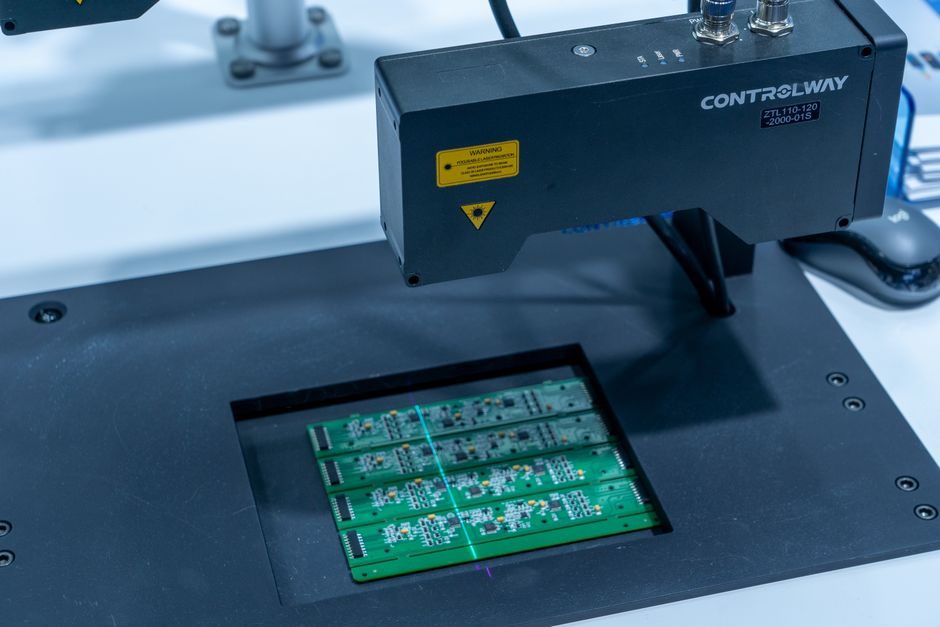
ISO's 2021 White Paper on Smart Manufacturing, published by the ISO Smart Manufacturing Coordinating Committee (SMCC), defines the enablers, enhancers and roadmap that copper-cathode producers are now expected to map their electrolytic refining, ISA-95 lot tracking and downstream rod-mill hand-off against [S1].
Copper cathode — tough, malleable, corrosion-resistant, recyclable, and an excellent conductor of heat and electricity per Rio Tinto's product reference — is the upstream output of electrowinning and electrorefining, and the input to wire rod, billet and strip for wind, EV and grid infrastructure [S2].
What "smart manufacturing" means in a copper-cathode context
The ISO white paper frames smart manufacturing around enablers (sensors, networks, data models) and enhancers (analytics, AI, digital twins) operating across the enterprise hierarchy from Level 0 field devices up to Level 4 ERP [S1]. For an electrorefining tankhouse, that hierarchy maps directly onto cell-voltage and electrolyte-temperature transmitters, short-circuit detection on each plate, lot genealogy back to anode cast numbers, and copper-grade (LME Cu-CATH-1) release events that post to the refinery MES.
Process-engineers reading the white paper's roadmap will see that the SMCC's coordination work specifically targets the interfaces between standards: how an OPC UA model on the cell-house PLC exposes parameters to an ISA-95 batch model in the MES, and how that MES exchanges lot and quality data with the rod mill or wirebar caster downstream [S1]. For copper, the "lot" granularity is normally a cathode pair (a starter sheet plus a plated cathode), tagged with current-efficiency, residual impurity (S, O, Fe) and surface-defect data.
Process stages where automation has the highest payoff
Electrowinning and electrorefining tankhouses typically run current densities of 220–340 A/m², with cell voltages of 1.8–2.4 V and target current efficiencies above 92%; small drift in acid-copper ratio or temperature moves those numbers visibly, so closed-loop control on electrolyte temperature, Fe³⁺/Fe²⁺ ratio and leveling-agent dosing pays back fastest [S2]. Rio Tinto's product reference highlights that one 1 MW wind turbine alone uses a significant mass of copper, so the downstream demand signal (EVs, wind, grid) is what justifies the capex on tighter tankhouse control [S2].
Automation penetration is also visible in the Chinese OEM/ODM cathode-anode supplier base: Made-in-China lists 501–1000-person cathode-anode factories, with ISO 9001 and ISO 9001:2015 certifications recurring across the directory, alongside OEM and ODM R&D capacity flags — proof that mid-tier anode/cathode vendors are already running the kind of process discipline that the ISO smart-manufacturing roadmap expects [S7]. Scrap-copper-rod factories in the same directory cluster in the 201–500-employee band with ISO 9001:2015, ISO 9001 and ISO 45001:2018 certifications, which is the same QA/OH&S baseline a cathode-line MES has to integrate with [S6].
Selection criteria for a cathode-line automation stack
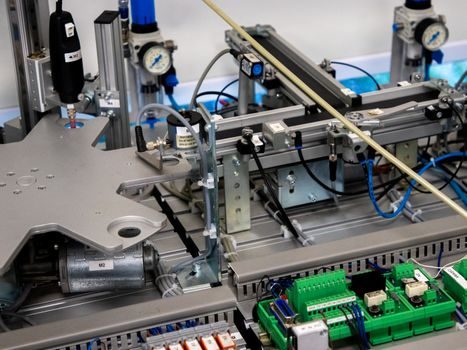
The four decision gates a refinery engineer should score every automation proposal against are: (1) standards fit — does the proposal cover ISA-95 lot tracking, OPC UA at the cell level, and IEC 61508 SIL targets on safety interlocks; (2) brownfield integration — can it consume the existing DCS, often ABB 800xA, Honeywell Experion or Siemens PCS 7, without ripping out cell I/O; (3) data latency — the cell voltage loop needs sub-second, while cathode-pull events and LIMS assays can be minutes; (4) cybersecurity — IEC 62443 zoning because the tankhouse sits between OT and an increasingly connected corporate network [S1].
Vendors that fail gate (2) — that is, vendors pushing a fully proprietary stack — are a poor fit for an existing refinery, because every cellhouse retrofit then becomes a parallel system rather than an upgrade. Conversely, vendors that pass (2) but cannot meet (1) leave the refinery with islands of automation that cannot feed a true smart-manufacturing model. The ISO SMCC roadmap exists precisely to let buyers score proposals against a common language instead of each vendor's own pitch [S1].
Comparison: three automation architectures a cathode producer can pick
Architecture A — DCS-centric: keep the existing DCS as the cellhouse controller, add an advanced process control (APC) layer on top for electrolyte composition and current-density optimisation, and connect to MES via OPC UA. Strength: lowest disruption, fits ISA-95 cleanly. Weakness: depends on the DCS vendor's openness [S1].
Architecture B — MES-centric: move lot tracking, cathode genealogy and LIMS hand-off into a dedicated MES (e.g. AVEVA, Honeywell Forge, Siemens Opcenter) and let the DCS stay in charge of sub-second loops. Strength: best fit to the ISO smart-manufacturing enablers/enhancers split, because the MES is exactly where analytics, AI and digital twins live. Weakness: requires strong data-governance between cell PLC and MES, and IEC 62443 zoning has to be designed in from day one [S1].
Architecture C — Cloud/data-lake-centric: stream every cell voltage, temperature and current-efficiency reading to a cloud platform for AI-driven optimisation, with edge gateways buffering during network drops. Strength: best place to deploy the kind of AI discussed at the Huawei eco-Connect and APAC industrial-automation forums for sustainability-and-AI collaboration [S4][S5]. Weakness: regulatory and cybersecurity exposure on a critical-commodity process, plus the fact that an electrorefining tankhouse is a 24/7 process that cannot tolerate an edge-gateway outage. For most copper refineries, the practical choice is a hybrid of A and B, with C reserved for non-critical analytics.
Where ISO/EN standards actually bite in this stack
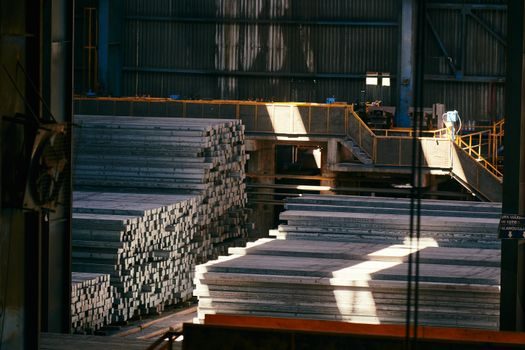
ISO 9001:2015 is the QA baseline you will see on every credible cathode-anode and scrap-copper-rod factory directory entry, and the ISO Smart Manufacturing white paper is explicit that the SMCC roadmap is meant to make it easier for companies to adapt to the smart-manufacturing concept, not to replace existing management-system standards [S1][S6][S7]. The white paper's "enablers" list also lines up with IEC 62443 on industrial cybersecurity and with IEC 61508 / IEC 61511 on functional safety for cellhouse interlock loops, even though the white paper itself is technology-agnostic [S1].
The "critical role in the clean energy transition" framing from Rio Tinto reinforces why the downstream wire-rod and billet mills now expect cathode-mill certificates to be machine-readable rather than PDF attachments [S2].
Limitations, failure modes and what this stack cannot fix
Automation will not compensate for an upstream concentrator feeding the smelter with variable impurity profile; ISA-95 and OPC UA can move the data around, but if the feed-grade drifts, the cellhouse analytics will simply tell you faster that you are out of spec. The IWAMA 2014 proceedings on advanced manufacturing and automation, in their sixth chapter on production, logistics and supply-chain management, make the same point for non-metals industries: integration gains are real, but the underlying process must be in statistical control first [S3].
Two practical failure modes to design against: (i) the "stale lot" problem, where a cathode pulled from cell 412 is still tagged to the previous shift's electrolyte conditions because the MES did not get the cell-voltage log in time — fix with edge buffering at the cell PLC, not by hammering the SCADA; (ii) the "AI recommendation no operator will accept" problem, common in heavy-industry AI rollouts, where the model suggests a current-density change that conflicts with operator training — fix with a recommendation/execution split so the operator stays the decision authority on the loop. The Huawei eco-Connect Europe 2020 forum discussion of "seamless flow of data and insight" is the vendor-side framing of the same point: insight has to land in the operator's workflow, not in a separate dashboard [S4].
For whom this stack is — and is not — a fit
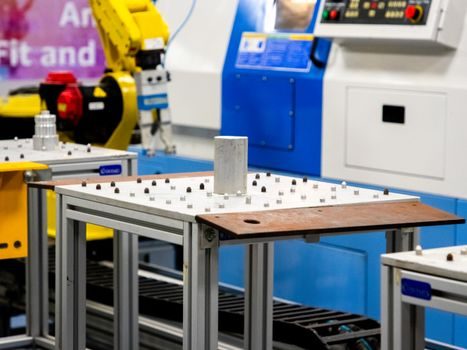
It is a fit for: brownfield copper refineries running 200–1,000 cells on an existing DCS, with an LIMS in place and a casting aisle that needs machine-readable certificates; mid-tier anode/cathode OEM/ODM factories targeting export customers who will audit against ISO 9001:2015 plus an MES evidence trail; and integrated mining-smelter-refinery groups trying to propagate lot genealogy from concentrate to cathode without re-keying [S2][S7].
It is not a fit for: small artisan recyclers running batch furnaces rather than true tankhouses, where the ROI on ISA-95 / OPC UA cannot be justified; pure-trading houses that never touch a cell; and greenfield plants where the temptation is to specify a cloud-first architecture (Architecture C above) without an IEC 62443 zoning plan — those projects tend to stall at the cybersecurity review. For buyers comparing tooling categories, a working reference on copper material properties is a useful companion to this automation discussion, because the same LME-grade and impurity ceilings that drive the spec also drive which analytics the MES has to surface.
Sourcing signals and the OEM/ODM cathode-anode supply base
Two directory-level signals are worth tracking. First, the cathode-anode factory cluster on Made-in-China concentrates in 501–1000-employee ISO 9001:2015-certified vendors with OEM and ODM R&D capacity — the size band that can absorb an MES retrofit and pass an audit, but not so large that they dictate the refinery's stack choice [S7]. Second, the scrap-copper-rod factory cluster sits one tier smaller, mostly 201–500 employees, with ISO 9001:2015 plus ISO 45001:2018 OH&S coverage — a relevant signal for recyclers looking to integrate cathode-grade recovered copper into a smart-manufacturing lot trail [S6].
Trackable next nodes: (1) any new revision of the ISO SMCC roadmap document after the 2021 white paper, since that is what the directory vendors will eventually align their ISO 9001:2015 audit evidence against; (2) LME and ISO/IEC alignment work on machine-readable cathode certificates, because that is the interface at which tankhouse automation has to hand off to the wire-rod and billet mills; (3) IEC 62443 certification announcements from the major DCS vendors, which will define the safe envelope for cloud/data-lake architectures in critical-commodity tankhouses. None of these are predictions — they are observable documents and announcements that will tell you, in concrete terms, whether the smart-manufacturing roadmap has moved from white paper to auditable practice [S1].
For component-level specifications, see additive manufacturing material, and smart camera.
For related coverage, see Steel Pipe Advantages and Disadvantages: Spec Engineer's Working Reference.