
Retrofitting a packaging line with a modern motion controller is one of the highest-ROI capital projects a plant engineer can specify, with retrofit motion control systems modernizing robot electronics while preserving mechanical hardware at 30–50% of full replacement cost [S8].
The audience is packaging OEMs, food and beverage CPG plants, pharmaceutical lines, and contract packers running form/fill/seal, volumetric filling, labeling, cartoning, and case-packing stations, where the dominant fieldbus protocols in the published retrofit literature are EtherCAT, EtherNet/IP, and PROFINET [S1][S2][S8].
Scope and decision frame: when a retrofit beats a rip-and-replace
A motion controller retrofit is justified when the mechanical actuators, gearboxes, and frame are still serviceable but the existing controller platform is obsolete, unsupported, or underperforming on throughput. The Delta Motion integrator white paper frames the engineering problem as designing around equipment the end user has already mandated (a certain brand of PLC, for example) and replacing only the components required to hit the productivity target [S1]. On the integration side, the softMC and Allen-Bradley environments exchange messages directly using EtherNet/IP communication protocols, with Rockwell Automation's PLCs and Studio 5000 software managing and monitoring the cell [S2]. Retro fit scope is therefore bounded by four engineering questions: which servomotors and encoders are physically on the machine today, which PLC/HMI platform must remain the supervisory brain for plant-wide reasons, which fieldbus the existing cabling can support, and which axes need new coordinated motion versus simple on/off sequencing [S1][S8].
Hard selection criteria: protocol, axis count, and software openness
The decision criteria that consistently appear across integrator literature are motor/encoder compatibility, software openness (for example LinuxCNC versus proprietary), supported protocols such as EtherCAT and CANopen, and axis count capacity [S8]. On the protocol axis specifically, EtherCAT and PROFINET are common in European packaging machinery, while EtherNet/IP is the de-facto choice where Allen-Bradley CompactLogix or ControlLogix PLCs are already in the control cabinet [S2][S8]. The Delta Motion retrofit paper requires the selected controller to interface with the existing PLC platform without replacing it, and the softMC packaging paper confirms bidirectional message exchange between softMC and Allen-Bradley over EtherNet/IP for exactly this reason [S1][S2]. Axis count matters because form/fill/seal, volumetric filling, and case-packing cells span a wide range of coordinated axes, and a single controller's published axis ceiling is a hard longlist filter; the Kinetix MPS stainless steel motor family is specified at continuous stall torque 0.95…11.90 N·m (8.40…105.00 lb·in) and peak stall torque 2.27…31.21 N·m (20.00…277.00 lb·in) for meat, poultry, and food-handling packaging cells [S3]. Software openness is the third gate: purpose-built LinuxCNC-compatible interfaces from suppliers such as Pico Systems and Mesa Electronics are common in low-axis CNC and small robotic retrofits, while large packaging cells almost always converge on proprietary or IEC 61131-3 vendor programming environments [S8].
Criteria-based comparison of the main controller architectures
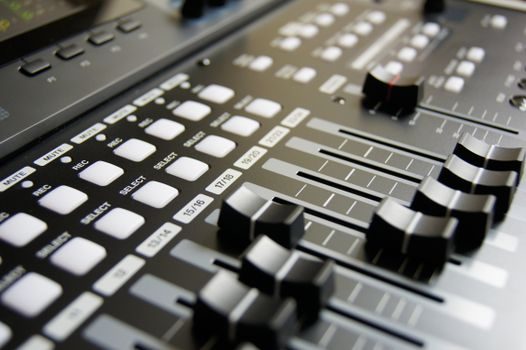
Three motion controller architectures are commonly specified for packaging line retrofits, and they line up against the key criteria as follows. (1) Standalone CNC/motion controller (softMC class) — strong on multi-axis coordination, supports EtherNet/IP and other industrial protocols for PLC exchange, fits the typical 4–20 axis packaging cell, and is favored when the existing PLC stays in place [S2][S8]. (2) PLC-integrated motion module (Allen-Bradley Kinetix class, Siemens SIMOTION, Beckhoff-class) — strong on tight PLC/HMI integration, lower incremental hardware cost, but ties the plant to one vendor's roadmap and is harder to port [S3][S7]. (3) PC-based / LinuxCNC-compatible motion controller (Pico Systems, Mesa Electronics) — strong on software openness and low cost, weaker on industrial fielding for washdown packaging environments, and typically used below four axes or in lab and CNC retrofits [S8]. The right architecture for a given retrofit is therefore a function of axis count, supervisory PLC brand, and the washdown / IP rating of the cell; for meat and poultry applications, Kinetix MPS stainless steel motors are specifically recommended to meet the IP66 requirement with optional shaft seal and the use of Rockwell Automation factory-delivered Kinetix 2090 cable connectors [S3].
Real packaging use cases and the integration hazards that derail them
The dominant packaging applications where motion controller retrofits are running in production are volumetric filling, form/fill/seal, food slicing and filling, raw food handling, meat and poultry handling, life science packaging, and consumer-product cartoning [S3]. The typical retrofit outcome is a higher-throughput cell with reduced mechanical complexity — companies can use the softMC to retrofit an existing packaging machine to quickly enhance capabilities and productivity with components such as robots, adding immediate value [S2]. The single most common failure mode is integration mismatch: updated mechanical drawings, photographs, and real installation videos should be shared with the supplier of the new machine, upstream and downstream conveyors must be verified unmodified since original installation, and PLC control logic (especially for air conveyor systems or puck handling solutions) must be exposed to the supplier [S6]. The Motion Control & Motor Association interview with Colborne Foodbotics captures the engineering point — in the motion control area, success comes from cutting cost by requiring fewer mechanisms, doing things in a more streamlined way, and fixing upstream registration errors before they propagate into the motion system [S9]. A motion controller cannot fix a registration problem that is mechanical upstream of it, and a well-scoped retrofit is explicit about this boundary [S6][S9].
Servo sizing, mechanical-boundary checks, and the upstream and downstream signal chain
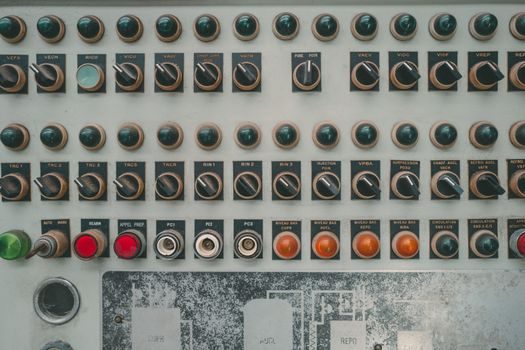
Servomotor selection for a packaging retrofit is not a clean-sheet exercise: the motor must match the existing gearbox ratio, the encoder must match the controller's feedback card, and the mechanical envelope must accept the new motor's frame size. The Kinetix selection guide publishes continuous stall torque of 0.95…11.90 N·m (8.40…105.00 lb·in) and peak stall torque of 2.27…31.21 N·m (20.00…277.00 lb·in) for the food-grade MPS stainless steel family, which is the published reference point for sizing a food-handling retrofit [S3]. For the rest of the signal chain, the modern packaging cell uses a PLC as the supervisory brain, networked via EtherNet/IP or PROFINET to a servo motor drive that executes the motion profile commanded by the motion controller; the motion controller in turn is networked upstream to fillers and dispensers, where flow meters at the volumetric filling station and downstream to industrial valve arrays on pneumatic and CIP skids must be coordinated with the motion profile so that fill-on-the-fly does not drift out of registration, and pressure sensor feedback on the pneumatic side closes the loop on gripper force and seal-bar pressure [S2][S3][S4][S6]. Modern PLCs coordinate multi-axis motion, manage I/O across the cell, and act as the data spine for OEE, which is why the motion controller selection is rarely a standalone decision — it is a decision about how cleanly the new controller will plug into the existing PLC, the existing drive and encoder stack, and the existing pneumatic and process instrumentation [S7].
Limitations, failure modes, and what the controller cannot fix
Three limitations recur in retrofit projects. First, a motion controller is bounded by the existing mechanical axis — it cannot recover repeatability that is being lost in a worn ballscrew or a stretched belt [S6][S9]. Second, the controller selection is constrained by the supervisory PLC mandate: if the plant standardizes on Allen-Bradley CompactLogix, the controller must exchange data over EtherNet/IP to the AOI library the plant already maintains, regardless of which motion controller has the better axis-level performance on paper [S1][S2][S7]. Third, the controller's IP rating and washdown rating must match the cell; for meat and poultry applications, IP66 with optional shaft seal and the use of Rockwell Automation factory-delivered Kinetix 2090 cable connectors is the published reference, and a controller that cannot accept that motor family should be excluded at the longlist stage [S3]. The boundary the motion controller can be expected to fix is the coordinated-motion boundary — cycle time, registration accuracy, electronic cam and gear profile changes, and recipe-driven changeover — but not upstream registration drift and not worn mechanics [S6][S9].
Trackable signals worth watching over the next quarter: (1) PROFINET versus EtherCAT versus EtherNet/IP win rate on new packaging retrofit RFQs, a directional indicator of PLC platform consolidation; (2) the share of retrofits that retain an existing PLC and replace only the motion controller and drives, versus full controller-cabinet replacement — the gap is the retrofit market's structural growth signal; (3) washdown / IP66 servo motor availability from second sources, since the Kinetix MPS family is a published reference but a single-source specification is a procurement risk worth flagging at the longlist stage [S3][S8].