
A motor grader commissioning procedure is a five-stage sequence, not a single checklist, and each stage isolates one of six mechanical systems: moldboard, articulation joint, hydraulics, circle drive, tandem drive, and engine. Industry guidance published in 2026 organises walk-around checks into 36 items across those six systems, with daily inspection mandated before the first operating shift [S1].
Testing, not just inspection, is what catches a worn bushing before it fragments inside the articulation joint, or a fatigued seal before hydraulic pressure drops mid-pass. The 2026 inspection guide specifies NLGI #2 EP grease for articulation pins, a 1/4 inch remaining-edge threshold before cutting-edge replacement, and a fluid-level check at the sight glass with all cylinders retracted [S1]. A complete commissioning flow covers engine warm-up, hydraulic function-by-function response, blade drift test, circle rotation, articulation range, and a loaded cut.
Stage 1: Pre-Start Walk-Around and Static Inspection
Operators must conduct a visual inspection of the engine compartment for leaks, loose connections, and wear before any key turn, because hydraulic or coolant loss during a load cycle can seize the articulation joint and force a tow-off [S3]. The six-system walk-around covers 36 items: moldboard cutting-edge remaining thickness (replace at 1/4 inch of the moldboard face), end-bit cracks, moldboard bolt torque, articulation pin play and bushing wear, hydraulic fluid level at the sight glass with cylinders retracted, all hoses and fittings from pump to cylinder, circle-drive backlash, tandem-chain tension, and tire condition across all six wheels [S1].
Michigan LTAP operator training manual adds a 50/100/250-hour service interval structure to that daily check: greasing is performed daily, hydraulic and engine oil at 250 hours, and a deeper structural inspection at 500 hours [S5]. Greasing the articulation joint daily with NLGI #2 EP grease until fresh grease purges at the seals is the single highest-frequency service task, because insufficient lubrication is the leading cause of premature articulation wear [S1].
Stage 2: Cold Start and Engine Commissioning
Engine commissioning starts with a warm-up to operating temperature, during which the operator listens for unusual noises, watches for abnormal smoke colour, and notes any vibration pattern that could indicate a misfire, bad injector, or cooling-system fault [S3]. Diagnostic tools such as engine analyzers then measure horsepower, torque, and fuel consumption against the manufacturer's published curves, with any deviation outside the tolerance band flagging a need for adjustment before the grader is released to the working face.
The start-up sequence in OEM operator procedures requires testing all controls, brakes, steering, and accelerator before engaging work circuits, with any unusual noise reported and resolved before the machine is moved under load [S4]. This is the safety-critical layer of commissioning: brake pedal travel, steering play, and hydraulic-control neutral position are all verified with the engine at idle before any travel speed is selected.
Stage 3: Hydraulic Function-by-Function Test
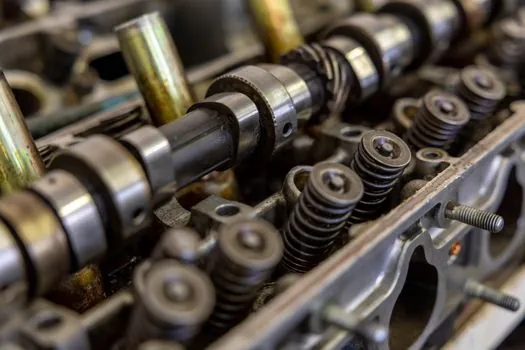
With the engine at operating temperature, each of the grader's six or more hydraulic functions is actuated individually: blade lift left, blade lift right, blade shift, blade tilt, circle rotation, and articulation. The operator observes response speed, smoothness, and any jerky motion that could indicate air ingress, a failing valve, or a worn cylinder seal [S3]. A typical grader runs six primary functions, plus a ripper, snow wing, or front dozer auxiliary, and every auxiliary must be cycled to full extension and full retraction during commissioning.
Operators should watch for blade drift: a blade that creeps down under engine-off, parking-brake-set conditions for more than a brief settling period has a leaking holding valve, and that test is performed with the engine off to isolate hydraulic lock-up from engine vibration [S3]. A leaking tilt cylinder or shift cylinder will show up as drift within seconds, and the grader is not released for production work until drift falls inside the OEM spec.
Stage 4: Loaded Moldboard Cut and Circle Drive Test
The first loaded pass is the real commissioning event, because the moldboard is the only component on the grader that can generate 360-degree side-load force on a moving machine. The blade tip angle is set with the cutting edge at 90 degrees to the road surface so that downward pressure places less stress on the cutting edge and retaining bolts, and edges tend to ride over buried objects instead of striking them [S2].
Travel speed during the loaded test is held to 3 to 5 mph, fast enough for productivity, slow enough to prevent machine bounce that destroys the cut and fatigues the circle-drive teeth [S2]. Circle-drive backlash and material buildup in the circle area are checked after the first pass, because bulldozing material in the circle area, rather than rolling it, increases circle wear and cuts productivity sharply [S2]. Motor grader inspection breakdowns on municipal fleets trace back to circle-drive wear caused by debris accumulation, which a loaded commissioning cut exposes on the first pass.
Stage 5: Articulation Steering and Washboarding Verification

Articulation range is tested with the machine stationary, then in a low-speed figure-eight, to confirm full left and full right frame angle without hydraulic binding. Operators apply a 2 to 5 degree rear-frame articulation toward the toe of the moldboard during washboard removal, a setting that staggers the front tyres so one climbs the corrugation while the other drops into the trough, keeping the front mainframe stable [S2]. Crab mode is not used during scarifying because the offset steering geometry bends scarifier shanks and linkage [S2].
Final commissioning pass targets the pothole and washboard case: potholes are cut to their full depth and regraded with moist material, because loose dry fill reforms in days under traffic [S2]. For comparison across commissioning standards, a 50/100/250-hour interval ladder (Michigan LTAP) is paired against the 36-item daily checklist (2026 maintenance guide), and the deciding factor is the same: daily greasing of the articulation joint with NLGI #2 EP grease and a 1/4 inch cutting-edge replacement threshold [S1][S5]. Construction machinery commissioning documents that skip the loaded cut are the ones that fail within the first 100 hours, because only a loaded pass reveals circle-drive backlash and hydraulic drift under working pressure.
Selection Criteria: What a Valid Commissioning Procedure Must Include
A valid commissioning procedure must produce a signed pass/fail record for each of five elements: engine performance against OEM curves, hydraulic response time for all six functions, blade drift under parked conditions, articulation range at low speed, and a loaded cut at 3 to 5 mph [S2][S3]. Motor graders without a recorded commissioning pass should not be accepted onto a working fleet, and the 2026 inspection guide is explicit that a $2,000 cutting-edge replacement avoided by the daily check prevents a $15,000+ moldboard repair later [S1].
The procedure is not for end-of-shift maintenance, and it is not for major 2000-hour overhauls. It is the day-of-delivery pass that moves a new or rebuilt grader from the yard onto the job, and it pairs naturally with concrete batching plant commissioning and lifespan programs, because both are acceptance events where a missed item multiplies into years of operating loss. Operators should also reference laser distance meter commissioning steps when graders are deployed with machine-control receivers, since the mast calibration feeds back into the same hydraulic response tests run in Stage 3.
Trackable signals to watch over the next reporting period: OEM publication of revised 50/100/250-hour service intervals, integration of circle-drive wear sensors with onboard telematics, and any update to the daily articulation-greasing specification beyond NLGI #2 EP. These three items govern the next decade of motor grader commissioning practice, and each can be verified against an OEM service bulletin within 6 months.
Spec-level background on the components involved: tensile testing machine.