
Raw materials, not labour, dominate the EV traction motor bill of materials: electrical steel, copper windings, and rare-earth NdFeB magnets together account for the single largest share of unit cost in high-volume PMSM production, with analyses indicating the cost structure is heavily weighted toward these raw materials [S1][S2][S8].
For a 100-250 kW permanent magnet synchronous motor (PMSM), the dominant EV traction type, the cost stack is a materials-plus-assembly story: rotor magnets, stator laminations and copper, plus an inverter/power-electronics package, with final assembly and end-of-line testing typically running 30-40% of the total manufacturing cost on a green-field line [S4][S7]. The market itself is large and growing fast, valued at USD 11.3 billion in 2024 and projected to reach USD 17.12 billion in 2025, with a forecast CAGR of 33.88% through 2035 [S4].
Where the Dollars Sit in a Traction Motor BOM
Cost structure of EV traction motors is heavily weighted toward raw materials, specifically electrical steel, copper, and rare-earth magnets, and procurement of those three categories sets the floor on unit price [S8]. A 1995-1999 scalable cost model (still cited in 2024 drivetrain reviews) breaks the motor into rotor, stator, housing, and electronics subassemblies, and treats each as a materials-plus-conversion line item, then layers a markup for OEM gross profit [S2][S7].
For a PMSM, the magnet line item is usually the most volatile. Copper weight scales with torque: a 150 kW continuous PMSM typically embeds 8-12 kg of copper in the hairpin or wave windings, and copper at recent LME-plus-conversion levels can rival magnets as the single largest line item when the design is magnet-light [S1][S3].
Subassemblies and the Stator/Rotor Split
Every traction motor breaks into four basic cost buckets: rotor, stator, body/housing, and inverter/controller; against an internal combustion engine's 200+ moving parts, an EV motor has about 20, which removes large blocks of metal-machining cost but concentrates what remains in the stator pack and rotor magnetisation [S3].
On the stator side, the dominant cost driver is the laminated core stack plus the winding process. Silicon-content electrical steel (typically 0.20-0.35 mm gauge, grade M19-M36 or non-oriented 35W250-50W350) is blanked or laser-cut, then stacked to 80-150 mm in active length; each lamination step is high-throughput, but the winding step, whether round-wire distributed, hairpin, or wave-wound, is where labour and capital tooling concentrate [S1][S3]. Hairpin (rectangular-bar) windings lift copper fill factor substantially versus random round wire, and the trade-off is a multi-station forming, twisting, and laser-welding cell that represents a major capex line for a new EV motor plant [S3][S5].
The rotor, in a PMSM, is a steel lamination sleeve plus an array of surface-mounted or interior V-shaped NdFeB segments, often with a carbon-fibre or Inconel sleeve to hold the magnets against centrifugal force above 15,000 rpm; magnet segmentation, sleeve selection, and rotor balancing drive the rotor-side cost variance more than raw steel does [S5].
Process Steps and the Automation Premium
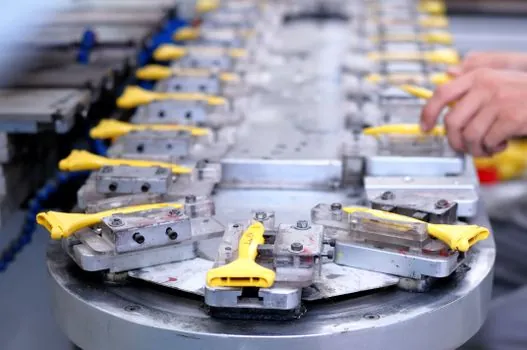
Most EV traction motors will be assembled by robots, with rotor and stator assembly applications using robots to pick, wind, and shape coils, make connections, press the rotor shaft, weld, glue, and bolt the body together [S3]. Manual labour in motor plants is therefore concentrated in magnet handling, sleeve fit-up, and end-of-line testing rather than in winding, and that mix is what allows green-field plants to run with low headcount but high capex.
Thermal management adds a measurable cost wedge: liquid-cooled housings and integrated cold plates add approximately USD 800-1200 per motor over an air-cooled equivalent, and pay back in continuous-torque capability and magnet-temperature control on high-performance BEV drivetrains [S6].
Comparison: PMSM, BLDC, and Induction on Cost Levers
For mainstream 100-250 kW traction duty, three topologies compete, and they move cost differently across the BOM. The table below lines the dominant drivetrain types against the decision criteria that actually move purchase cost and total cost of ownership [S1][S2][S4][S5].
Topology, magnet cost share, copper cost share, typical peak efficiency, and OEM tooling capex rank as the four key axes; PMSM sits high on efficiency but highest on magnet exposure, induction motors eliminate the magnet line entirely at the cost of efficiency and packaging size, and BLDC variants sit between them with simpler control electronics [S1][S4][S5].
Total cost of ownership over a typical 200,000-unit annual run is therefore a function of magnet price exposure versus inverter and cooling cost; in a high-NdFeB-price regime, induction and externally-excited synchronous designs regain ground they lost during the 2018-2024 magnet-deflation window [S4][S5][S8].
Standards, Specifications, and Materials That Move Cost
Material choice and certification are not optional cost lines: silicon-content electrical steel must meet thickness and loss targets (typical core-loss spec 2-5 W/kg at 1.5 T, 400 Hz) for the motor to hit WLTP range targets, and magnets are usually qualified to IEC 60404 for magnetic properties plus customer-specific thermal-cycle tests [S5]. Insulation systems on hairpin windings are specified to ANSI/NEMA MW 1000 or IEC 60851 for enamel, and the full motor is type-tested against IEC 60034-1 for rating and performance, with ISO 1940-1 balancing grades for the rotor and ISO 16750 environmental qualification on the inverter side.
On the manufacturing-process side, OEM acceptance of hairpin joints increasingly references cross-section quality per internal CT (computed-tomography) protocols rather than legacy pull-tests, which raises inspection capex but cuts warranty exposure; this is one of the few areas where a process upgrade is widely documented in industry coverage as net-cost-positive at scale [S3][S5].
Who Should Spec Which Topology, and Where the Cost Levers Are
A spec-first buyer running a mass-market 100-250 kW BEV programme should anchor on PMSM with hairpin windings and accept the magnet-cost exposure, because continuous-peak efficiency and power density dominate the vehicle-side trade-off; an OEM targeting cost leadership at the expense of range, or building commercial vehicles with duty cycles that reward sustained torque, should evaluate induction or externally-excited synchronous motors to remove NdFeB from the BOM [S4][S5][S8]. A startup without in-house stator lines should not specify a custom hairpin geometry in low volume, because the tooling amortisation makes unit cost non-competitive against Tier-1 PMSM suppliers already running similar parts at scale [S3].
On the capex side, the single largest line remains the hairpin forming and welding cell, and modular, shared lines such as GM's Ultium Drive family are explicitly designed to spread that capex across three interchangeable motor sizes [S3].
Factory Footprint, Vertical Integration, and the Total-Cost Picture
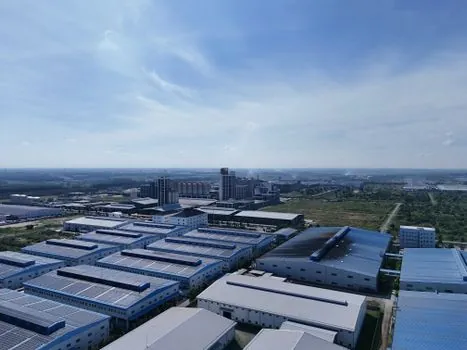
Most major OEMs, including BMW, Ford, GM, and Volkswagen, are now assembling motors in-house rather than buying complete motors from suppliers; Ford committed USD 150 million to convert its Van Dyke Transmission Plant for e-motor mass production, and GM's Ultium Drive approach builds castings, gears, and assemblies on shared, flexible propulsion lines to spread capex across SKUs [S3]. Volvo Cars has moved to in-house assembly at Skövde, Sweden, on the same logic, and Nidec, BorgWarner, ZF, and Jing-Jin Electric remain the dominant Tier-1 suppliers for OEMs that buy rather than make [S3][S4].
Total cost of ownership on a 10-year horizon is therefore the sum of BOM materials, plant capex amortised over volume, and warranty plus recycling exposure on magnets; on the recycling line, NdFeB reclaim via hydrogen decrepitation or acid-less electrochemical routes is moving from pilot to commercial at OEMs running closed-loop material recovery, and the recovered magnet cost is competitive with virgin material at current NdPr oxide prices [S5][S8]. Readers comparing this drivetrain topic to adjacent industrial-motor spec work can cross-reference our ac motor selection notes and our broader motor accessory coverage for context on the supply base, while drivetrain-adjacent manufacturing process coverage such as our industrial fastener production line spec map and our shakeout machine spec map for automotive foundries speaks to the upstream capex lines a green-field EV motor plant still has to clear. Watch the NdPr oxide spot price, the rate of OEM in-house motor assembly announcements, and the spread between hairpin-PMSM and induction line capex as the three signals that will move the cost stack next.
For the relevant spec sheets and selection criteria, see additive manufacturing material.