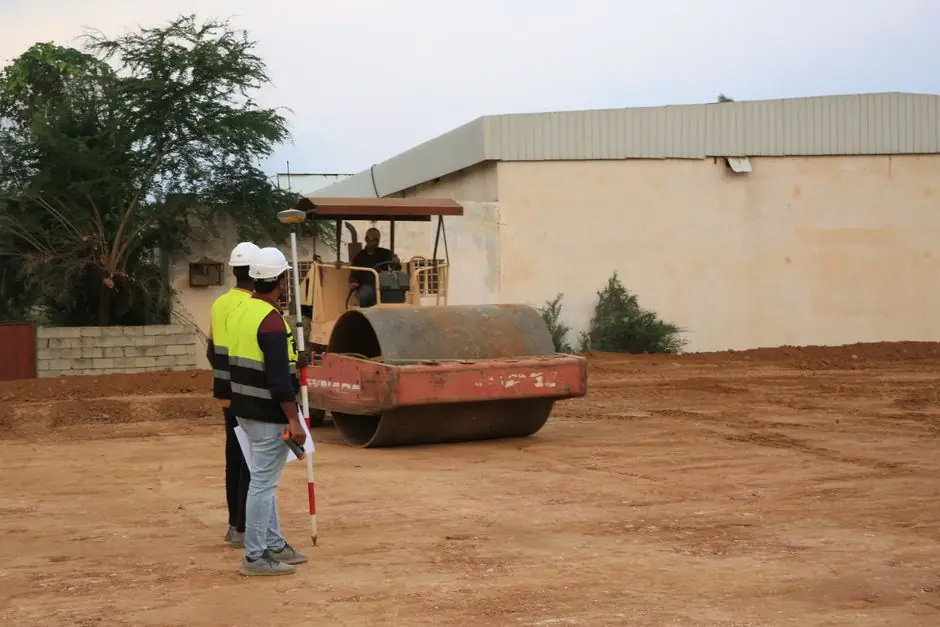
A motor grader is the machine that brings a road formation to its designed grade and cross-section within tight tolerances, while a road roller is the compactor that locks that finished surface to specification through controlled densification [S2][S4].
Both sit in the same paving train, but the two machines do fundamentally different work: the grader redistributes and profiles material with a 3.0 to 7.3 metre moldboard, and the roller applies static or vibratory load to compact each lift before the next one goes down [S2]. Specifying one as a substitute for the other is one of the most common planning errors on road and site projects.
What Each Machine Actually Does on Site
A motor grader's defining component is its moldboard, a long curved steel plate mounted on a rotating circle assembly between the front and rear axles, that cuts, lifts, and casts material laterally to set cross-slope and elevation [S2][S4]. Engine outputs on production graders commonly span 74 HP on lighter machines to over 250 HP on heavy highway units, with a long wheelbase so the frame bridges surface undulations rather than copying them [S4].
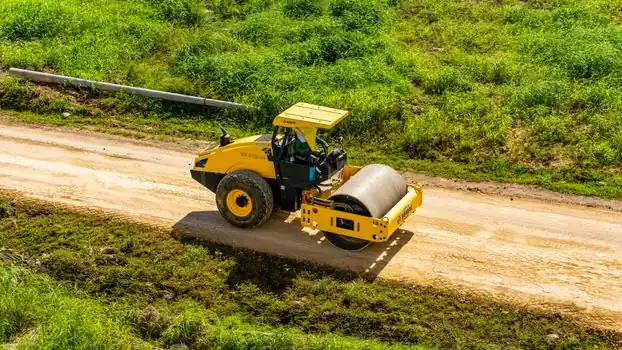
A road roller is a compactor, not a finisher: it densifies soil, gravel, or asphalt by static weight, vibration, or kneading action without altering the design profile. Tandem rollers, single-drum soil compactors, and pneumatic-tyred rollers cover different density and lift-thickness requirements, and the roller chosen must match the layer being placed rather than the tolerance being targeted.
Decision Criteria: Cut to Tolerance or Lock the Lift
The first decision is whether the material still needs to move or whether the lift is ready to compact. If the surface is off-grade, rutted, or carries the wrong camber, the motor grader runs first; a roller run before the cut wastes fuel and burns density into the wrong profile [S2]. If the lift is already on grade and at the correct loose thickness, the roller takes over.
The second decision is tolerance band. Modern graders paired with GPS, laser, or 3D machine control maintain design grade to millimetres across long runs, while a dozer or loader blade cannot match that finish regardless of operator skill [S3][S4]. The third decision is production rate: a motor grader is a precision finisher, not a bulk mover, and trying to push large volumes with a moldboard burns time that an excavator-and-truck fleet would have moved in a fraction of the cycle [S3].
Side-by-Side Comparison on Four Gates
On job-fit, the motor grader wins for fine grading, camber and cross-fall shaping, ditch cutting, gravel-road maintenance, and final trim before paving, because the moldboard tilts, angles, lifts, pitches, rotates 360 degrees, and side-shifts independently to hold slope on the move [S4]. The road roller wins for density: achieving the required compaction percentage on sub-base, base course, or asphalt lift is something no blade can do, and under-compacted lifts fail under traffic regardless of how well they were graded.
On tolerance, a GPS-equipped grader maintains millimetre-grade accuracy on long runs, while a roller is held to density targets rather than surface-elevation targets. On volume, a wheel tractor-scraper moves 8 to over 30 cubic metres heaped per cycle, which neither machine can match, so neither the grader nor the roller is the right primary mover when bulk cut-and-fill dominates the programme [S3]. On operating cost, total cost of ownership varies sharply by brand: premium graders such as the CAT 140K add load-sensing hydraulics and integrated grade control, while high-value models such as the LiuGong 4180D, 4165D, and 4215D trade electronics for mechanical simplicity, reinforced worm gearboxes, and maintenance-free slewing rings to cut field downtime [S5].
When a Grader Alone Is Enough, and When It Is Not
For unsealed and gravel-road maintenance, a motor grader on a periodic pass is often the only machine required: it restores the running surface, recovers camber, and pushes water off the formation, which is why councils and mine sites keep graders on long-term maintenance contracts rather than one-off hire [S3]. Final trim on a building pad or subdivision road, ahead of base-course placement, is another grader-only task, because no roller can fix a profile that has not yet been cut.
For sealed-road construction, base course preparation, landfill cell lifts, and dam shell placement, the roller is mandatory and the grader is preparatory: a well-graded lift that is under-compacted will rut, settle, or fail shear, and a perfectly compacted lift that is off-grade still has to be re-cut. The two machines form a sequence, not a choice, and on most asphalt and major earthworks projects both are on the same critical path.
Integration With the Broader Earthworks Fleet
On a typical road or large site package, the chain runs scrapers or excavator-and-truck for bulk cut-and-fill, grader for trim and profile, and roller for density. LiuGong D-Series graders, for example, mount Cummins or Shangchai powerplants, use a 5-pillar cab layout that gives the operator a 324 degree panoramic view of the moldboard and tyres, and pair low-vibration noise-resistant cabins for long-shift accuracy, while Caterpillar equivalents layer in load-sensing hydraulics with proportional priority pressure-compensating valves and AccuGrade GPS integration to cut passes per grade [S5].
Selection should weigh electronics versus serviceability: a premium grader with integrated 3D control reduces rework and operator fatigue, while a simpler mechanical package lowers field downtime and lets on-site mechanics service the machine without proprietary tooling. Fleet managers running mixed OEM yards often standardise roller brands separately from grader brands, because the two machines share almost no wear parts, hydraulic specifications, or telematics backbones.
Common Failure Modes From Spec Errors
Specifying a grader where a scraper is needed burns the production rate; specifying a scraper where a grader is needed produces a rough, unworkable finish that still has to be trimmed. Specifying a roller before the lift is on grade bakes density into the wrong profile and forces a re-cut, which then requires a re-roll. Specifying a static roller on cohesive clay or a heavy lift where vibratory energy is required wastes passes and fails density tests, while over-vibrating a thin asphalt lift crushes aggregate and breaks mat tolerance. [S3]
The cheapest insurance against these errors is a written sequence on the ITP, or Inspection and Test Plan, that names the grader pass, the lift thickness, the roller type and pass count, and the density test method before paving or the next lift is allowed. None of this is novel, but it is the part of the programme that gets skipped when procurement compresses the schedule.
Standards, Sourcing, and What to Verify on the Data Sheet
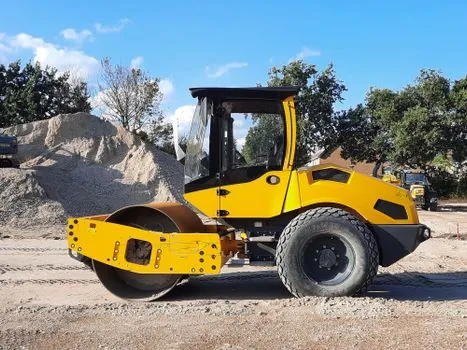
For road and site work, the key verification points on a grader data sheet are moldboard length (3.0 to 7.3 m on common production units), engine power, operating weight, and the type of grade-control ready mounting bracket, because the controller is often sold separately and the bracket compatibility decides whether GPS or laser guidance can be retrofitted in the field [S2]. For rollers, the verification points are drum width, static linear load, vibratory frequency and amplitude, and whether the machine meets the project-specific compaction method specification rather than a generic catalogue rating.
For cross-brand fleet decisions, compare total cost of ownership over a 5 to 7 year horizon, including fuel, planned maintenance, telematics subscription, and expected residual value, rather than purchase price alone; brand comparison guides published through 2026-04 put premium grader marques against high-value contenders on exactly these axes, with the gap closing as competing OEMs add factory telematics and operator-cab refinements [S5]. Pricing and lead time should be re-quoted at order, not at spec stage, because both have moved across 2026.
Next node for spec teams: lock the moldboard length, grade-control package, and roller drum configuration on the ITP before tender, and require the contractor to name the machine models, not just the machine classes, on the method statement. A tracked signal through 2026-Q4 will be how OEM telematics subscriptions are bundled with grade-control licences, since that is now a real line item on total cost of ownership rather than a free option.
For the relevant spec sheets and selection criteria, see roller bearing.
Related analysis: Marine lead screw selection: material, thread, and duty gates.