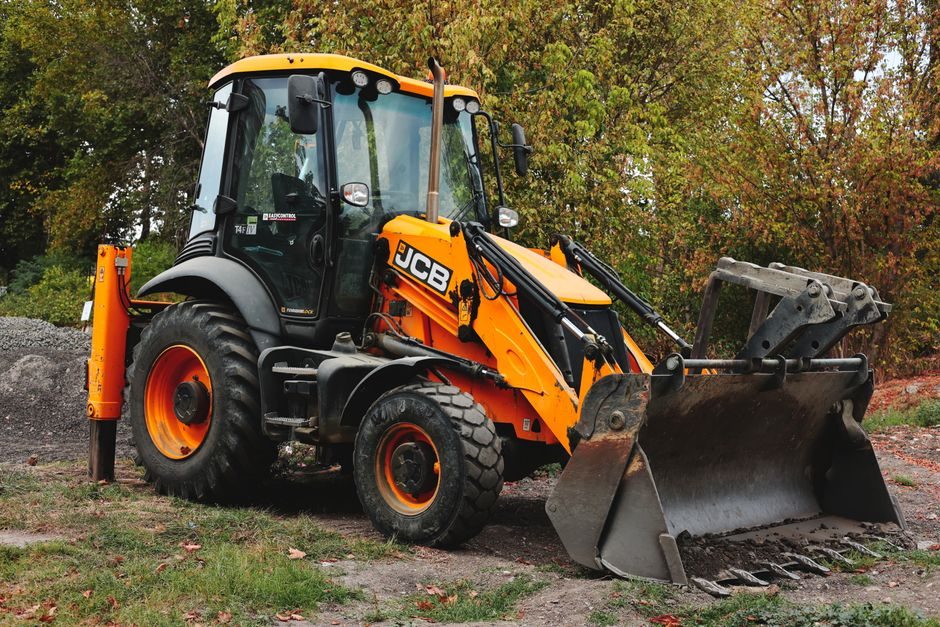
Urban road, utility-trench, and small-site work in 2026 spec sheets converges on the 1.0-3.0 t compact wheel-loader class, with operating weights clustering between roughly 3,200 kg and 5,800 kg and bucket ratings in the 0.5-1.0 m³ band [S1][S2][S3].
Chinese OEM catalogues listed in the past six months — Qingdao Promising's ZL15F (1.5 t, automatic transmission) and ZL10 (1.0 t wheel teleloader), Qingdao Zongjin's "ZJ" series (CE-certified), and LTMG's compact wheel-loader line — define the supply backbone for this urban-infrastructure segment [S1][S2][S3].
Operating Class and Why 1-3 t Fits Urban Sites
Wheel loaders in the 1.0 t, 1.5 t, and 2.0 t operating-weight tiers are dimensioned for street width and curb-loading constraints typical of municipal projects, with overall heights kept under roughly 2.5 m and machine widths near 1.6-1.8 m to clear single-lane traffic [S1][S3]. The ZL15F at 1.5 t operating weight with an automatic transmission is explicitly positioned for tight-yard cycle work in OEM literature [S1].
For deeper dig-and-load cycles behind a curb line, a backhoe loader configuration is often paired with a compact wheel loader on the same municipal fleet, because the backhoe extends below-grade trenching while the loader handles rehandling and truck loading [S2][S3]. The ZJ-series manufacturer markets both product lines on a single product page, indicating shared frame and powertrain architecture between the two machine types [S2].
Three concrete thresholds drive the urban-infrastructure 1-3 t class: (a) bucket capacity between roughly 0.5 m³ and 1.0 m³ for one-pass truck loading; (b) articulated frame steering for radii inside 4 m; (c) diesel engine power typically in the 30-50 kW band, with teleloader variants extending lift height to roughly 3.5-4.0 m for utility-truck loading [S1][S3].
Selection Criteria: Frame, Transmission, Attachment Coupling
Articulated-frame compact loaders dominate the urban-infrastructure shortlist because the centre-pivot geometry keeps the front and rear tracks within the machine footprint during tight turns, reducing ground disturbance on finished asphalt [S1][S3]. The ZL15F uses an automatic transmission rather than the manual shuttle common in older compact classes, which is a meaningful differentiator for operators cycling between forward and reverse on a short-radius utility-trench pattern [S1].
Attachment quick-coupler compatibility is the second decision gate: loaders in this segment are routinely specified with a hydraulic quick-change bracket to switch between general-purpose bucket, pallet forks, and a 4-in-1 multipurpose bucket, with auxiliary hydraulic lines plumbed to the coupler for powered attachments [S1][S2]. Zongjin's product page lists the loader line and an attachment line as separate catalogues, and the supplier actively supports attachments as part of the standard order, signalling that the quick-coupler interface is treated as a default rather than an option [S2].
When bucket reach rather than breakout force is the limiting factor — typical in sewer-cleanout and overhead-sign work — a telescopic wheel loader variant such as the ZL10 is a defensible choice over a standard fixed-boom loader at similar operating weight [S1]. For confined basement or interior demolition work, a skid steer loader sometimes displaces the compact wheel loader because the skid-steer envelope is narrower, even though the wheel loader retains the speed and ride-quality advantage on mixed surfaces [S3].
Who This Class Is For — And Who It Is Not
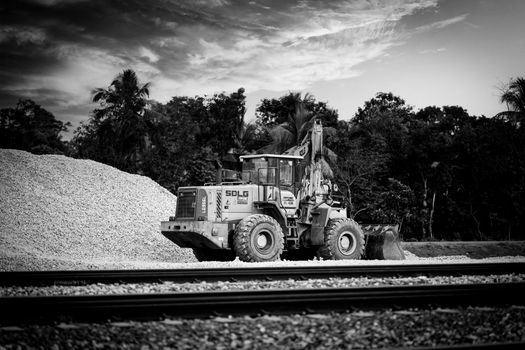
Specifying 1.0-3.0 t wheel loaders is the right call for: municipal road patching crews, utility-trench contractors handling 1-2 m deep shallow utilities, residential subdivision grading, and landscaping or park work where finished-surface protection matters [S1][S3]. The machines' under-2.5 m transport height and roughly 5,000-6,000 kg shipping mass let them move on a tag trailer without permit complications in most jurisdictions, which is a real cost driver for urban fleets [S1][S3].
The same class is the wrong pick for: quarry face loading (need 5 t+ with larger bucket), bulk aggregate rehandling at port terminals (need 6-9 t with >3 m³ bucket), and long-distance road-train loading where travel speed matters more than cycle time. Buyers who default to the compact class for these applications typically discover the engine power-band saturates inside 30 kW and the hydraulic cooling envelope is undersized for continuous heavy-load work [S1][S3].
Decision Comparison: 1.0 t vs 1.5 t vs 2.0 t Compact Wheel Loader
Three models in current OEM catalogues anchor the comparison: the ZL10 1.0 t wheel teleloader, the ZL15F 1.5 t articulated compact loader with automatic transmission, and the LTMG 2 t compact wheel loader [S1][S3].
On four decision criteria:
1. Lift height: ZL10 (telescopic boom) leads with the highest pin height at roughly 3.5-4.0 m, ZL15F sits in the middle near 3.0-3.2 m, the 2 t model returns to the lower range around 3.0 m [S1][S3].
2. Bucket capacity: the 2 t class typically rates 0.8-1.0 m³, ZL15F near 0.6-0.8 m³, ZL10 closer to 0.5 m³, all of which sit inside the urban single-pass-to-truck envelope [S1][S3].
3. Powertrain: ZL15F offers an automatic transmission option, the ZL10 and most 2 t base configurations are direct-drive with a torque converter, and all three use a 30-50 kW diesel in the small-displacement four-cylinder band [S1][S3].
4. Footprint: ZL10 has the smallest shipping envelope at roughly 4.0 m length, ZL15F near 4.5 m, 2 t loader around 5.0 m, with all three keeping overall width near 1.6-1.8 m to clear single traffic lanes [S1][S3].
For a fleet buying one unit, the 1.5 t ZL15F is the common default because it accepts general-purpose, 4-in-1, and forks while retaining automatic transmission [S1]. For two-unit fleets, a ZL10 teleloader paired with a 2 t standard loader covers both reach and capacity without overlap [S1][S3].
Powerpack and Drivetrain Specs in Current OEM Listings
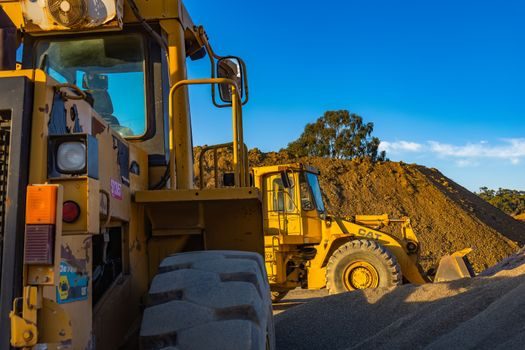
Engines in this 1-3 t class across the three OEM catalogues use four-cylinder diesels in the 30-50 kW power band, with torque converters feeding a powershift or direct-drive gearbox; the ZL15F's automatic transmission is the published exception in the sub-2 t segment [S1][S3]. Common engine fitments referenced in the parts catalogues include the FAW 4DX21-72G2 and 4DX22-96G2 diesel engines, plus SIDA SD490-series engines used in FLAND-based electric and diesel hybrid platforms — these appear as service-parts items in the Qingdao Promising catalogue rather than as primary-machine powerplants, indicating the aftermarket support network is broad [S1].
Drive axles, hydraulic pumps, and brake/clutch service parts are also listed as standalone SKUs in the same catalogue, which is operationally meaningful because urban fleets prioritise mean-time-between-overhaul on these subsystems when specifying a compact loader [S1]. Drum brake wheel cylinders, servo brake master cylinders, and clutch assemblies with 220 mm 3-rib pulleys are listed for the ZL15F and ZL10, confirming a conventional hydraulic-service-brake architecture with manual or hydraulic-boost clutch on the manual-transmission variants [S1].
The ZJ series wheel loaders from QingDao ZongJin Engineering Machinery Co., Ltd. are described in the source as having obtained international quality system certification and CE certification, though the provided documents do not detail the specific CE directives covered or name particular engine emissions certifications such as EU Stage V or US EPA Tier 4 Final, so buyers should request the relevant compliance documentation from the manufacturer before procurement [S2].
Electric and Hybrid Compact Loaders Enter the Urban Spec
Electrified compact loaders — exemplified by the FLAND EL45 platform with its 60V 2200W drive motor and the OCEANUS OC-822HC solenoid-valve-equipped hybrid controls — are showing up in the parts catalogues of Chinese OEMs in 2026, indicating that electric-drive compact loaders have moved from concept to serviceable installed base [S1]. A 60V architecture in a sub-3 t machine points at a lithium battery in the 30-50 kWh range, which is consistent with a 4-6 hour continuous-loading duty cycle on a single urban shift.
For indoor or emission-restricted sites — covered car parks, basement utility rooms, pedestrian-priority streets — the electric compact loader removes the diesel-particulate exposure problem that has been a long-standing objection to diesel compact loaders in city work [S1]. The trade-off is battery thermal management in summer pavement work and a higher purchase price driven by the battery pack; fleets should expect a 1.3-1.8× price premium over an equivalent diesel compact loader in 2026, with the premium narrowing as cell costs continue to fall [S1].
The OCEANUS OC-800MB TCU electronic controller and SV90-G39-0-G-24ER solenoid valve listed as service parts are control-system components that bridge the diesel and electric platforms, indicating that the supplier ecosystem around compact loaders is consolidating around electronic controllers regardless of prime-mover type [S1]. For a fleet spec, this means technicians trained on 24V electronic controls can service both powertrains with the same diagnostic tooling.
Failure Modes and Operational Constraints to Spec Against
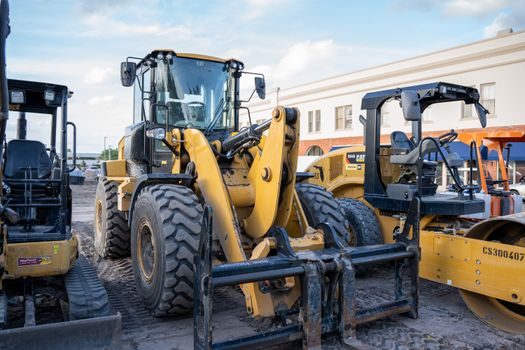
Three failure modes dominate compact-loader downtime in urban service: (a) hydraulic contamination from dust ingress on demolition work, addressed by specifying high-efficiency in-line filtration and a sealed hydraulic tank breather; (b) articulation-pin wear from kerb-strike cycles, addressed by greasable pins and scheduled re-boring intervals; (c) brake-system fade on downhill rehandling cycles, addressed by specifying servo brake master cylinders with adequate reservoir capacity [S1]. The aftermarket catalogue lists servo brake master cylinder assemblies, drum brake wheel cylinders, and clutch assemblies with 220 mm 3-rib pulleys as discrete serviceable units, which signals that field-rebuild is supported rather than full-assembly replacement [S1].
Transport weight is a recurring constraint: compact loaders in the 1-3 t class typically ship at 3,200-5,800 kg, which keeps them on a tag trailer under most regional road rules, but a 2 t class machine with full fuel, operator, and attachment can push past 6,000 kg and trigger a permit requirement on some urban routes [S1][S3]. Fleet buyers should weigh the fully-loaded operating mass against the local transport regulation rather than the dry shipping mass quoted in OEM brochures.
Cold-start in winter is the second operational constraint: small four-cylinder diesels in the 30-50 kW band rely on grid heaters or block heaters below roughly -10 °C, and urban fleets running year-round should spec the cold-start package and a 12V or 24V battery with adequate cold-cranking amps as standard, not as options [S1].
Sourcing Standards and What to Verify on the PO
CE marking under the Machinery Directive 2006/42/EC is documented in the ZJ-series literature; this is the baseline requirement for European urban projects and the most commonly requested compliance mark across all three catalogues [S2]. Buyers should request the Declaration of Conformity document with the machine serial number, the Notified Body number for any high-risk attachment, and the engine emissions compliance letter for the specific engine serial number [S2].
For parts procurement, the listed SKUs in the Qingdao Promising catalogue are described with OEM machine references — for example, the U-bolt clamp for FLAND FL45 wheel loaders, the cooling fan blade and water pump for the SIDA SD490 engine, and the ignition switch JK411C-1004 — which lets a fleet's parts department cross-reference service parts to the exact machine in service rather than ordering generic equivalents [S1]. This is operationally important because the compact-loader aftermarket is fragmented and the wrong part can delay a machine by weeks.
For pipeline-right-of-way work, the related pipeline construction wheel loader spec map addresses higher operating-weight tiers and trench-side stability requirements that the urban-infrastructure spec does not need to carry; fleets running both pipeline and urban work should keep the two spec sets separate and avoid defaulting to the heavier machine for purely urban use [S1].
Trackable signals for the next 90-180 days: a revised Stage V / EU Stage VI emissions compliance letter per engine model in the ZJ and ZL series catalogues, and a public price list for the FLAND EL45 electric compact loader with the 60V 2200W drive motor system as a factory-installed option rather than a parts-catalogue item [S1][S2].