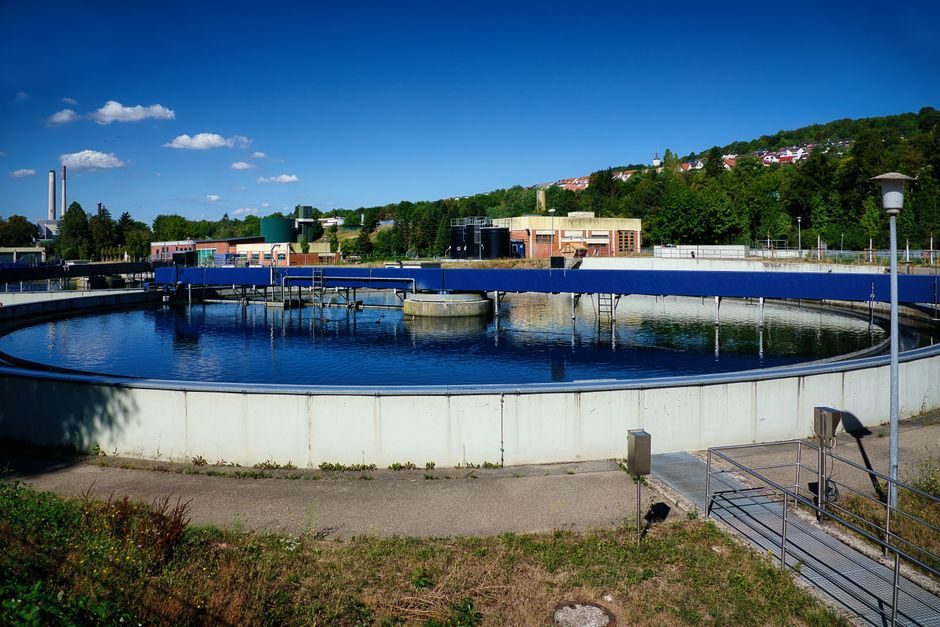
A wastewater lift station pump must deliver rated head and flow against a varying static+dynamic profile while passing rags, grit, and fibrous solids — the practical envelope for horizontal multistage clean-water designs sits at Q=12.6–1260 m³/h, H=13–232.8 m, suction 50–150 mm, and 0–105 °C fluid temperature per the SLD/SLDG/SLMD series spec sheet [S6].
For raw sewage duty the geometry changes: dry-installed single-stage sewage units such as the ANDRITZ SD/CP series are documented at 1800–10,000 m³/h, 15–16 bar (≈75–100 m head), and 120–140 °C, with a free-flow impeller and open spiral casing that passes suspensions up to 140 mm particle size [S2]. Multistage arrangement on slurry duty — e.g. the EHR-2C cantilevered horizontal pump with rubber-lined frame plates and replaceable elastomer liners — covers Q=36–75.6 m³/h and H=13–39 m at up to 30 kW per stage [S1].
Head, Flow, and Stage Count — the First Three Numbers
Head (m) and flow (m³/h) come from the station's duty point: static lift plus friction at peak wet-weather flow. Horizontal multistage pumps like the D/DG/DY series are designed precisely for high-head, lower-flow profiles where adding stages raises H without re-shafting the whole unit [S3]. For a typical 4–8 m static lift with friction margins up to ~30 m total, a two-stage horizontal multistage unit is the common starting point; once total H exceeds ~80 m, the spec crosses into the SLD/SLDG envelope where staged diffusers and stainless impellers are standard [S6].
Suction caliber is a hard constraint — the SLD range documents 50–150 mm inlet, which must be matched to the wet-well suction pipe to avoid NPSH margin loss at the design flow [S6]. The ANDRITZ SD range by contrast uses large free passages rather than small calibrated nozzles because the limiting solid in sewage is sized in tens of millimetres, not the line diameter [S2]. For a lift station with peak inflow above 1000 m³/h and high-head forcemain routing, the dry-installed sewage pump (single-stage but high-flow) is the closer match than a small-bore multistage.
Solids Handling and Free Passage — the Deal-Breaker Spec
Solids passage drives impeller choice. A free-flow impeller with a large, smooth passage — the ANDRITZ CP design — explicitly handles suspensions up to 140 mm and is built for abrasive, low- and high-viscosity sludge [S2]. A multistage radial-flow impeller on the SLD/SLDG series, by contrast, has tight stage-to-stage clearances and is suited to clear water or physico-chemically similar fluids; rags and stringy material will lock the stages [S6].
The EHR-2C slurry pump solves the wear problem rather than the passage problem: rubber impellers and replaceable rubber frame-plate liners, cantilevered shaft (no submerged bearing), and a choice of expeller seal or shaft gland — but its solids envelope is set by the impeller eye, not a free passage [S1]. The selection rule is therefore: free passage ≥ max solid in the influent, and for a municipal lift station with fibrous loading that almost always means a vortex or single-vane free-flow impeller in a dry-installed casing, not a stacked multistage.
Materials, Wear Parts, and Corrosion Envelope
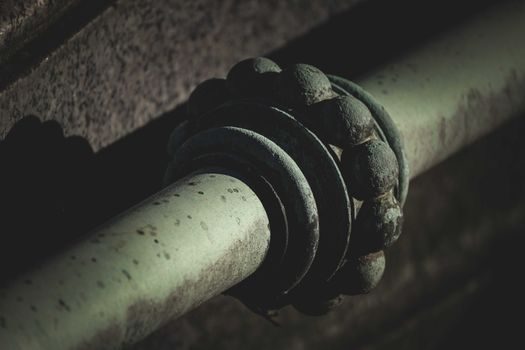
Wastewater is mildly corrosive (H₂S in the wet well, chloride in coastal systems) and abrasive (silica grit). The EHR-2C uses natural rubber/elastomer liners — economical for abrasive slurry but limited to < ~80 °C and a narrower pH window than metal [S1]. The ANDRITZ dry-installed sewage pump line uses wear-resistant metallic executions for service up to 140 °C with abrasive media, and is built as a modular system so impeller, casing liner, and shaft seal can be replaced independently [S2].
For potable-water-class service or low-solids reuse, stainless impellers and 0–105 °C capability of the SLD/SLDG/SLMD range are the right fit [S6]. When selecting a multistage pump for a lift station, check three material flags in this order: (1) shaft sleeve and mechanical seal faces compatible with the actual chloride/H₂S level, (2) casing and stage bowls rated for the discharge pressure plus water-hammer surge (commonly 1.5× shutoff head), and (3) replaceable wear parts available from stock — a modular design reduces spare-parts inventory [S2].
Mechanical Layout: Horizontal Multistage vs Cantilevered Slurry vs Dry-Installed Sewage
Three mechanical archetypes compete for lift-station duty. A short comparison across the four decision criteria that actually drive the call:
<b>Selection matrix:</b>
<b>(1) Horizontal multistage (SLD/SLDG/SLMD, D/DG/DY):</b> H up to 232.8 m, Q 12.6–1260 m³/h, 0–105 °C, suction 50–150 mm. Best for high-head, low-to-medium solids, clean or pre-screened wastewater; weakest on raw sewage passage [S3][S6].
<b>(2) Cantilevered horizontal slurry (EHR-2C):</b> Q 36–75.6 m³/h per stage, H 13–39 m, 0–30 kW, rubber liners, V-belt/gearbox drive options, eight discharge orientations. Best for abrasive primary sludge or mining-class slurries with limited flow; weak on very high head and on large fibrous solids [S1].
<b>(3) Dry-installed free-flow sewage (ANDRITZ SD/CP):</b> Q 1800–10,000 m³/h, H 75–100 m, 120–140 °C, 140 mm free passage, modular casing. Best for raw municipal sewage with rags and grit at high flow; the go-to for a main lift-station duty pump [S2].
The mainstream option — dry-installed free-flow sewage — is the right call for the typical municipal wet-well because the limiting parameter is the solid, not the head. Where the duty is high-head clean-water booster (e.g. treated-effluent line to a reuse zone), the horizontal multistage is correct. Cantilevered slurry pumps are right for primary-sludge or grit handling, not for raw influent.
Sealing, Drive, and Maintenance Access
Seal choice tracks the fluid. The EHR-2C accepts either an expeller seal (no flush water, suited to abrasive slurry) or a shaft gland (low-pressure sealing) — both are dry-running tolerant to a point, and the cantilevered shaft removes the submerged bearing that most often fails in a wet-well pump [S1]. The ANDRITZ SD/CP series is built so the impeller unit can be removed from the installed casing, with a modular parts list that drops spare-parts count and shortens mean-time-to-repair [S2].
Drive options matter when the lift station is far from a clean power feeder: V-belt, gear reducer, hydraulic coupling, or direct — the EHR-2C documents all four [S1]. Horizontal multistage units like the SLD series are normally direct-coupled to a 4-pole or 2-pole motor at 50/60 Hz; derating for 60 Hz, VFD operation, or non-standard voltage must be confirmed with the manufacturer because head scales with the square of speed and the stage bowl pressure class may not survive the higher shutoff head. A general framing of the underlying centrifugal pump affinity laws and the role of staged diffusers is in the reference entry.
Who Should NOT Pick the Multistage Mainstream
Three duty profiles disqualify a horizontal multistage centrifugal pump for lift-station service, even when the head envelope fits: (a) raw sewage with fibrous solids — the staged impeller will rag up; (b) flows above the largest SLD/SLDG calibrated size when high head is not actually required — a single-stage end-suction or submersible is cheaper; (c) hot sludge above 105 °C — the elastomer and standard mechanical seal envelope is exceeded, and a metallurgy-rated dry-installed sewage pump becomes mandatory [S6].
For low-flow, high-head effluent booster or reverse-osmosis-feed style duties — where the fluid is screened and clean — the multistage pump is the correct pick and the slurry/sewage options are overbuilt and inefficient. If the duty is to move abrasive primary sludge from a sump to a digester, the cantilevered rubber-lined slurry design wins on wear life even though it cannot match the high-head envelope of an SLD stack [S1].
Sourcing, Verification, and Tracking Signals
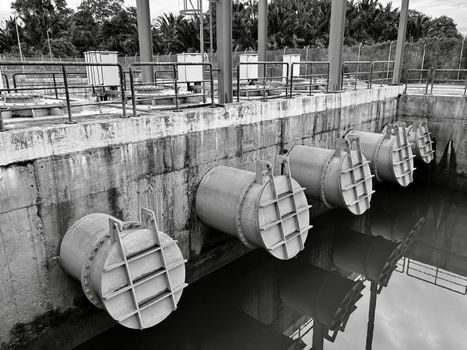
Two product-level signals to verify on any lift-station RFQ: the free-passage diameter (mm) stated in the impeller drawing — not the discharge flange size — and the actual shutoff head the stage bowl is pressure-rated for, which must exceed the maximum possible static head plus water-hammer surge. ANDRITZ publishes the 140 mm free-passage figure and 75–100 m head band for its SD/CP dry-installed sewage pump line [S2]; the EHR-2C publishes a 13–39 m head and 36–75.6 m³/h envelope per stage with replaceable rubber liners [S1]; the SLD/SLDG/SLMD 450-spec line publishes a 12.6–1260 m³/h flow and 13–232.8 m head envelope at 0–105 °C [S6].
Track the next nodes: the InnoTrans 2026 exhibition (Berlin, 22–25 Sep 2026, Hall 21 Stand 670) where ANDRITZ is exhibiting dry-installed sewage pump line extensions [S2], and any 2026-Q3 release of a higher-pressure-class SLD stage bowl, which would extend the high-head multistage envelope further into the lift-station duty band [S6]. For a side-by-side on sealing arrangement versus a sealed centrifugal architecture — relevant where zero-leakage is required — the reference piece on magnetic-drive vs sealed centrifugal trade-offs lays out the flow-stability penalty.
The underlying component specifications are covered under vertical lift module.