A multistage centrifugal pump mounts two or more impellers in series on a single shaft so that each stage adds its head to the discharge of the previous one, while the flow rate stays unchanged. This series construction lets a single machine reach hundreds of metres of head at moderate flow, which a single impeller cannot do at any practical diameter or speed. Multistage pumps are the standard solution for boiler feedwater, high-rise and pressure-boosting systems, reverse-osmosis feed, mine dewatering, pipeline transfer, and oilfield water injection.
This guide treats the multistage pump as a procurement object, not a textbook abstraction. It walks through the recognised configurations (ring-section, barrel, axially split, and vertical), the stage hydraulics that set head and efficiency, the axial-thrust and rotordynamic problems that distinguish multistage rotors, the materials and seal choices that drive cost, the spec-sheet parameters that actually decide a model, and a selection sequence you can reuse as an RFQ template.
Photo: Asurnipal, CC BY-SA 4.0, via Wikimedia Commons
This guide is written for procurement engineers and design engineers selecting multistage pumps before a $10K to $1M purchase. It covers 6 chapters, from what the machine is, through types and stage hydraulics, materials and standards, spec-sheet decoding, to a selection decision sequence, plus 7 selection FAQs. Quoted configurations and parameters reference the public standards API 610 / ISO 13709, ISO 5199, ISO 2858, EN 733, and ISO 9906, cross-checked against manufacturer documentation from Sulzer, KSB, and Grundfos.
Chapter 1 / 06
What is a Multistage Centrifugal Pump
A multistage centrifugal pump is a rotodynamic pump in which liquid passes through two or more impellers arranged in series on a common shaft. Liquid enters the eye of the first impeller, gains kinetic energy as the impeller throws it radially outward, and then passes through a stationary diffuser or return channel that converts that velocity into pressure and redirects the flow into the eye of the next impeller. Each impeller-and-diffuser pair is one stage. A unit with seven impellers and seven diffusers is a seven-stage pump. Because the stages are in series, the head adds up stage by stage while the volumetric flow through every stage is the same.
This is the fundamental reason multistage pumps exist. A single-stage centrifugal pump is head-limited: at a fixed rotational speed, the head a single impeller can develop is bounded by its diameter, and at 2,900 rpm (2-pole, 50 Hz) a practical single impeller tops out around 100 to 150 metres. To reach 400 or 600 metres, a single-stage design would need an impractically large impeller spinning fast enough to invite cavitation, stress, and noise problems. Stacking modest impellers in series sidesteps all of that: ten 50-metre stages deliver 500 metres of head using impellers that each run at a safe, efficient operating point.
Structurally a multistage pump comprises four functional groups: (1) the rotor, a shaft carrying the series of impellers plus a thrust-balancing device; (2) the stator, the stacked stage casings or the volute-and-diffuser elements that guide flow between stages and contain pressure; (3) the bearing and sealing system, which for industrial machines means between-bearing support at both shaft ends plus mechanical seals or, on older designs, packed glands; and (4) the pressure boundary, which for high-energy pumps is either a tie-bolted ring-section stack or a forged outer barrel. The way these groups are arranged is exactly what the standard configuration codes (described in Chapter 2) classify.
Historically the multistage pump is a direct descendant of the centrifugal pump pioneered through the 19th century and refined for high head once electric drives made high rotational speeds routine. Boiler feed service in steam power generation was the original demanding application and remains the archetype: a boiler feed pump draws deaerated feedwater (often near 160 to 180 degrees C) and must raise it above the boiler drum pressure plus all system losses, which in a modern utility unit means several hundred bar. That duty, high pressure, hot liquid, continuous running, and serious consequences of failure, is what drove the development of barrel casings, balance drums, and the API 610 design discipline that still governs the heavy end of the market.
The application scale is wide. Light-industrial vertical multistage pumps such as the Grundfos CR family cover flows up to roughly 320 m³/h at working pressures up to about 40 bar for water supply, boosting, washing, and reverse-osmosis feed. Heavy horizontal ring-section and barrel pumps such as the Sulzer MSD, HPT, and HPcp families and the KSB high-pressure ranges cover power-plant boiler feed, pipeline transfer, and oilfield water injection, where the Sulzer HPcp barrel design reaches into the multi-hundred-bar class. No single pump spans this range, so multistage selection is fundamentally about mapping a duty point onto the right configuration and the right manufacturer family.
Chapter 2 / 06
Configuration Types and Casings
Multistage pumps are classified first by shaft orientation (horizontal or vertical) and then, for horizontal between-bearing machines, by how the pressure casing is split. API 610 is the reference taxonomy for heavy-duty service and defines the relevant between-bearing types as BB3, BB4, and BB5 (earlier 9th to 11th editions were co-branded as ISO 13709, but the current 12th edition is API-only). Understanding these codes is essential because a vendor quote that says BB5 already tells you the casing is a forged barrel rated for the highest pressures, while BB4 tells you it is a tie-bolted ring-section stack. The table below summarises the main configurations.
Configuration
API 610 type
Casing split
Typical pressure class
Typical service
Vertical multistage inline
(general / ISO 5199)
Stacked chambers
up to ~40 bar
Water supply, boosting, RO feed
Ring-section horizontal
BB4
Radial, segmental
~100 to 250 bar
Boiler feed, general high head
Axially split multistage
BB3
Axial (horizontal split)
up to ~100+ bar
Pipeline, water injection, boiler feed
Barrel (double casing)
BB5
Radial, outer barrel
up to 350+ bar
Utility boiler feed, water injection
Vertical turbine multistage
VS1
Stacked bowls
depth-dependent
Deep well, condensate, cooling water
Vertical multistage inline pumps stack impellers on a vertical shaft inside cylindrical stage chambers, with suction and discharge on the same horizontal centreline so the pump drops straight into a pipe run. This is the dominant configuration for light-industrial duty: the Grundfos CR / CRI / CRN range, for example, covers flows up to about 320 m³/h and working pressure up to about 40 bar, with the pump head and base in cast iron and the wetted hydraulic parts in stainless steel (CRI and CRN use higher grades). The vertical layout saves floor space, which is why these pumps fill plant rooms, booster sets, and water treatment skids.
Ring-section (segmental-ring) pumps, API type BB4, build the pressure casing from individual stage sections clamped together by long tie-bolts. They are compact and economical for their pressure capability and are the workhorse of mid-range boiler feed and general high-head duty, typically serving up to roughly 100 to 250 bar. The drawback is maintenance: to reach an inner stage the entire stack must be unbolted, and the tie-bolt joints are the pressure-containment weak point at the high end, which is why very high pressures move to the barrel design.
Axially split pumps, API type BB3, split the casing along a horizontal plane through the shaft centreline so the top half lifts off to expose the entire rotor without disturbing the suction and discharge nozzles, which sit in the lower half. This makes BB3 attractive for pipeline and water-injection duty where rotor access matters, and Sulzer cites its MSD axially split family as having the broadest hydraulic coverage of any BB3 multistage pump. The axial joint, however, limits the practical pressure and is generally not used for the very hottest or highest-pressure services.
Barrel (double-casing) pumps, API type BB5, enclose the entire stacked inner cartridge inside a single forged outer barrel that carries the pressure, while the inner element can be withdrawn as a unit for overhaul without breaking the main piping. This gives BB5 the highest pressure containment, into the 350 bar class and beyond for utility boiler feed, and well into the multi-hundred-bar range for water injection (the Sulzer HPcp barrel family targets the ultra-high-pressure end). BB5 is the default for hazardous, high-energy, high-temperature service. Vertical turbine multistage pumps (type VS1) stack bowl assemblies on a lineshaft suspended below the liquid level, used for deep-well, condensate, and large cooling-water duty where the head comes from stacking bowls rather than from a horizontal casing.
Chapter 3 / 06
Stage Hydraulics and Thrust Balancing
The hydraulics of a multistage pump follow directly from the series arrangement: total head is the sum of the per-stage heads, flow is identical through every stage, and the absorbed power is the product of total head and flow divided by efficiency. Because the stages share one shaft and one speed, the affinity laws apply to the whole machine. Flow varies in proportion to speed, head varies with the square of speed, and shaft power varies with the cube of speed. This is why variable-speed drives are so effective on multistage booster sets: trimming speed to match demand cuts power dramatically. The table below collects the governing hydraulic relationships and typical magnitudes.
Quantity
Relationship / typical value
Engineering note
Total head
Sum of per-stage heads
Per stage ~30 to 60 m at 2,900 rpm
Flow vs speed
Q ∝ n
Halving speed halves flow
Head vs speed
H ∝ n²
Halving speed quarters head
Power vs speed
P ∝ n³
Halving speed cuts power to ~12.5%
Best efficiency
~60 to 85%
Higher for larger, high-flow stages
Min continuous flow
~25 to 40% of BEP
Below this, recirculation and heating
Head per stage and stage count. The number of stages is the required total head divided by the head developed per stage at the duty flow. A practical industrial stage at 2,900 rpm develops on the order of 30 to 60 metres, so a 400-metre duty needs roughly 7 to 13 stages, with the precise count taken from the manufacturer curve because head-per-stage falls as flow rises above the best efficiency point. More stages are not free: they lengthen the rotor, raise cost, add inter-stage leakage paths, and increase axial thrust, so the goal is the minimum stage count that still places the duty point at 80 to 110 percent of the best efficiency flow.
Axial thrust and balancing. Each impeller experiences a net axial force toward its suction eye because the pressure on the back shroud exceeds the pressure on the front. In a single-stage pump this is modest, but in a multistage rotor the per-stage forces add, and on a high-head machine the cumulative thrust can reach tens of kilonewtons, far more than a practical thrust bearing can absorb alone. The standard remedy is a hydraulic balancing device behind the last stage. A balance drum is a cylinder across which high-pressure discharge liquid leaks through a controlled clearance into a low-pressure balance chamber (usually piped back to suction), generating a force that opposes the impeller thrust. A balance disc works similarly but also self-adjusts axially as thrust changes. A residual thrust is taken by an oil-lubricated thrust bearing. API 610 does not permit a balance disc on compliant pumps, so refinery and pipeline machines use a balance drum plus thrust bearing.
Suction and NPSH. Only the first-stage impeller sees suction conditions, so cavitation is a first-stage problem. The pump quotes an NPSH required (commonly NPSH3, the suction head at which total head falls 3 percent), and the installation must provide an NPSH available comfortably above it. A typical rule keeps NPSHa at least 0.5 to 1.0 metre, or about 1.3 times NPSHr, above NPSHr for clean cold water, with a larger margin for hot or volatile liquid. If NPSHa drops below NPSHr the first impeller cavitates, pits, vibrates, and starves the downstream stages. Boiler feed trains routinely insert a separate low-NPSH booster pump ahead of the high-pressure main pump to protect that first stage, because the deaerator delivers hot water with very little suction margin.
Minimum flow and rotordynamics. A multistage pump must never run for long against a closed or nearly closed discharge. At very low flow almost all the shaft power turns to heat in a small trapped liquid volume, and a high-head pump can drive the casing liquid toward boiling within a minute or two, flashing the first stage and destroying seals. The manufacturer specifies a minimum continuous stable flow, often 25 to 40 percent of best efficiency flow, protected by an automatic recirculation valve or a continuous bypass to suction. Separately, the long slender multistage rotor has lower critical speeds than a short single-stage shaft, so rotordynamic analysis, balancing, and seal/wear-ring clearances that provide Lomakin damping are part of any high-energy multistage design.
Chapter 4 / 06
Materials, Seals, and Standards
Material selection for a multistage pump follows the same corrosion and erosion logic as any rotodynamic pump, but the high heads raise the stakes for the wetted components, the wear rings, and the shaft. Light-industrial vertical multistage pumps are built from cast iron casings with stainless-steel hydraulics: the Grundfos CR uses cast iron for the head and base, the CRI and CRN variants step the wetted parts up to higher stainless grades for more aggressive water and for hygienic or chloride-bearing duty. Heavy boiler feed and water-injection pumps use higher-strength martensitic and duplex stainless steels for impellers, casings, and shafts to handle the pressure, temperature, and erosion-corrosion of hot feedwater and produced water.
Wear rings and running clearances are more critical in multistage pumps than in single-stage machines, because each inter-stage clearance both controls leakage (and therefore volumetric efficiency) and provides hydrodynamic damping that stabilises the long rotor. Hardened or coated wear rings, often with a hardness differential between the rotating and stationary parts to avoid galling, are standard. Tighter clearances raise efficiency but reduce tolerance to off-design running and transient rubs, which is one reason multistage pumps are intolerant of dry running and prolonged low flow.
Shaft sealing on modern industrial multistage pumps is by mechanical seal rather than packed gland, and on API 610 machines the seal and its support system follow API 682 (the companion seal standard). Single, dual unpressurised, and dual pressurised seal arrangements are selected by the hazard and volatility of the pumped liquid. Boiler feed pumps sealing hot water frequently use a cooled seal arrangement or an injection of cooler flush to keep the seal faces below the flash point. The seal and flush plan is a major cost and reliability driver and should be specified explicitly in any high-energy RFQ.
The applicable standards depend on the duty. For hydrocarbon, refinery, and pipeline service the governing document is API 610, whose 9th to 11th editions were co-branded as ISO 13709, though the current 12th edition (2021) is API-only and diverges from the now-frozen ISO 13709 second edition. It defines the BB3, BB4, and BB5 multistage types along with materials, testing, and baseplate requirements. For general industrial and chemical process pumps, ISO 5199 covers mechanical design and ISO 2858 covers principal dimensions and flange ratings, while EN 733 (formerly DIN 24255) standardises the single-stage end-suction booster pumps often paired with multistage units. Performance acceptance testing is to ISO 9906 with tolerance grades 1B, 2B, and 3B. The table below maps common standards to their scope.
Standard
Scope
Where it applies
API 610 / ISO 13709
Heavy-duty centrifugal pumps; BB3/BB4/BB5 types
Refinery, oil and gas, pipeline, utility
ISO 5199
Mechanical design of process pumps
General industry, chemical process
ISO 2858
End-suction pump dimensions and ratings
General industry, interchangeability
EN 733 (DIN 24255)
Single-stage end-suction pumps
Booster pumps, water and HVAC
ISO 9906
Performance acceptance tests (grades 1B/2B/3B)
Factory and witnessed testing
API 682
Shaft sealing systems
Mechanical seals on API 610 pumps
ATEX 2014/34/EU / IECEx
Equipment for explosive atmospheres
Hazardous-area certification
PED 2014/68/EU
Pressure equipment directive
Pressure-bearing parts sold in the EU
Chapter 5 / 06
Key Specification Parameters
A multistage pump datasheet lists dozens of lines, but a manageable set of parameters truly drives selection: flow (capacity), total head (or differential pressure), number of stages, rotational speed, efficiency at duty, NPSH required, absorbed power and rated driver power, minimum continuous flow, design temperature and pressure, and the seal and material specification. Each is explained below, with the unit conventions buyers should insist on.
Flow (Q) is the volumetric capacity, normally in m³/h (or US gpm). For a multistage pump the flow is identical through every stage. Always state flow at the actual operating temperature and against the rated head, and confirm the duty flow falls between 80 and 110 percent of the best efficiency flow. Far below BEP the pump suffers recirculation, vibration, and heating; far above BEP, NPSH required climbs steeply and the curve runs out of head.
Total head (H), in metres of liquid column (or the equivalent differential pressure in bar), is the sum of the per-stage heads. Head in metres is preferred over pressure in bar because head is largely independent of liquid density, so the same hydraulic delivers the same head on water or on a lighter hydrocarbon, while the developed pressure scales with density. When a vendor quotes bar, confirm the reference liquid and temperature. Number of stages follows from dividing total head by head-per-stage and should be the minimum count that meets the duty, to limit rotor length, cost, and thrust.
Efficiency at the duty point sets the operating cost over the pump life and typically ranges from roughly 60 percent for small, low-flow, many-stage hydraulics up to the mid-80s percent for large high-flow stages. A few points of efficiency on a continuously running boiler feed or pipeline pump dwarf the purchase price difference over a decade, so efficiency at the actual duty (not the headline peak) belongs in the evaluation. NPSH required (usually NPSH3) applies to the first stage only and must sit comfortably below the site NPSH available, as discussed in Chapter 3.
Power and driver sizing. Absorbed shaft power is total head times flow times liquid density times gravity, divided by efficiency. The driver (motor or turbine) is then sized above the maximum absorbed power across the intended operating range, including the non-overloading or end-of-curve condition, with a margin per the governing standard. Note the affinity-law cube relationship: a pump run faster than rated draws sharply more power, so any speed increase must be checked against driver capacity. Minimum continuous stable flow, often 25 to 40 percent of BEP, is a hard limit that the recirculation or bypass system must guarantee.
Design temperature and pressure, sealing, and certification. The casing design pressure must cover the maximum discharge pressure at the highest suction pressure and lowest temperature, and the design temperature must cover the hottest process condition (boiler feedwater near 160 to 180 degrees C is the classic case). The seal arrangement (API 682 plan), the wetted and pressure-boundary materials, and the hazardous-area and pressure-directive certifications (ATEX / IECEx, PED) round out the parameters that turn a hydraulic selection into a buildable, code-compliant machine. Demand these as explicit datasheet lines, not as assumed defaults.
Chapter 6 / 06
Selection Decision Factors
To turn the preceding chapters into a specific model, work through the sequence below. Most selection mistakes are not single wrong numbers but decisions made at the wrong level, for example fixing the stage count before the duty point and NPSH are settled. These steps double as a reusable RFQ template.
Duty point and system curve: Fix the required flow and total head at the actual liquid temperature, and define the system resistance curve. Confirm the duty sits at 80 to 110 percent of the candidate pump best efficiency flow before anything else.
Liquid properties: Specify density, viscosity, temperature, vapour pressure, solids and chloride content, and corrosivity. These set the material grade, the NPSH margin, and whether a booster pump is needed ahead of the main pump.
NPSH check: Compute NPSH available at the worst suction condition and verify it exceeds first-stage NPSH required with margin (about 1.3 times NPSHr, or 0.5 to 1.0 m, for cold water; more for hot or volatile liquid). If marginal, add a booster pump or raise the suction vessel.
Configuration and casing: Choose vertical inline (light booster duty, up to ~40 bar), ring-section BB4 (mid-range high head), axially split BB3 (rotor-access pipeline duty), or barrel BB5 (highest pressure, hot, hazardous). Let the pressure and temperature class drive this, not habit.
Stage count and speed: Pick the minimum stage count that meets the head at BEP, and decide fixed-speed versus variable-speed. A VFD lets the affinity laws cut energy on variable-demand booster sets and protects against running off the end of the curve.
Sealing, thrust, and minimum flow: Specify the mechanical seal arrangement (API 682 plan) and flush, confirm the thrust-balancing device (balance drum for API duty), and define the minimum continuous flow protection (automatic recirculation valve or continuous bypass).
Standards and certification: Name the governing standard (API 610 / ISO 13709 for hydrocarbons; ISO 5199 / ISO 2858 or EN 733 for general industry), the test grade (ISO 9906 1B/2B/3B and whether witnessed), and hazardous-area and pressure certifications (ATEX / IECEx, PED).
Driver and total cost of ownership: Size the motor or turbine above maximum absorbed power, then evaluate purchase price plus the energy cost at the duty efficiency over the service life, plus seal and wear-ring spares. On a continuously running pump, a few efficiency points outweigh a large price difference within a few years.
A final, frequently overlooked dimension is serviceability: how the rotor is accessed (top-half lift on a BB3, cartridge withdrawal on a BB5, full unstacking on a BB4), local spare-part availability, field-service and seal-rebuild support, and documented running clearances for wear-ring renewal. These determine the mean time to repair after years of operation, which on a critical boiler feed or pipeline pump matters more than a small price advantage. Established suppliers including Grundfos and KSB for the light-industrial range, and Sulzer, KSB, Flowserve, Andritz, and Ebara for the heavy ring-section and barrel range, maintain service networks and spare-part inventories that should weigh in the decision.
FAQ
What is the difference between a single-stage and a multistage centrifugal pump?
A single-stage pump has one impeller, so the head it can generate is limited by the impeller diameter and rotational speed, typically up to 100 to 150 metres at 2,900 rpm. A multistage pump mounts two or more impellers in series on one shaft, and each impeller adds its head to the discharge of the previous stage while the flow rate stays unchanged. A ten-stage pump can therefore reach 600 metres or more of head at a moderate flow. The trade-off is mechanical complexity: multistage rotors are longer, accumulate large axial thrust, and need inter-stage seals, a balance drum or balance disc, and tighter alignment than a single-stage pump.
What is the difference between a ring-section (BB4) and a barrel (BB5) multistage pump?
Both are radially split multistage pumps under API 610 / ISO 13709. A ring-section pump (type BB4), also called a segmental-ring or tie-rod pump, stacks individual stage casings that are clamped together by long tie-bolts; it is compact and economical and typically serves up to roughly 100 to 250 bar. A barrel pump (type BB5) encloses the entire stacked cartridge inside a single forged outer barrel that contains pressure, while the inner element can be withdrawn for maintenance without disturbing the suction and discharge piping. BB5 handles the highest pressures, up to 350 bar and beyond in utility boiler feed and water injection, and is preferred for hazardous, high-energy, and high-temperature duty.
How do I calculate the number of stages I need?
Divide the required total differential head by the head-per-stage of the selected hydraulic at your duty flow. As a first approximation, an industrial multistage stage running at 2,900 rpm develops roughly 30 to 60 metres of head each, so a 400 metre duty needs about 7 to 13 stages. The exact figure comes from the manufacturer performance curve, because head-per-stage falls as flow rises above the best efficiency point. Do not simply maximise stages: more stages raise cost, rotor length, and axial thrust, and push the rotor closer to its first critical speed. Confirm the chosen stage count keeps the duty point within 80 to 110 percent of the best efficiency point.
Why does a multistage pump need a balance drum or balance disc?
Each impeller in a series rotor generates axial thrust toward the suction end, and in a multistage rotor these forces add up. On a high-head pump the cumulative thrust can reach tens of kilonewtons, which would overload any practical thrust bearing. A balance drum is a cylinder behind the last stage: high-pressure discharge liquid leaks across a controlled clearance into a low-pressure balance chamber, creating a hydraulic force that opposes the impeller thrust. A balance disc works on the same principle but also self-adjusts axially. Note that API 610 does not permit a balance disc on compliant pumps, so a balance drum plus an oil-lubricated thrust bearing is the standard arrangement for refinery and pipeline service.
What NPSH margin should I allow for a multistage pump?
In a multistage pump only the first-stage impeller sees suction conditions, so NPSH available must exceed the first-stage NPSH required (usually quoted as NPSH3, the head at which output drops 3 percent). If NPSHa falls below NPSHr, the first-stage impeller cavitates, pits, and vibrates while the downstream stages starve. A common rule is to keep NPSHa at least 0.5 to 1.0 metre, or roughly 1.3 times NPSHr, above NPSHr for clean cold water, and to add more margin for hot, volatile, or entrained-gas service. Boiler feed pumps are often fed by a separate low-NPSH booster pump precisely to protect the first stage of the main high-pressure pump.
Why must a multistage pump never run against a closed discharge valve?
At zero or very low flow, almost all of the absorbed shaft power converts to heat in the small trapped volume of liquid. A high-head multistage pump can raise the casing liquid temperature toward boiling within a minute or two, causing the first stage to flash, the seals to fail, and the rotor to seize. The manufacturer specifies a minimum continuous stable flow, often 25 to 40 percent of the best efficiency flow, and most installations fit an automatic recirculation valve or a continuous minimum-flow bypass line back to the suction vessel. A low-flow trip on temperature or power is also common on boiler feed and pipeline pumps.
Which standards apply to multistage centrifugal pumps?
For heavy-duty refinery, oil and gas, and pipeline service the governing document is API 610, whose 9th to 11th editions were co-branded as ISO 13709 and which defines the between-bearing multistage types BB3, BB4, and BB5. For general industrial and chemical process pumps ISO 5199 covers mechanical design and ISO 2858 covers dimensions, while EN 733 (formerly DIN 24255) standardises single-stage end-suction pumps used as boosters. Performance acceptance testing follows ISO 9906 (grades 1B, 2B, 3B). Hazardous-area certification uses ATEX 2014/34/EU or IECEx, and pressure-bearing parts in Europe fall under the Pressure Equipment Directive PED 2014/68/EU. Always confirm which edition a vendor quotes, because the current API 610 12th edition (2021) is API-only and diverges from the now-frozen ISO 13709 second edition (2009).
Multistage Centrifugal Pump Manufacturers
Source-backed product routes. Open a company dossier for procurement scope and cited evidence.
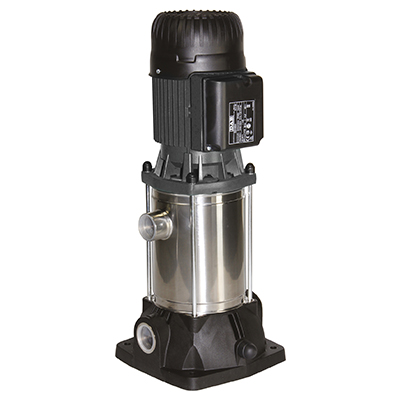
DAB documents KVC/KVCX vertical multistage centrifugal pumps for bounded water-system and pressurization routes.
Published product fact
KVC/KVCX vertical multistage centrifugal pumps with a published operating range of 50 to 200 l/min, head up to 113 m and maximum operating pressure of 12 bar.
Published product fact
Feka VS submersible stainless-steel pumps for lifting sewage water in residential and commercial building service.
Franklin documents High Capacity 3 and 5 HP as a bounded fuel-delivery submersible centrifugal-pump route.
Published product fact
FE PETRO High Capacity 3 and 5 HP multi-stage centrifugal pumps for high-volume or high-speed gasoline and diesel fuel delivery; the retained page identifies a two-stage, 60 Hz product configuration.
Published product fact
Little Giant 6 Series one-third-horsepower sump pumps.