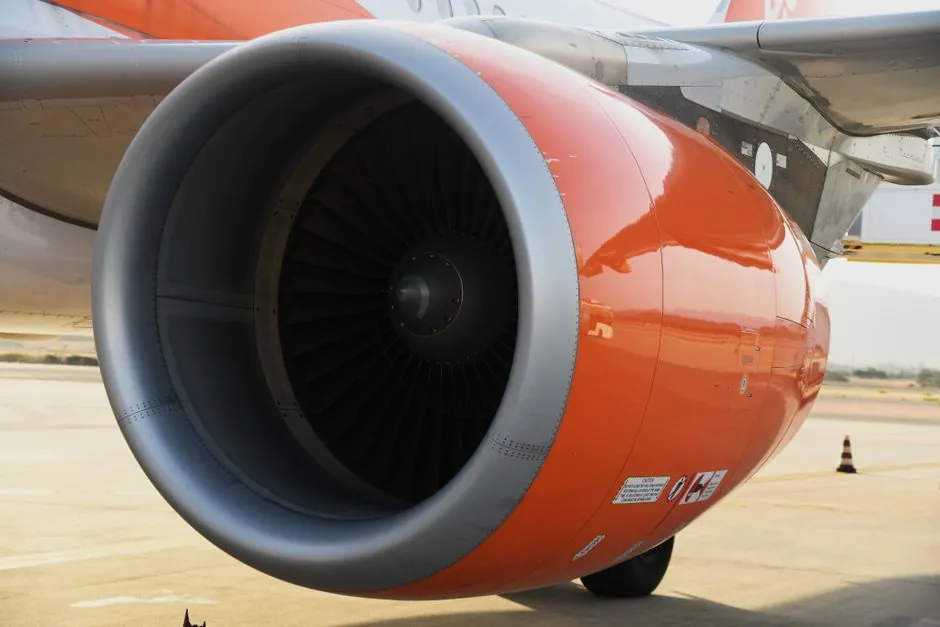
Aerospace procurement in mid-2026 still routes the bulk of high-temperature hardware through Inconel 718, Inconel 625, and Hastelloy X, with Waspaloy, Nimonic 263, and Monel K500 filling the disc, combustor-liner, and fuel-line niches [S1].
For gas-turbine combustor liners, comparative FEA studies published in December 2024 benchmarked Inconel 625 and Hastelloy X against SiC/SiC and oxide/oxide CMCs across cruise, climb, and descent flight conditions, treating the two nickel superalloys as the baseline reference [S6]. Friction stir welding of these same nickel and titanium airframe alloys has moved from lab to production cell, with the 2024 review of process parameters and tool materials establishing the parameter envelope that shops now quote [S7].
The 2026 grade map: which nickel alloy goes where
Three families cover roughly 80% of aerospace nickel buys, with the rest split between brazing foils, soft-magnetic / controlled-expansion grades, and refractory cermets [S1][S3]. Inconel 718 (UNS N07718) anchors turbine discs, shafts, and casings up to about 700 degC; Inconel 625 (UNS N06625) covers exhaust, combustor, and afterburner liners where weldability and pitting resistance dominate; Hastelloy X (UNS N06002) handles the hottest combustor zones and afterburner transition pieces where hot-corrosion resistance, not peak strength, is the driver [S1][S3][S6].
A second tier addresses disc and blade hot sections: Waspaloy (UNS N07001) for high-stress turbine and compressor discs, Nimonic 80A and 263 for creep-resistant sheet fabrications, and Incoloy A-286 (UNS S66286) for fasteners and casings exposed to 600-650 degC service [S1][S3]. A third, smaller tier covers fluid systems: Monel 400 (UNS N04400) for fuel and hydraulic lines, Monel K500 (UNS N05500) where higher strength and non-magnetic behaviour are required, plus the Inconel 600/601/690 group for heat-shield and high-temperature static hardware [S1][S3][S4].
Combustor liner trade-off: nickel superalloy vs ceramic matrix composite
The Springer combustor-liner study (December 2024) compared Inconel 625 and Hastelloy X against SiC/SiC, Al2O3/B4C, and Al2O3/SiO2 CMCs under representative flight-cycle thermo-mechanical loading, with nickel superalloys retained as the baseline against which the lighter CMC concepts are measured [S6]. The trade-off is concrete: nickel superalloys deliver mature supplier base, established repair routes, and predictable NDT response, at the cost of higher density (about 8.4-8.9 g/cm3 versus 2.5-3.0 g/cm3 for typical CMCs) and a cooling-air penalty that CMC liners are designed to remove [S6].
For new-build commercial engine programmes targeting a 10-15% specific-fuel-consumption step, the procurement pattern in 2026 is to keep Inconel 625/Hastelloy X in the hottest pressure-side zones and to introduce CMC liners only in the outer liner and exhaust nozzle where the cooling-air saving is recovered; full CMC combustor retrofits remain limited to demonstrator builds [S6].
Joining: FSW and the EN 3947 Ni-Pd-Au brazing foil subset
Friction stir welding has consolidated its position for nickel and titanium airframe alloys, with the 2024 review identifying the parameter envelope (rotational speed, traverse speed, axial load, tool shoulder/diameter ratio) that shops now run as a baseline for Inconel 625, Inconel 718, and Ti-6Al-4V assemblies [S7]. For high-temperature nickel joints where FSW is not applicable, aerospace procurement in 2026 still relies on the EN 3947 family: EN 3947:1998 defines the composition of nickel-base brazing filler metal NI-B15701 (NiPd34Au30) as a rolled foil, with a Ni-Pd-Au balance designed for oxidation-resistant joints in turbine and exhaust hardware [S10].
Welding consumables follow the AWS A5.11/A5.14 family: ERNiCrMo-3 for Inconel 625 overlay and dissimilar joints, ERNiCrMo-4 for C-276 service, ERNiCu-7 for Monel fuel-line work, and ERNiFeCr-2 for Incoloy 800/825 joints, all of which are kept as stock items by the major aerospace nickel distributors [S1][S9]. Stocked forms are equally important: aerospace buyers in 2026 still order the bulk of hardware as bar, billet, sheet, plate, strip, foil, wire, and seamless or welded tube, with the strip/foil subset (0.025-0.8 mm titanium foil, nickel-alloy strip down to 0.15 mm) sourced separately for honeycomb and brazing preforms [S2].
Selection criteria: temperature, environment, strength, and inspectability
Four decision criteria dominate a 2026 aerospace nickel grade decision, and they should be applied in this order [S1][S3][S4][S6]:
1) Peak metal temperature and time-at-temperature. Below 650 degC with high cyclic stress, Inconel 718 or Incoloy A-286 remain the default; 650-900 degC steady with hot-corrosion exposure pushes selection to Hastelloy X or Inconel 625; 900 degC and above drives Waspaloy, Nimonic 263, or a CMC liner hybrid [S1][S6].
2) Environment. Fuel, hydraulic fluid, and salt-spray exposure favour Monel 400/K500 for line components; oxidising hot-gas paths favour the high-Cr Inconel 601/690 and Hastelloy X; reducing acid or HF-bearing service routes to Hastelloy C-276/C-22 [S1][S3][S4].
3) Mechanical loading. Fatigue-critical rotating hardware (discs, shafts) routes to Inconel 718 or Waspaloy; static high-temperature hardware (casings, liners) routes to Inconel 625 or Hastelloy X; fastener and bolting routes to Incoloy A-286 or Waspaloy [S1][S3].
4) Manufacturability and inspectability. Inconel 625 and Hastelloy X are the workhorses for welded fabrications because they resist hot cracking and accept standard NDT; Inconel 718 is selected only when the strength premium justifies the welding-procedure and post-weld heat-treatment overhead [S1][S7].
Supply base in 2026: stockists, mills, and form coverage
Procurement in mid-2026 has at least four supply lanes open: Chinese integrated mills (Jiangsu Shengpo New Materials, established 2009, ISO 9001:2015, 175 employees, offering nickel-alloy strip/tube, titanium tube, and stainless steel tube from a Changshu base) [S2]; UK and EU specialty stockists carrying the full nickel, cobalt, and refractory-metal grade list as bar, plate, sheet, wire, strip, and cube from stock [S8]; Indian stockists covering the UNS grade range from C276 through Inconel, Monel, and Incoloy for aerospace and defence [S3]; and project-focused suppliers offering custom plate, seamless and welded pipe, bar, flanges, and fittings in Hastelloy, Inconel, Incoloy, and Monel for one-off build programmes [S9].
Sekonic Metals (25 years in nickel, titanium, and stainless steel) continues to publish the most complete UNS/cross-reference grade list relevant to aerospace procurement, with explicit categories for Inconel, Monel, Hastelloy, Incoloy, Nimonic, Waspaloy, Haynes, Nitronic, and PH stainless [S1]. Midalloy's 2026 positioning likewise ties nickel-alloy selection directly to corrosion and thermal resistance in aerospace, defence, energy, and chemical service [S4].
Common failure modes and what to avoid in a 2026 spec
Three misuse patterns show up repeatedly in aerospace RFQs in 2026 and are worth flagging before issuing a PO [S1][S4][S6][S7]:
Specifying Inconel 718 for heavily welded fabrications without budgeting for the post-weld heat-treatment cycle that the grade requires to recover its strength [S7]. Specifying Hastelloy C-276 where the service environment is purely oxidising hot gas: C-276 is a reducing-environment alloy and the wrong cost/availability trade against Hastelloy X or Inconel 625 for combustor duty [S1][S3]. Specifying Monel 400 above roughly 400 degC in sour or oxidising service, where Monel K500 or an Inconel grade gives better resistance and creep life [S1][S4].
For brazed joints, avoid the temptation to substitute a generic Au-Ni foil for EN 3947 NI-B15701 (NiPd34Au30); the Pd content is the feature that gives the joint its oxidation and thermal-cycling resistance, and it is the reason the EN 3947 grade remains a controlled aerospace purchase [S10].
For welded airframe and engine structures, FSW should be on the table as a default rather than an exception for nickel and titanium assemblies, given the parameter and tool envelope now published and the inherent advantage of a solid-state bond over fusion welding for these alloy systems [S7].
Two trackable signals to watch into late 2026: whether EN 3947 is reissued with additional filler-metal grades under the same NI-Bxxxxx designation, and whether the December 2024 combustor-liner FEA benchmark translates into published CMC-liner retrofit orders against Inconel 625/Hastelloy X baselines [S6][S10]. For the wider titanium and refractory-metal procurement chain that surrounds any nickel-alloy aero build, see the related defense titanium alloy selection: grade map, fatigue gates, and spec chain and titanium alloy selection for general fabrication: grade map, forming gates, and reference notes.
For component-level specifications, see nickel alloy, alloy steel, and aluminum alloy.