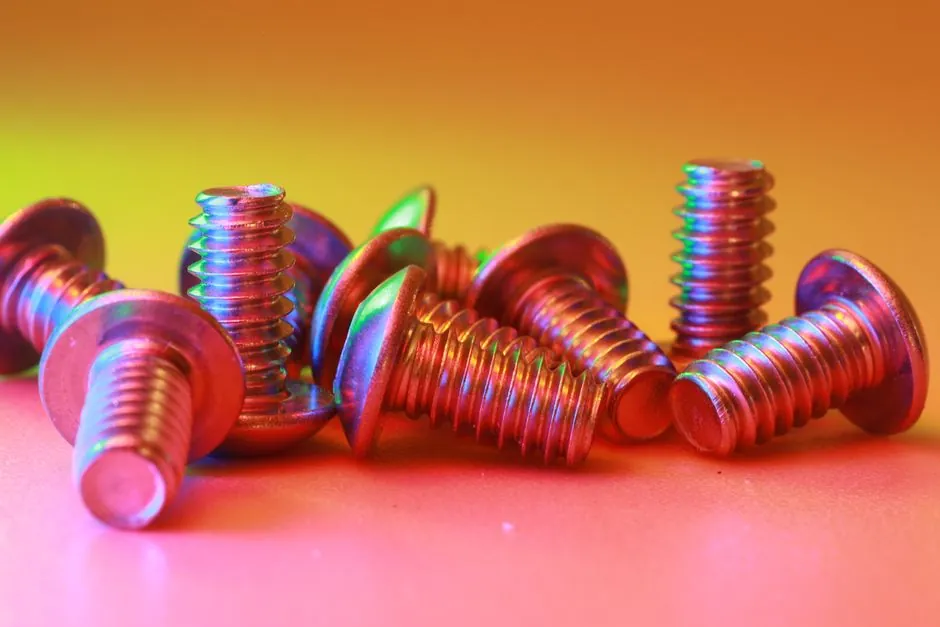
For general fabrication work, the practical alloy shortlist is narrow: CP titanium (Grades 1-4) for corrosion-resistant forming, Ti-6Al-4V (Grade 5) for the bulk of structural machining, Ti-3Al-2.5V (Grade 9) for tube and cold-formable sheet, and the experimental Ti-Co family (5-27 wt% Co, balance Ti) under thixoforming development per US20180281055A1 [S2].
Fabricators who stock all four cover approximately 80% of incoming RFQs in chemical, medical, and light-aerospace work, based on the product mix observed at Baoji-region mills serving those segments [S1]. Outside this shortlist, niche grades (Ti-10V-2Fe-3Al, Ti-15V-3Al-3Cr-3Sn, commercially pure Grade 7 with Pd) only pay off when a specific corrosion or beta-processing gate forces the call. For a broader comparison against titanium alloy families and how they sit next to aluminum alloy and alloy steel on the shop floor, the grade map below is the working baseline.
Grade-by-Grade Selection Criteria: CP, Ti-6Al-4V, Ti-3Al-2.5V, Ti-Co
CP titanium (Grades 1-4) is the default for chemical tanks, heat-exchanger tube sheets, and any forming job where weldability and corrosion resistance outrank strength, with minimum tensile strength ranging roughly 240-550 MPa as impurity content rises from Grade 1 to Grade 4. [S2]
Ti-6Al-4V (Grade 5) is the alpha-beta workhorse: minimum tensile strength around 895 MPa in annealed condition, machinable at roughly 30-40% the feed rate of 304 stainless, and weldable with inert-gas shielding on both sides of the joint to keep the oxygen-enriched alpha-case below the 0.1-0.2 mm removable range. This is also the grade that links to related fabrication work covered in Titanium Alloy Selection for Energy Equipment: Grade Map, Fatigue Gates, and, where fatigue and corrosion gates dominate over formability.
Ti-3Al-2.5V (Grade 9) sits in the gap: minimum tensile strength around 620 MPa, weldable, and the standard tubing alloy for hydraulic lines and cold-formed pressure hardware where Ti-6Al-4V is over-spec and CP titanium is under-spec. The Ti-Co thixoforming family disclosed in US20180281055A1 targets a different problem entirely, since the patent claims a 5-27 wt% Co composition (with 13-27 wt% Co in one narrower claim) that is heated to a temperature between its solidus and liquidus, then formed in the semi-solid state to cut the cost of machining complex titanium geometries [S2].
Hot Working Window: Temperature, Reheats, and Atmosphere Order
Titanium and its alloys hot work at temperatures "generally somewhat lower than those used for steels," per the standard fabrication reference for these alloys, with forging practice (press and hammer) otherwise following low-alloy steel techniques [S3].
Contamination kinetics drive most of the rule set. The diffusion rate of oxygen stays relatively low up to 700°C and then rises quickly with temperature, so soak time at peak must be kept short; a hardened alpha-case forms under the scale and is normally removed by subsequent machining. Hydrogen diffuses faster than oxygen and can penetrate the full section, with recovery only by prolonged vacuum annealing, while nitrogen pickup is generally not significant at normal preheat temperatures [S3]. The standard preference order for preheating atmospheres, when a choice is available, runs dried air (electric heating) first, undried air (electric heating) second, and oxidizing oil- or gas-fired furnaces third, with direct flame impingement on the workpiece ruled out.
For drop forging, die contours should carry larger radii and fillets than the steel equivalent because titanium contracts less on cooling, so the shrinkage allowance is smaller. Trimming is done hot, and the furnace, hammer, and trim press are laid out close together to cut transfer time and heat loss. A final stress-relief anneal is recommended for closed-die titanium forgings [S3].
Forming, Machining, and Joining: Shop-Floor Gates

Annealed and solution-treated titanium sheet can be press-formed, stretch-formed, spun, and dimpled, with maximum deformation limited by slow load application: hydraulic presses give the best results, the rubber-pad method is useful for light-gauge parts, and drop-hammer forming with heated blanks is standard for complex contours [S3]. Punch presses should be slowed to roughly half to one-third of their normal steel speed to avoid cracking the work.
Blanks for forming come from shearing, sawing, nibbling, or blanking at slow cutting speeds, with sharp, close-fitting guillotine blades and burr removal mandatory; for difficult forming operations, edges may need filing or polishing before the press. Repeated light forging blows or continuing deformation below the hot-working range promote internal cracking and should be avoided, while many small reheats with little deformation between heats coarsen the microstructure and hurt mechanical properties [S3]. These shop rules are a closer match to the gating logic used in Ball Bearing Selection for Mining: Load, Sealing, and Material Gates, where the grade decision flows from a small set of measurable operating limits rather than a brand catalog.
Comparison Table: Four Workhorse Grades Against Four Decision Criteria
Side-by-side, the four practical grades line up against the four criteria a fabricator weighs on every quote: minimum tensile strength, weldability, hot-work temperature relative to steel, and primary shop form. [S2]
CP titanium (Grade 2) delivers 240-550 MPa tensile across Grades 1-4, welds readily with inert shielding, hot-works below typical steel forging temperatures, and is the default for chemical and forming work. Ti-6Al-4V (Grade 5) is the 895 MPa structural default, weldable with strict atmosphere control, hot-worked below steel range, and feeds 70%+ of titanium machining chips. Ti-3Al-2.5V (Grade 9) sits at roughly 620 MPa, is weldable and cold-formable, hot-works below steel range, and dominates tubing and cold-formed pressure parts. Ti-Co (5-27 wt% Co) per US20180281055A1 is thixoformed in the semi-solid state between solidus and liquidus, targets near-net-shape complex parts, and remains an R&D and patent-stage option rather than a stocked shelf item [S2].
Who This Shortlist Is For, and Who It Is Not For
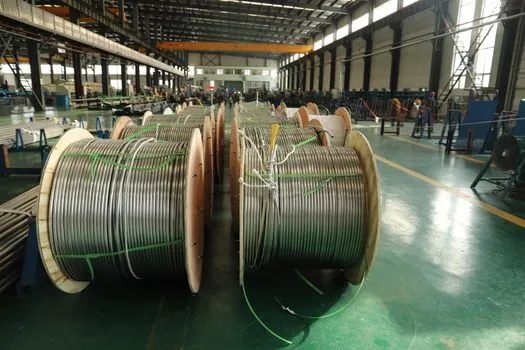
The four-grade list fits small and mid-size fabrication shops doing chemical-process equipment, medical device components, marine hardware, light-aerospace brackets, and consumer titanium goods, where a single inventory of CP Grade 2 plate, Ti-6Al-4V bar, and Ti-3Al-2.5V tube covers the RFQ flow [S1]. It is not the right list for jet-engine rotating parts (which need damage-tolerant beta-rich grades like Ti-6Al-4V ELI or Ti-10V-2Fe-3Al run to tight AMS specifications), nor for large marine propeller shafts (where Cu-Ni or Monel-type nickel alloy alternatives are commonly out-spec'd, see nickel alloy reference for those service envelopes).
It is also not a complete answer for high-volume zinc die-cast enclosures, where the fabrication decision shifts to a different process and a different material, as mapped in Zinc Die Casting Machine Selection for Pump and Valve Production: Spec Map; a titanium forging shop and a zinc die-casting shop solve different problems with different gates, even when both quote the same chemical-plant end user.
Failure Modes, Standards, and Trackable Signals
The two recurring failure modes on the fabrication floor are hydrogen embrittlement from extended furnace exposure (recoverable only by vacuum anneal) and alpha-case formation from oxygen pickup above 700°C, both of which the standard fabrication reference flags as the dominant contamination mechanisms for hot-worked titanium [S3]. A third, less common mode is internal cracking from forging too far below the hot-working range or from too many light reheats with too little deformation, which the same reference identifies as a direct path to coarse microstructure and poor mechanical properties [S3].
For sourcing, mills in the Baoji, Shaanxi cluster still dominate the Chinese supply side for CP and Ti-6Al-4V plate, rod, bar, and tube, with companies like Baoji Xinnuo New Metal Material Co., Ltd. (established 2004, 101-200 employees) listing titanium rod, plate, threaded bar, mesh, and arc-bar products with North America, South America, and Eastern Europe as primary export markets [S1]. Trackable signals for the next buying cycle are (1) any commercial availability announcement for Ti-Co thixoforming billet beyond Boeing/UNICAMP patent disclosures [S2], and (2) AMS and ASTM revision activity on Ti-6Al-4V and Ti-3Al-2.5V heat-treatment and weld-procedure qualifications, which usually lead mill stocking changes by one to two quarters.