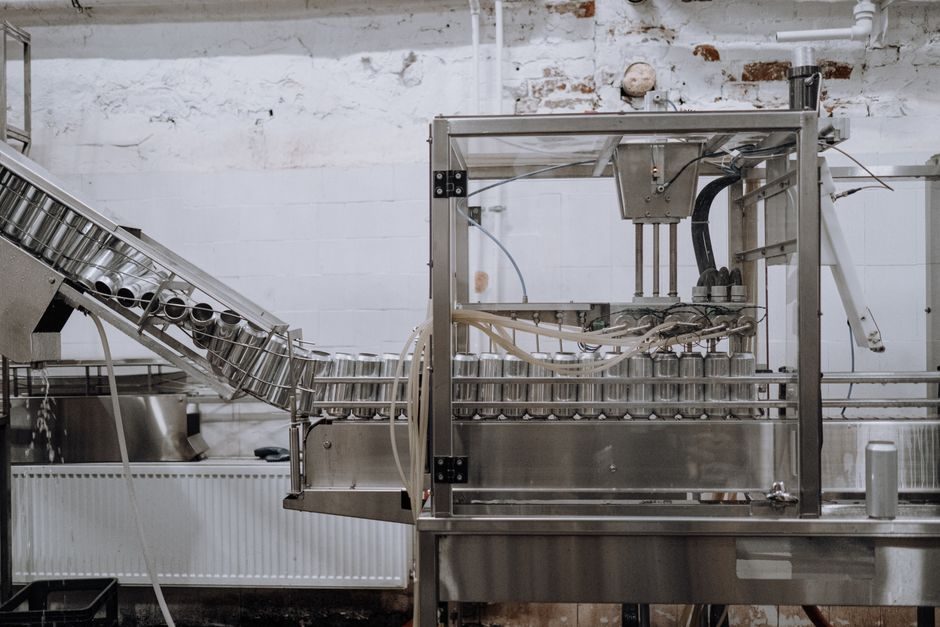
For nickel and nickel-alloy buyers, the OEM vs ODM choice is a design-ownership decision before it is a price decision: OEM means the buyer owns the print, the alloy grade and the heat-treatment schedule, and the factory executes to that spec; ODM means the factory owns the print and the buyer rebrands an existing platform [S2]. On the Made-in-China directory as of July 2026, Henan-based Lork Group lists Nickel Alloy, Cobalt Alloy, Titanium Alloy and Super Alloy under "OEM/ODM Service" [S1], while Guangdong and Hebei cupronickel coil suppliers list "OEM, ODM, Own Brand" as three separate R&D-capacity options with annual-revenue bands from under 1 MUSD to over 100 MUSD [S4].
The same directory shows Fujian's Xiamen Rongxufeng Technology — 20-plus years in metal wire mesh — listing OEM/ODM for nickel mesh, expanded metal and perforated sheet [S8], and a separate Guangdong ODM-only steel-bar supplier (Urich) covering steel round bar and steel rectangle bar under ODM service only [S1]. The pattern: factories running a discrete forming line (mesh, bar, coil) are more willing to take ODM on an off-the-shelf platform, while specialty alloy mills prefer OEM because the alloy chemistry is the product.
Definition split: who owns the print, the chemistry, the cert
OEM (Original Equipment Manufacturer) in the nickel trade means the buyer supplies the engineering package — alloy designation (e.g. Nickel 201, Monel 400, Inconel 625, cupronickel 70/30), dimensional tolerances, surface finish (2B, BA, No.4, mirror), mechanical targets (yield, tensile, elongation) and the test plan — and the factory runs it on its mill [S2]. ODM (Original Design Manufacturer) means the factory already has a tested design, often in a standard form factor, and the buyer customises the cosmetic layer: logo, packaging, private-label documentation [S2].
The cert layer is where the two paths diverge hardest. OEM programs typically demand the mill supply EN 10204 3.1 (or 3.2 for higher-risk service) mill test certificates, with heat numbers traceable to the actual cast; the buyer usually names the test lab and the third-party inspector. ODM programs can ride on the factory's existing ISO 9001:2015 quality system, which is the dominant certification tag visible on Made-in-China cupronickel and nickel-mesh supplier pages [S4][S8][S9]. A buyer who needs NACE MR0175 / ISO 15156 sour-service compliance or ASME B&PV Section II material acceptance will struggle to get it on an ODM run — those certifications attach to the heat, the chemistry and the QA chain, not the brand label.
Spec bands that actually decide OEM vs ODM
Three spec parameters usually force the call. First, alloy grade: cupronickel 70/30 (C71500) and 90/10 (C70600) coil and sheet are commodity enough that ODM works; Inconel 625, Hastelloy C-276, Monel K-500 and NACE-compliant 825/625 derivatives are almost always OEM because heat-by-heat certification is non-negotiable [S1][S4]. Second, form factor: standard wire-mesh apertures (e.g. 10–200 mesh), standard coil widths and standard round-bar diameters (6–200 mm) can ship ODM from catalogue drawings; non-standard weave, custom dutch-twist or precision-rolled foil drops back to OEM [S8].
Third, documentation depth. OEM buyers in pressure-bearing, marine, offshore and chemical-plant service will ask for: 3.1/3.2 MTC, PMI (positive material identification) report, hydrostatic or pneumatic test report, mechanical test report, intergranular-corrosion test per ASTM A262 for austenitic grades, and often a radiographic or ultrasonic exam on welded tube/pipe. ODM packages, even on a factory with ISO 9001:2015 [S4][S8], usually stop at a generic COA and visual/dimensional inspection. The decision rule that comes out of the 2026 supplier directory: if your end-use is sour service, subsea, nuclear or pharmaceutical, default to OEM; if it is HVAC, heat exchanger (low-pressure), decorative mesh, architectural cladding or general industrial, ODM is the faster, lower-MOQ path [S4][S8].
Supplier-tier signals on the 2026 Made-in-China directory
Reading the supplier filter pages in this segment, the operating cert signals are thin and worth checking before RFQ. The visible quality-system tags on cupronickel coil and nickel-mesh factory pages are ISO 9001:2015, ISO 14001:2015 (where shown), ISO 45001:2018, and ANSI/ESD on the electronics-adjacent lines — but product-line specific certs (DNV, BV, Lloyd's, TÜV, ASME QSC) are not exposed in the directory and must be requested on a per-factory basis [S4][S8][S9]. For cupronickel coil specifically, factory pages list annual-revenue tiers from "less than 1 MUSD" up to "more than 100 MUSD" and headcount bands up to 1,000 employees, which is the most concrete scale proxy a buyer can read off the page [S4].
Factory age and tenure is the second usable signal. Xiamen Rongxufeng Technology cites a 2004 founding and "over 20 years" in nickel mesh and wire forming as of 2026 [S8]; Lork Group positions itself as a multi-alloy supply-chain manager with Nickel Alloy and Super Alloy on the same product card [S1]; the ODM-only Guangdong steel-bar supplier (Urich) does not publish a founding year on the directory page, which itself is a flag — on nickel-purity and traceable-chemistry buys, undisclosed corporate history is a red flag, not a discount. The 2026 sourcing logic is to weight the OEM/ODM label less than the alloy-specific experience, the cert list and the willingness to issue 3.1 mill certificates heat-by-heat [S1][S4][S8].
Comparison: OEM, ODM and Own-Brand on three decision criteria
On design ownership, OEM puts the full print (alloy, tolerance, surface, test plan) with the buyer; ODM puts it with the factory and lets the buyer rebrand; Own Brand sits in between — the factory ships its standard product under the buyer's label and trademark [S2][S4]. On certification depth, OEM can carry 3.1/3.2 MTC, NACE MR0175 sour-service compliance and customer-named third-party inspection; ODM rides on the factory's ISO 9001:2015 system plus a generic COA; Own Brand usually stops at a commercial invoice and a basic COA [S2][S4][S8].
On minimum order quantity and lead time, OEM is the slowest and the highest-MOQ because every order is a new tooling/draw run; ODM is the fastest and the lowest-MOQ because the platform already exists; Own Brand behaves like ODM with a label change. Cost follows the same curve: OEM carries the highest unit price because the mill is amortising a one-off set-up; ODM is the cheapest per kilo on a like-for-like form factor; Own Brand sits just above ODM to cover label/packaging. For projects needing ASME/NACE documentation or custom alloy chemistry, the OEM premium is not optional — it is the price of buying a heat-traceable, certifiable material [S1][S2][S4].
Failure modes and traps unique to nickel ODM
Three traps repeat on ODM nickel buys. First, the alloy-substitution trap: an ODM factory drawing a "nickel mesh" or "cupronickel coil" line may quietly run 200/201 series where the spec implied 201 with controlled Co, or run 304/316 austenitic stainless in place of true nickel-iron-chromium alloys when the buyer does not pin the UNS number and the chemistry table on the PO [S8]. Second, the surface-finish trap: a "BA" or "mirror" finish on a commodity ODM coil can be a 2B buff pass rather than a true bright-annealed finish, which matters for food/pharma and for any downstream polishing line that assumes a known Ra [S4].
Third, the documentation trap: ODM COAs are frequently cut-and-paste across heats and the heat numbers on the MTC may not match the heat numbers etched/stamped on the product. The 2026 buyer-side mitigation is the same in every case — demand a heat-traceable 3.1 certificate, run an incoming PMI gun check on the first batch, and require a retained sample per heat for at least the project life. The nickel alloy reference page lists the standard UNS designations (N02200, N02201, N04400, N05500, N06625, N10276, C70600, C71500) that should appear on every MTC; if the factory cannot match the heat to one of those, the ODM label is not the issue — the chemistry is. See also a parallel write-up of Lithium OEM vs ODM Manufacturing: 2026 Spec Bands, Certifications and Sourcing Logic for how the same OEM/ODM split plays out on a different commodity chemistry, and Nickel Manufacturing Cost Breakdown: Laterite, Sulfide and Precursor Lines for the upstream cost stack that drives the OEM/ODM unit-price gap.
RFQ checklist before signing a nickel OEM or ODM PO
A 12-line checklist that works for both paths: (1) Name the UNS alloy designation, not a trade name; (2) Pin the product form (coil, sheet, strip, bar, wire, mesh, tube) and ASTM/ASME/EN material standard; (3) Specify dimensional tolerances as numbers, not "as standard"; (4) State surface finish by standard designation (2B/BA/No.4/No.8 per ASTM A480); (5) Demand 3.1 MTC minimum, 3.2 for sour/nuclear service; (6) State the third-party inspector (SGS, BV, TÜV, DNV) and who pays; (7) Ask for a retained sample per heat and define sample size; (8) State packaging and labeling — Own Brand and ODM need this in writing; (9) Define the rejection ladder (rework, replace, credit) before PO; (10) Cap the heat-trace window (e.g. 90 days from MTC issue); (11) Confirm REACH/RoHS if the coil or mesh is going into EU equipment; (12) Get the factory's ISO 9001:2015 certificate number and expiry and verify it on the issuing body's register [S4][S8].
For buyers who need a deeper background on the upstream side of the supply chain, the Nickel Production Capacity Planning: Work-Center Logic Meets Cathode Demand Waves piece walks through how cathode and refined-nickel mills schedule OEM-grade heats, which is the same logic that drives lead time on an OEM nickel-alloy order. For buyers who treat the mill certificate as the core spec artefact, treat the nickel alloy page as the chemistry reference and the 12-line checklist above as the contractual wrapper around it.
2026 market signals worth tracking on the next refresh

Two trackable signals for the next 90–180 days: LME nickel three-month price and the MRL (maximum residue limit) conversation around nickel in EV-battery precursor lines, both of which move ODM vs OEM unit-cost spread by changing how much margin a Chinese mill can absorb on a low-MOQ ODM run. A third is the additive manufacturing material segment — more nickel-alloy powder is moving to ODM-style catalogue platforms (standard particle size distribution, standard powder-bed parameters), and the ODM logic that works for coil and mesh is starting to show up on the powder side of the same supplier directory. Watch the factory-page cert columns on cupronickel coil and nickel mesh for new entries of ISO 14001:2015 and ISO 45001:2018 — those are the lead indicators that a mill has invested in the kind of QA depth an OEM program demands, and they typically appear 6–12 months before the factory will quote on a 3.2 MTC [S4][S8].
For component-level specifications, see pressure transmitter.