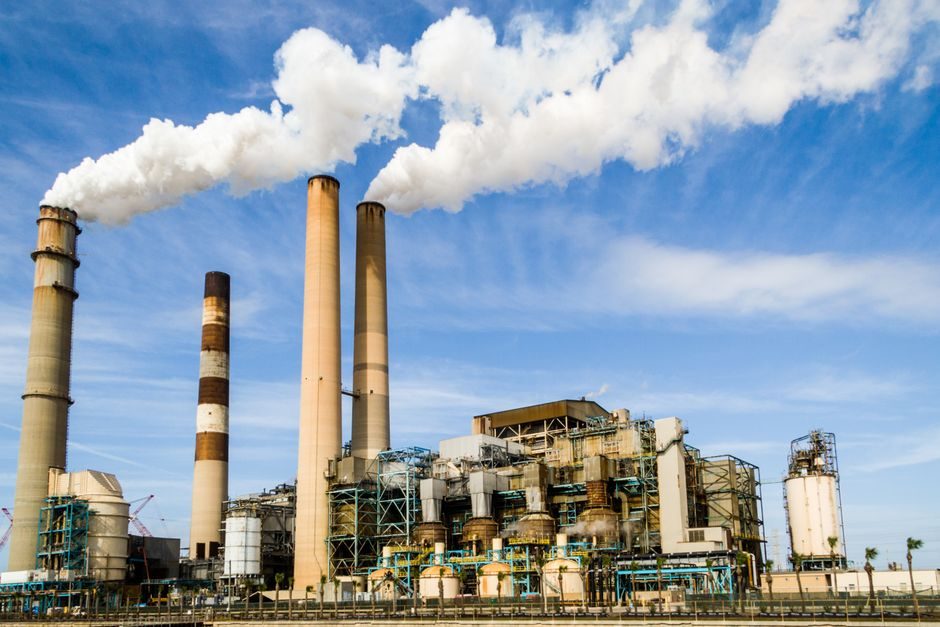
Three regional clusters — North America, East China, and Northeast Asia — account for the bulk of commercially-deployed hydrogen fuel cell stack and system production capacity in 2026, each with a distinct technology mix and downstream anchor market [S1][S3][S4].
The U.S. Department of Energy frames hydrogen as an energy carrier produced from natural gas, nuclear, biomass, solar and wind, and consumable in fuel cells that emit only water — a baseline definition that anchors every capacity discussion [S1]. The International Partnership for Hydrogen and Fuel Cells in the Economy (IPHE), the intergovernmental coordination body, had welcomed Kenya as a new member on 15-Jun-2026, with 30+ country members tracked in its July 2026 activities compendium [S4].
United States: DoE-anchored PEM and stationary stack assembly
The United States is the largest single-country producer of PEM fuel cell stacks and stationary fuel cell power systems, supported by the Department of Energy's Fuel Cell Technologies Office and a deep Tier-1 automotive stack supplier base in California and Connecticut [S1]. The DoE definition of hydrogen as a fuel "consumed in a fuel cell" producing only water is the technical reference for cell efficiency (40–60% electrical, up to 85% CHP) and lifetime targets (commercial truck stacks rated to 25,000 h) cited across US procurement documents [S1].
Stationary fuel cell generators in the 100 kW–2.5 MW class are a US production strength: molten-carbonate and solid-oxide systems for prime power, and PEM units for backup power, are built in California and New York. U.S. stack manufacturing capacity is feedstock-flexible: natural-gas steam methane reforming (SMR), water electrolysis from grid or renewable power, biomass gasification, and nuclear electrolysis are all in commercial use [S1]. For sourcing engineers, the U.S. cluster is the first call for sub-MW stationary PEM fuel cell generators and for Class-8 truck propulsion stacks requiring 25,000 h durability data packages.
China: Zhejiang PEM/generator OEM/ODM volume base
Zhejiang province, China, is the highest-density export-oriented fuel cell OEM/ODM manufacturing base in the world, with publicly-listed factories offering Hydrogen Fuel Cells, PEM Fuel Cells, Fuel Cell Generators, Fuel Cell Engines, and Fuel Cell Power Generation Systems under OEM/ODM service models [S3]. Typical Zhejiang production lines cover 1–10 kW air-cooled PEM stacks for forklift and backup-power use, and 30–120 kW liquid-cooled stacks for light commercial vehicles.
The Chinese cluster competes primarily on lead time and price-band, not on heavy-duty durability: most Zhejiang catalog units carry 5,000–8,000 h stack-life ratings against U.S./Korean 20,000–25,000 h commercial-vehicle ratings [S1][S3]. China-sourced stacks are commonly integrated with locally-built pressure transmitters for hydrogen pressure monitoring and with flow meters on the anode recirculation loop. Hydrogen feedstock in China skews to grey (coal/SMR) and increasingly green (offshore wind electrolysis) per IRENA's hydrogen technology overview [S5].
Europe and Korea/Japan: vehicle-anchored stack production
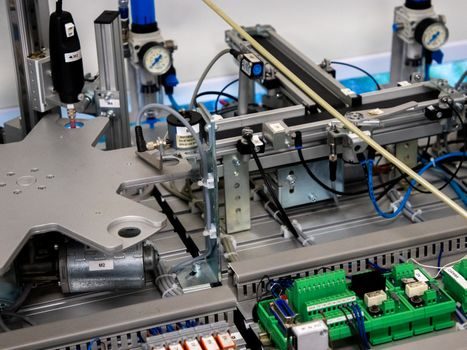
Europe's fuel cell production is split between automotive propulsion stacks (Germany, France) and large-scale alkaline/PEM electrolyser manufacturing (Germany, Denmark, Norway) for hydrogen production rather than consumption in cells. IPHE membership — covering 30+ countries as of July 2026 — drives harmonisation of certification mechanisms (Webinar "Certification Mechanisms v.2" held 22-Jun-2026) which directly affects cell export compliance [S4].
South Korea and Japan anchor commercial-vehicle and passenger-FCEV stack production: Hyundai's XCIENT fuel cell truck programme operates from Korean plants with global fleet deployment, and Toyota's Mirai-class passenger FCEV output continues from Japanese facilities [S4][S6]. Fuel cell vehicles "are completely free from tailpipe pollutant emissions, including particulates, oxides of nitrogen, carbon monoxide, and carbon dioxide" — a regulatory and marketing lever that supports sustained CAPEX in these two national clusters [S6]. Korea/Japan are the reference choice for load-cell instrumented hydrogen tank skid builds and for compliance-tested stack modules requiring automotive-grade traceability [S6].
Production-capacity comparison by cluster
Four decision criteria separate the three clusters for procurement engineers evaluating where to source 2026 fuel cell stack and system capacity [S1][S3][S4][S6]:
1. Annual stack output (MW-class equivalent): USA leads in stationary (Bloom/Doosan-class 100 kW–2.5 MW systems), Korea/Japan lead in FCEV (Hyundai/Toyota programmes), China leads in small stationary and light-commercial PEM (Zhejiang 1–120 kW lines) [S1][S3][S6].
2. Stack lifetime rating: U.S. commercial 25,000 h; Korea/Japan automotive 20,000 h; Zhejiang catalog 5,000–8,000 h — roughly a 3× spread on total cost of ownership per kWh delivered [S1][S3].
3. Feedstock hydrogen mix: USA gas/nuclear/renewable-flexible; Korea/Japan predominantly imported grey with growing green imports; China >60% coal-derived (grey) with growing offshore-wind green [S1][S5].
4. Export compliance and certification: U.S. (DoE standards + UL listed); Korea/Japan (UN/ECE R134 hydrogen vehicle + IPHE Certification Mechanisms v.2 alignment); China (GB/T 35579 / GB/T 29123 stack standards) [S1][S4].
This four-axis comparison lets a sourcing manager match duty-cycle, lifetime, and certification gates to the cluster that meets them at lowest landed cost.
Limitations, failure modes, and constraints
Three constraints cap near-term capacity growth regardless of cluster: platinum-group-metal (PGM) catalyst supply, bipolar-plate graphite/metal forming throughput, and high-purity hydrogen storage and industrial valve qualification [S1][S5]. DoE's own framing notes hydrogen can be produced from natural gas, nuclear, biomass, and renewable power — but storage and delivery infrastructure (350/700 bar composite tanks, cryo-liquid tankers) is the binding gate, not the cell itself [S1].
Stack degradation modes are cluster-agnostic: membrane chemical attack (radical species at high voltage), catalyst dissolution (Pt at >0.85 V), and bipolar-plate passivation all set the same 5,000–25,000 h lifetime bands cited above [S1]. China-sourced stacks fail earlier primarily from thinner membrane loading and higher-power-density continuous-duty operation, not from any cluster-specific degradation mechanism.
Standards, sourcing, and next signals
Capacity claims should be cross-checked against four reference sources: the U.S. DoE Fuel Cell Technologies Office (technical baseline and lifetime data) [S1], IPHE activities compendium (July 2026) for intergovernmental certification status [S4], IRENA hydrogen technology overview (feedstock and policy context) [S5], and ScienceDirect's fuel cell vehicle chapter (automotive stack reference) [S6]. Chinese OEM/ODM factory listings on Made-in-China.com provide production-line catalog validation for Zhejiang stack volumes [S3].
For procurement teams building a 2026 sourcing shortlist, the engineering data point to watch next is the IPHE Certification Mechanisms v.2 implementation timeline following the 22-Jun-2026 webinar, and the FY2026 U.S. DoE Hydrogen Shot cost-target update — both will move capacity pricing bands within the next two reporting cycles [S1][S4]. Engineers working on related mechanical assemblies such as mesh belt conveyor sizing for food and beverage lines adjacent to fuel cell stack production will see parallel pressure on stainless component traceability as IPHE certification tightens.