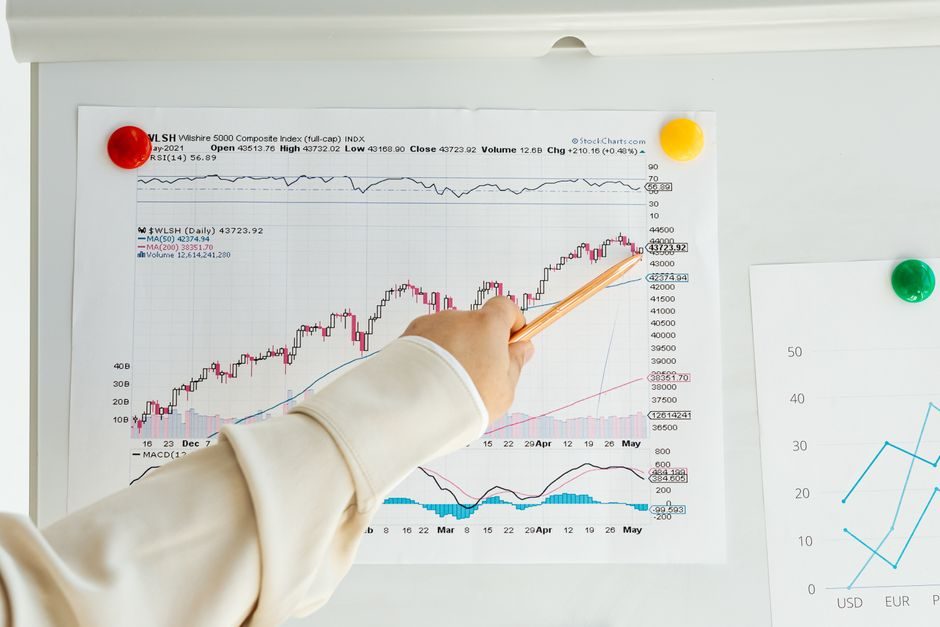
Inner Mongolia samarium oxide quotations on the China domestic board held above the May 2026 floor as the July trading window opened, while oxide products feeding NdFeB magnet production — praseodymium-neodymium, dysprosium and terbium — moved in a tightening range [S4][S5].
Transparency Market Research pegs the global rare-earth metals market at US$ 14.1 Bn in 2025, with a projected climb to US$ 30.9 Bn by 2036 at a 7.4% CAGR (2026–2036), driven primarily by EV traction-motor and wind-turbine demand [S2]. For buyers specifying pressure transmitters and flow meters into hydrometallurgy lines, the input that matters is the oxide-to-alloy spread, not the headline index.
China Oxide Price Bands, 9 June 2026 Snapshot
CBCIE's Inner Mongolia daily board on 9 June 2026 listed samarium oxide, neodymium oxide, praseodymium oxide and cerium oxide under its rare-earth oxide category, with separate Shanxi, Jiangsu and Jiangxi regional splits [S4]. The same board distinguishes rare-earth metals (alloy), rare-earth chloride and rare-earth carbonate as discrete tradable products, not interchangeable units [S4].
Buyers running continuous solvent-extraction trains should treat the oxide reference price as the lead indicator; carbonate typically trails by two to four weeks because it sits one step earlier in the cracking chain. Vacuumschmelze (VAC) is flagged in the 2026 trade press as a key sintered-NdFeB magnet producer whose upstream oxide pull directly tracks the Inner Mongolia oxide tape [S1].
Magnet-Grade vs Non-Magnet Grade: Where the Premium Sits
Within the 17-element REE family, four oxides carry the bulk of the 2026 price premium: neodymium, praseodymium, dysprosium and terbium — all feeding NdFeB permanent magnets used in EV traction motors, wind turbine generators and servo industrial valve actuators. Lighter rare earths (cerium, lanthanum) trade at a fraction of magnet-grade pricing and are used in catalysts, glass polishing and metallurgy. [S1]
Samarium sits between the two bands: its oxide is the precursor to SmCo magnets, which retain magnetism above 350 °C and are specified in aerospace and defence applications where NdFeB loses flux. The 9 June 2026 Inner Mongolia board showed samarium oxide quoted separately from the Nd-Pr band, confirming the smelter view that samarium and Nd-Pr are not substitutable inputs [S4].
Demand Drivers Behind the 2026 Tape

Three end-markets account for most of the 2026 demand pull: EV traction motors (NdFeB, ~1–2 kg per motor), wind turbine direct-drive generators (NdFeB, several hundred kg per unit), and industrial pressure sensors / PLCs in smelter automation retrofits. The 7.4% CAGR projection in the Transparency report maps directly onto these three vectors [S2].
On the supply side, the 2026 trade press identifies Vacuumschmelze (VAC) as a Western sintered-magnet producer of strategic interest, alongside the long-standing Chinese separation cluster in Inner Mongolia, Jiangxi and Sichuan [S1][S4]. Diversification of refining capacity outside China is the structural story buyers are watching, even when spot oxide prices in Baotou move sideways week-to-week.
Selection Criteria for Procurement Teams in Q3 2026
Procurement engineers running EV-motor or wind-turbine BOMs should lock Nd-Pr oxide under a quarterly reset rather than spot, because the weekly tape on rare-earth mining news feeds shows intra-quarter swings that exceed the typical 5–8% annual negotiated discount [S1]. Samarium and Dy/Tb are thinner markets and better suited to annual contracts with ceiling/floor collars.
Limitations and Failure Modes Buyers Must Price In
Three risks sit on top of the spot tape: export licensing shifts in China, which have moved oxide prices 20–40% in past policy windows; substitution pressure on heavy rare earths (Dy, Tb) where Dy-free grain-boundary diffusion grades are maturing; and FX volatility, since most REE contracts settle in USD while the underlying oxide is RMB-denominated in Inner Mongolia [S4][S5].
On the engineering side, a wrong grade of NdFeB feedstock will not just cost money — it shifts the motor's BHmax curve and can derate a traction machine by 5–10% on continuous torque. Specifying without an explicit oxide assay report (not a metals-content report) is the most common failure mode in 2026 spot buys.
Sourcing Standards and Audit Trail
Two standards govern the assay chain: ISO 9001 for smelter quality systems, and per-lot ICP-OES or XRF assays traceable to a national metrology institute (NIST, NIM China). Buyers should require the assay report to specify each of the 17 REEs individually, not a single "REO total" figure, because the magnet-grade premium is driven by the Nd-Pr ratio and the Dy/Tb allowance [S2].
Trackable signals into Q4 2026: the next Inner Mongolia daily-board print on the CBCIE feed [S4]; any updated Transparency Market Research rare-earths datapoint [S2]; and any new disclosure from Vacuumschmelze on sintered-magnet capacity additions that would loosen the magnet-grade oxide tape [S1].
For related coverage, see Spherical Plain Bearing Suppliers 2026: Cluster Map, Spec Bands and Sourcing Reality.