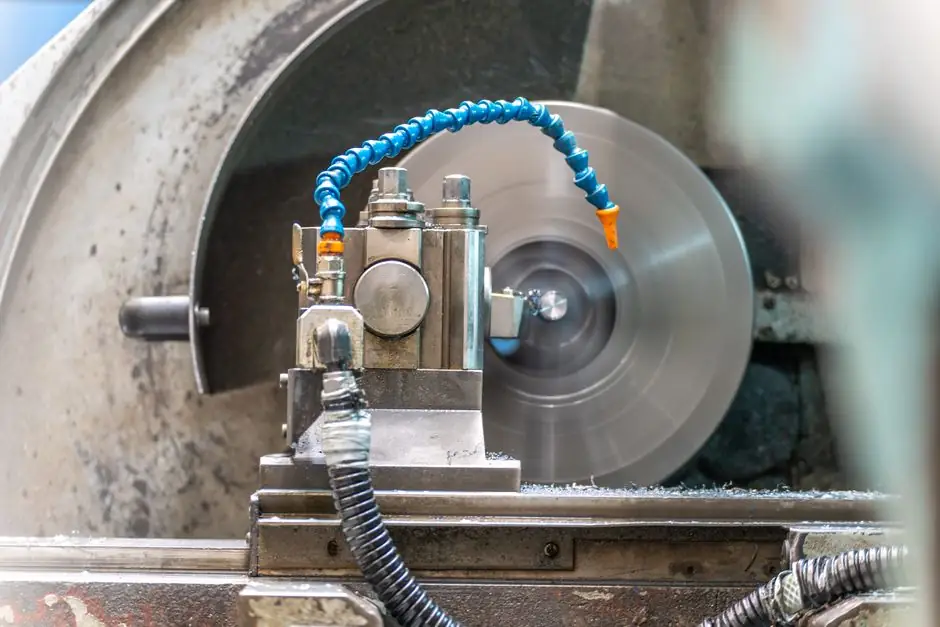
In nuclear plant construction, OEM and ODM are not interchangeable labels: an OEM owns the design, the design output, and the regulatory chain (10 CFR 50 Appendix B or ASME NQA-1), while an ODM owns the manufacturing process, the tooling, and often the metallurgical formulation, but inherits the licensing envelope from the buyer [S1][S3].
The practical consequence in 2026-08 is that a "private-label" approach common in automation fieldbus (where an ODM ships under the buyer's brand with R&D outsourced) [S2] cannot be transplanted to safety-related nuclear components without a documented commercial-grade dedication process and a 10CFR Part 21 corrective-action interface.
Defining the two models for nuclear scope
OEM (Original Equipment Manufacturer) in nuclear scope means the legal manufacturer holds the design authority, the design output (drawings, stress reports, seismic qualification per IEEE 344 / IEEE 323 for I&C, ASME III material certifications for pressure-retaining parts), and the NRC / EUR / CNSC license trail. The 2014 ASME QME-1 / NQA-1 chain sits with the OEM, and replacement parts ordered under the same part number are traceable to the original safety-analysis report (FSAR) chapter that justified the component [S1].
ODM (Original Design Manufacturer) means the manufacturer owns the production line, the tooling, the metallurgical process, and usually the in-house lab that runs calibrated testing, but the buyer's part number, specification, and regulatory pedigree own the design output. Cyfasten's published nuclear-scope workflow illustrates this: in-house R&D, first-article approval, independent third-party testing (SGS, BV, TÜV), and an AQL 0.65 pre-shipment review before container loading [S1]. The ODM must still hand back EN 10204 3.1 / 3.2 mill certificates, spectrometer-verified wire-rod heat data, hardness profiles (HRC/HV), case-depth metallography, and salt-spray results per ASTM B117 for the surfaces used in safety-related applications [S1].
Who OEM is for, and who ODM is not for
OEM is the correct model for safety-related (SR) equipment inside the reactor coolant pressure boundary, for Class 1E electrical components, and for any item whose failure is postulated in the plant's Chapter 15 safety analysis. Here the licensee must be able to demonstrate a single design authority, a single 10 CFR 50 Appendix B / ASME NQA-1 program, and a single 10 CFR Part 21 notification path. Substituting a private-label ODM without a written dedication plan is a finding waiting to happen. [S1]
ODM is acceptable for non-safety-related (NSR) balance-of-plant, augmented-quality spares, and commercial-grade items entering a 10 CFR 50 Appendix B program through EPRI 5652 / EPRI NP-5652 commercial-grade dedication. It is also common for fasteners, brackets, conduit supports, and similar items that share geometry with industrial grades but require a documented 10 CFR 21.21 dedication, a seismic-environmental qualification check (IEEE 344), and a 10-year or end-of-life traceability window. A second-tier supplier like PICOPACK, whose published OEM/ODM stack covers design through mass production and regulatory approval for digital X-ray and sensor packaging, demonstrates the same ODM discipline of process ownership with documentation ownership sitting on the buyer [S3].
Decision matrix: OEM vs ODM for nuclear components
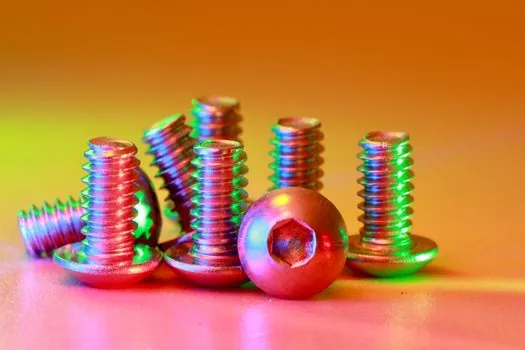
Four criteria decide the model, drawn from the published nuclear fastener and sensor workflows [S1][S3]:
Design authority. OEM: held by supplier, mapped to FSAR chapter. ODM: held by buyer, with the supplier executing against drawing + spec + acceptance criteria.
Quality program. OEM: 10 CFR 50 Appendix B or ASME NQA-1 fully implemented and audited by the licensee or NUPIC / NIAC. ODM: ISO 9001:2015 minimum [S1], with nuclear scope layered on as a project-specific quality plan, IATF 16949 in progress for the supplier's automotive line [S1], and a written dedication plan on the buyer's side.
Traceability. OEM: design output, stress reports, and corrective-action chain co-resident. ODM: EN 10204 3.1 / 3.2 mill certs, spectrometer heat checks, AQL 0.65 final inspection [S1], and buyer-side dedication record.
Cost and lead time. OEM: higher per-piece cost, longer NRE, but the license trail is closed. ODM: lower NRE, faster prototype-to-production (PICOPACK publishes a "concept to mass production" stack [S3]), but the buyer carries the dedication cost and the Part 21 interface.
Standards and documentation that gate both models
Any 2026 nuclear-scope supplier has to produce, on request: a mill test certificate to EN 10204 3.1 / 3.2, ISO 9001:2015 registration, RoHS / REACH compliance for surface chemistries, and PED 2014/68/EU conformance for pressure-bearing fasteners [S1]. In-house lab capability is the differentiator: direct-reading spectrometer, Rockwell / Vickers hardness, tensile / proof-load up to 600 kN, profile projector, 2D vision, salt-spray (NSS) chamber, thread ring / plug gauge sets, metallographic microscope, and XRF coating thickness [S1].
For I&C and sensor packages, the buyer's ODM scope typically wraps in IEEE 323 / IEEE 344 environmental and seismic qualification, IEC 61513 / IEC 60987 for Class 1E digital systems, and for digital X-ray or imaging sub-assemblies a vendor stack like PICOPACK's vacuum ceramic packaging for CMOS sensors [S3]. The published Nuclear I&C Goes Digital and AI-Assisted as 2026 SMR Build-Out Reshapes Sensor Demand coverage tracks the SMR-driven pull on exactly this ODM discipline. A general-purpose fastener shop with a nuclear SKU, by contrast, can deliver an ODM fastener under the buyer's nuclear QA plan provided the in-house SPC and AQL controls are documented at every transition [S1].
Limits, failure modes, and what to refuse in a quote
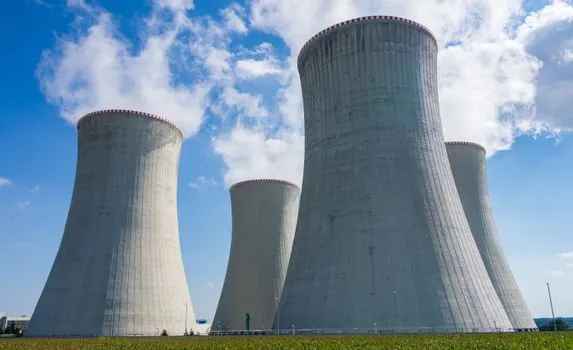
Three red flags disqualify a quote regardless of OEM or ODM label. First, no EN 10204 3.2 traceability on safety-related material: 3.1 is acceptable for non-safety, 3.2 (independent third-party) is required where the buyer's QA plan demands it [S1]. Second, no calibrated lab: a 600 kN tensile machine, a salt-spray chamber, and a spectrometer are the floor, not the ceiling [S1]. Third, no first-article approval step: the ODM must produce and submit an FAIR before serial production, and a quality review with the option of client witness inspection before container loading [S1][S3].
For adjacent renewable and offshore-wind programs the same OEM/ODM mechanics apply, but the quality frame shifts from 10 CFR 50 Appendix B to ISO 9001:2015 + project-specific wind specifications; the Offshore Wind OEM vs ODM Manufacturing: Spec-Driven Sourcing Guide for 2026 piece maps that divergence side by side. Generic ODM talk without a documented quality plan, a written dedication path, and Part 21 / REACH / RoHS evidence is the single biggest reason nuclear-scope POs slip schedule.
Cross-check the supplier's Nuclear Manufacturing QA Standards: Spec Map for Components, Materials, and Records coverage before issuing the PO: the spec map specifies exactly which records must accompany each shipment and which standards govern the audit trail. For SMR builders watching the 2026 supply squeeze, the ODM route through a documented ISO 9001:2015 shop with a nuclear QA plan attached is faster than chasing a single-source OEM, provided the buyer's dedication engineer signs off on the package.
For the relevant spec sheets and selection criteria, see additive manufacturing material, power cable, and power distribution.