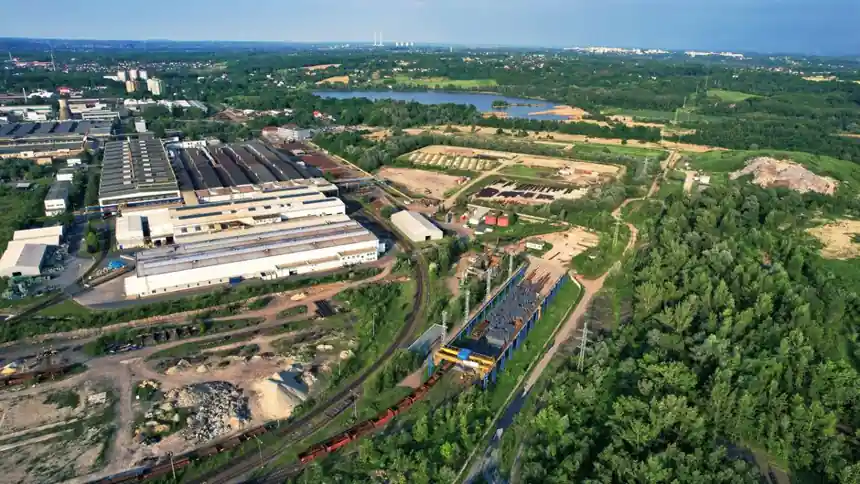
A Generation III+ reactor pressure vessel is the most binding constraint on a nuclear power production line today: production requires forging presses in the 140-150 MN (14-15,000 tonne) range that accept hot steel ingots of 500-600 tonnes, and a single large press typically yields about four pressure vessels per year, fitted in with other work [S3].
The U.S. heavy-forging base is not aligned with this requirement. Japan Steel Works, China First Heavy Industries, China Erzhong, Shanghai Electric, Doosan, Taewoong, Le Creusot, OMZ Izhora, Atommash, Petrozavodskmash and ZiO-Podolsk operate the very heavy forging capacity that the modern reactor designs demand, while no North American facility currently matches it [S3].
Reactor Pressure Vessel: Ingot Mass, Press Tonnage, Welds
The single largest scope item on a nuclear power production line is the reactor pressure vessel, because it dictates mill capacity, transport logistics, and shop scheduling. Westinghouse has stated the minimum requirement for making the largest AP1000 components is a 15,000 tonne press taking 350 tonne ingots, and reactor vendors prefer large forgings to be integral single pieces rather than split and welded, since each weld adds in-service inspection burden across the plant life [S3].
Material throughput has roughly doubled between generations. A Generation II plant might need around 2000 tonnes of forgings, while the largest modern designs need about twice that figure, which means a single Gen III+ unit can absorb the output of a major forging press for the better part of a year [S3].
Where the Presses Are: Active and Planned Capacity
Capacity to support a nuclear power production line is concentrated in five jurisdictions. The very heavy forging capacity currently in operation sits in Japan (Japan Steel Works), China (China First Heavy Industries, China Erzhong, Shanghai Electric), South Korea (Doosan, Taewoong), France (Le Creusot) and Russia (OMZ Izhora, Atommash, Petrozavodskmash, ZiO-Podolsk), while new capacity is being built by these and other firms in Japan, China, South Korea, the Czech Republic and Russia, and is planned in India by Larsen & Toubro, Bharat Heavy Electricals and Bharat Forge Ltd [S3].
North America is the structural gap. In the 1970s U.S. Steel and Bethlehem Steel each ran 8000 tonne presses handling 300 tonne ingots, but that capacity has not been significantly upgraded, partly because of limited integration with steel mills and melt shops to feed hot steel as 600-tonne ingots [S3]. A 2025-07 DOE action directly targets this gap.
DOE Fuel Line Pilot Program and the U.S. Reshore Push
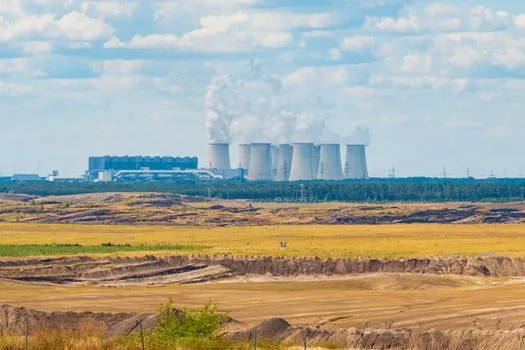
The Fuel Line Pilot Program was established by DOE in July 2025 to enable U.S. companies to develop nuclear fuel production lines needed for advanced reactors, which covers the front half of any nuclear power production line that is currently being rebuilt from scratch in North America [S1]. The policy framing matters: an AP1000-style forging shop and a HALEU fuel fabrication line are two different production lines, and only the fuel half is being actively seeded.
For a process engineer the practical read is sequencing: a domestic fuel rod line can be commissioned in a new-build plant on a multi-year schedule, while a 15,000 tonne forging press is a multi-billion-dollar capital project with its own permitting, steel supply and ingot-handling yard. Different lines, different lead times, both required for a sovereign build [S3].
Qualification: ASME N-Stamp as the Gate
Suppliers of nuclear equipment must be qualified and quality controlled before they feed any nuclear power production line, and the American Society of Mechanical Engineers nuclear accreditation known as N-stamp is the internationally recognized gate that an authorized vendor has produced commercial nuclear-grade components to the code [S3]. N-stamp is the reason that a forging mill that already serves petrochemical or wind work cannot simply be re-purposed for nuclear work without a separate qualification track.
Reactor vendor business models have also changed. First- and second-generation plants came mostly from integrated national suppliers with little external input, whereas today most of a new plant comes from a range of international suppliers, and reactor vendors are usually focused on design with specialist EPC contractors, which means the production line is effectively a multi-vendor bill of materials rather than a single OEM package [S3].
Cost, Lead Time and Local-Content Pressure
Three forces compress the schedule of any nuclear power production line. First, very heavy forging supply is constrained, with about four pressure vessels per year per large press being common at present, fitted in with other work, and individual large presses do not have high throughput [S3]. Second, escalating steel and energy prices flow on to plant costs, and supply constraints amplify that effect. Third, customers demand maximum local supply, which often means a high level of technology transfer rather than a simple procurement contract [S3].
For a heavy-equipment specifier this sets a clear filter: a 1100 MWe class unit needs a press that the home market does not currently host, and the only way to compress that lead time is to book press slots years in advance or to accept split forging with welded joints and the associated in-service inspection regime. The DOE Fuel Line Pilot Program addresses fuel, not forgings, and that distinction should drive how a project team splits its vendor-development budget.
Comparison: Three Routes to a Domestic Production Line
Three practical routes exist for a buyer or government that wants a nuclear power production line with domestic content. Route A, integrated national champion, mirrors the 1970s U.S. model of in-house forging plus in-house vessel fabrication, but no North American facility currently matches the 14-15,000 tonne press class required for Gen III+ vessels, and U.S. forging capacity has not been significantly upgraded since that era [S3]. Route B, qualified international supply, books slots at Japan Steel Works, China First Heavy Industries, Shanghai Electric, Doosan, Le Creusot or the Russian OMZ group, all of which run presses in the 140-150 MN class, with the trade-off being transport of a 500-600 tonne forging and the political risk of cross-border nuclear-grade work [S3]. Route C, fuel-first with imported vessels, uses the 2025-07 DOE Fuel Line Pilot Program to localize HALEU and TRISO fuel lines while pressure vessels continue to be imported, which is the lowest-capex but least-sovereign option and depends on a single fuel-fabrication scope being politically separable from a multi-thousand-tonne forging scope [S1][S3].
The N-stamp qualification requirement applies to all three routes, and a vendor that has not yet held the accreditation cannot simply step in to fill a slot on a nuclear-grade component, regardless of its general heavy-industry track record [S3].
What to Track Next
Two signals are worth monitoring. The first is any DOE or ARPA-E award for a greenfield 14-15,000 tonne forging press in the U.S. with integrated steel-melt supply, because the present gap is the press plus the 600-tonne ingot supply chain rather than the press alone [S3]. The second is the first commercial output from a Fuel Line Pilot Program awardee, since the program was established in July 2025 to enable U.S. companies to develop nuclear fuel production lines needed for advanced reactors, and a 2026-2027 ribbon-cutting would validate the route-C sequencing [S1].
For component-level specifications, see molding line, automatic molding line, and conveyor sorting line.
Related analysis: Order Picker Spec Map for Cold Chain: Lift, Battery, and Freezer Class.