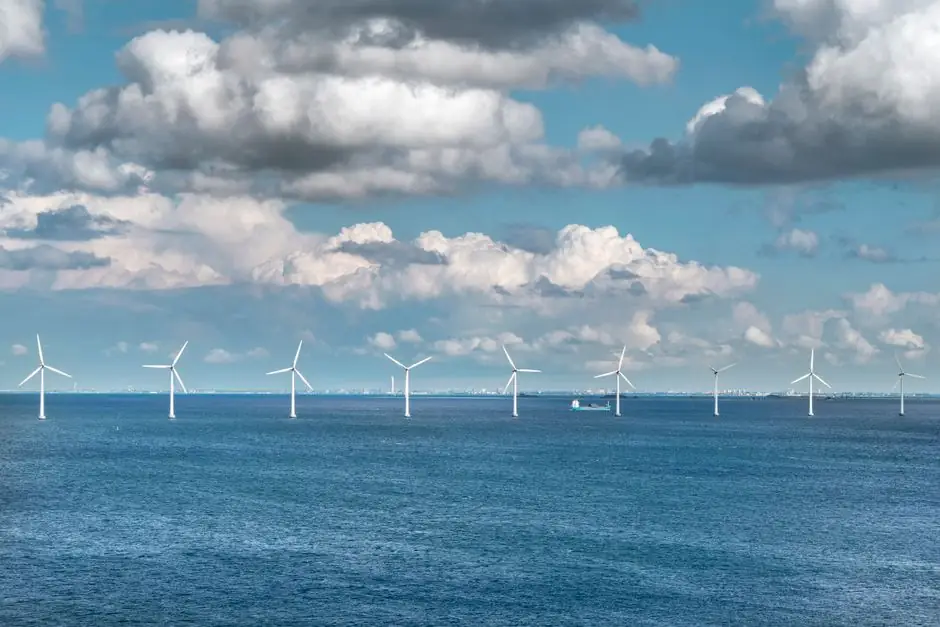
Fixed-bottom offshore wind LCOE in 2022 reached $95/MWh, with a sensitivity range of $52–$184/MWh, while floating offshore wind sat at $145/MWh over the same $52–$184/MWh band [S1]. Offshore wind energy investment has hovered around $3,500/kW to $4,000/kW per 100 kW unit of capacity, a multiple that drives the wide LCOE spread versus onshore wind's $39/MWh baseline [S1].
On 2026-03-23, the U.S. Department of Interior and TotalEnergies terminated four offshore wind leases (OCS-A 0545, OCS-A 0538, and others) and redirected roughly $928 million into the Rio Grande LNG plant plus Gulf of America upstream oil and gas [S2]. On the manufacturing side, Rystad Energy reported on 2026-05-06 that European offshore wind turbine selling prices rose 40–45% since 2020, against manufacturing cost growth of only 20–25% [S3][S7].
Turbine CAPEX: per-MW and per-unit cost ranges
A typical offshore wind turbine cost lands between $2.6 million and $4 million per unit, with a 2023 Nordex average selling price near $965,000 per MW [S5]. That puts a 15 MW Siemens Gamesa SG 14-222DD, with its 222 m rotor, into roughly the $14–15 million turbine cost envelope, before tower, foundation, and installation. Larger turbines capex-heavier per unit but reduce the count per MW, which trims balance-of-plant and O&M complexity in the long run [S5].
Offshore turbines run 2–3x more expensive than onshore equivalents because of marine-grade corrosion protection, larger nacelles, and specialised installation vessels [S6]. The price compression between offshore turbine selling price (+40–45%) and manufacturer cost (+20–25%) is the clearest 2026 margin signal: supplier concentration has lifted bid prices without a matching input-cost pass-through [S3][S7].
Site and water depth: fixed-bottom vs floating split
Fixed-bottom offshore wind farms deliver LCOE around $95/MWh; floating farms land at $145/MWh, a 53% premium driven by dynamic mooring systems, longer dynamic cables, and port logistics for tow-out [S1][S5]. Projections call for fixed-bottom LCOE to fall from $75/MWh in 2021 to $53/MWh by 2035, and floating from $207/MWh in 2021 to $64/MWh by 2035, closing most of the gap through serial floater production [S5].
Water depth is the toggle: fixed-bottom becomes uneconomic past roughly 60 m, which is precisely where floating is the only option. Floating CAPEX is dominated by the semisubmersible or spar hull, mooring lines, and dynamic array cables, all of which sit outside the pressure transmitter and flow meter instrumentation scope but inside the same balance-of-plant procurement package.
Installation, vessels, and balance-of-plant drivers
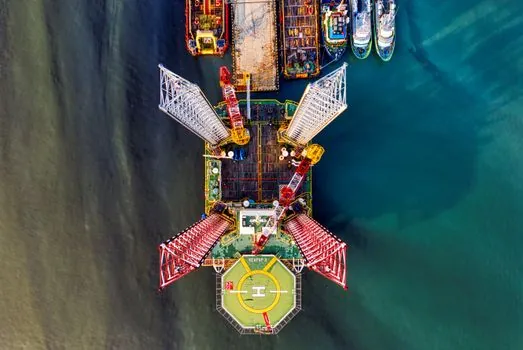
Installation contributes a disproportionate share of offshore wind cost because of wind turbine installation vessels (WTIVs), monopile or jacket foundations, and subsea cable lay. As turbines scale to 12–15 MW classes (GE Haliade-X 12 MW / 107 m blades, Siemens Gamesa SG 14-222DD 15 MW / 222 m rotor), the vessel class required to lift them narrows to a handful of ships, which inflates day rates and constrains installation windows [S5].
Foundation choice (monopile, jacket, or floating hull) is governed by water depth and seabed conditions, and is sized alongside the industrial valve and pressure sensor packages that monitor yaw, pitch, and tower load. Spacing rule of thumb is four rotor diameters between turbines to avoid wake losses, so a 222 m rotor implies roughly 888 m spacing, which multiplies cable and seabed-leasing cost across the lease area [S5].
O&M and total cost of ownership
Operation and maintenance is the second-largest lifetime cost after turbine CAPEX, with offshore access requiring crew transfer vessels or helicopter windows in sea states above 1.5–2 m significant wave height. Offshore wind O&M runs 2–3x the per-MWh cost of onshore because every intervention is a marine operation, and salt-air corrosion drives a higher spares consumption rate on blades, gearboxes, and yaw bearings [S6].
Total cost of ownership therefore hinges on three levers beyond sticker price: turbine reliability (larger machines have fewer but costlier interventions), vessel availability (a bottleneck in 2024–2026), and condition-monitoring instrumentation that catches bearing or gearbox faults before they trigger a jack-up. The 2026 quality-control signal from OEM shop floors, covered in Offshore Wind Manufacturing Quality: Standards, Specs, and 2026 Signals, points to tighter weld and blade-lamination inspection as the main lever to bend the O&M curve down.
Policy, finance, and the 2026 demand signal
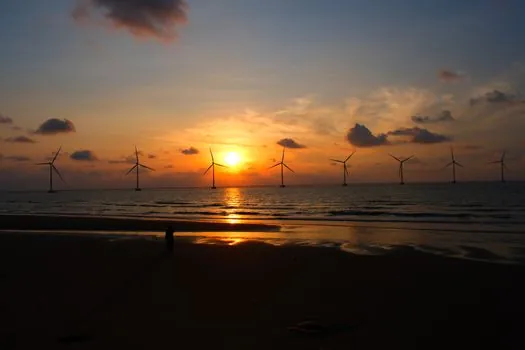
Global installed wind capacity surpassed 1,015 GW by the end of 2023, with 116 GW added that year and cumulative capacity expected to exceed 2,000 GW by 2030 per the IEA [S4]. Global weighted-average LCOE for onshore wind fell from $0.089/kWh in 2010 to $0.034/kWh in 2024 (a 70% drop), while offshore wind fell 62% from $0.208/kWh to $0.079/kWh over the same window, leaving offshore 2.3x above onshore [S4].
At the global average level in 2024, offshore wind carried a premium of approximately $0.045/kWh, or roughly 132% above the onshore LCOE [S4]. The TotalEnergies lease exit of 2026-03-23, returning roughly $928 million in lease value toward LNG and Gulf of America upstream work, is the highest-profile demand-side pullback, but European OEMs are simultaneously raising turbine selling prices 40–45% on supplier consolidation, a divergent signal worth tracking [S2][S3].
Comparison matrix: cost driver vs price impact
Four cost levers line up as follows. (1) Turbine size: 12–15 MW units raise per-turbine capex to $14–15 million but cut count per GW, with a net LCOE benefit at high-capacity-factor sites. (2) Water depth: fixed-bottom is cheaper up to ~60 m; floating adds 50–100% to LCOE. (3) Installation: vessel day rates and foundation type can swing project capex 15–25% depending on site. (4) O&M: offshore runs 2–3x onshore per-MWh and dominates lifetime cost on older fleets [S1][S5][S6].
The critical ratio is the spread between European turbine selling price inflation (40–45%) and the underlying manufacturing cost inflation (20–25%), which means the 20-percentage-point gap is supplier margin and demand intensity, not steel or copper [S3][S7]. For procurement teams watching the PLC and instrumentation side of a turbine, the implication is that the same supplier consolidation is squeezing the control-system bill of materials as well.
Trackable next nodes: the next quarterly Rystad turbine-price update, any U.S. Bureau of Ocean Energy Management lease renouncement after the TotalEnergies precedent, and IRENA's 2025 weighted-average LCOE release, expected to show whether floating is on its $207/MWh-to-$64/MWh glide path to 2035 [S5].