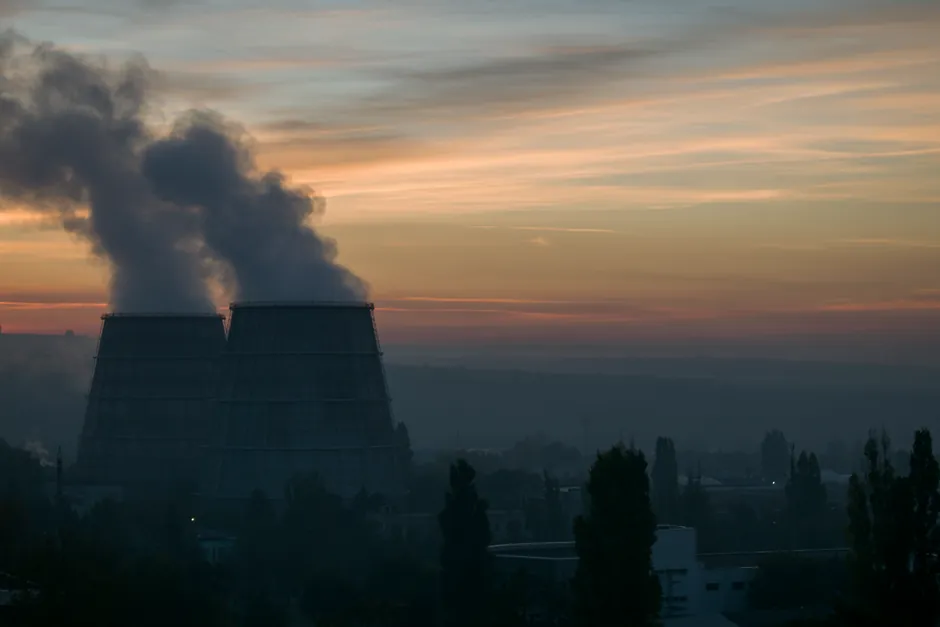
Nuclear power procurement in 2026 sits at the intersection of capital-intensive economics and policy-driven sourcing rules: capital cost accounts for at least 60% of a new plant's levelized cost of electricity (LCOE), while procurement pathways are increasingly codified by federal, state, and provincial authorities [S2].
The dominant frameworks are the U.S. Department of Energy (DOE) guidance for procurement officials advancing nuclear technologies to support energy, security, and innovation goals [S1], Canada's June 2026 Nuclear Energy Strategy, which projects a doubling of electricity capacity over the next twenty-five years [S4], and New Jersey's Power NJ Act, signed 13 July 2026, which launched a state procurement process for new nuclear with explicit ratepayer safeguards [S7].
Economic Baseline: LCOE, Capital Share, and Operating Horizon
Capital cost accounts for at least 60% of new nuclear plant LCOE, with interest charges and construction period as the dominant variables in cost of capital [S2]. Once commissioned, production cost is low and predictably stable, and plants are now expected to operate for 60 years and even longer, with decommissioning and waste disposal fully internalized in operating cost [S2].
Fuel cost is a minor share of total generating cost, which inverts the fossil-fuel exposure profile and shifts procurement leverage toward EPC contractors, heavy forgings, and long-lead nuclear-grade components rather than commodity inputs [S2]. For sourcing teams, this means qualification cycles for power distribution and power cable packages inside the nuclear island dominate schedule risk more than unit pricing.
Supply Segmentation: Kraljic Matrix Applied to Nuclear
The IAEA Nuclear Energy Series No. NG-T-3.4 (Rev. 1), published 30 June 2026, applies a Kraljic-style matrix that categorizes products and services into routine, bottleneck, leverage, and strategic categories for strategic procurement decisions [S5]. Each category drives a different sourcing playbook: routine items go to competitive bidding, leverage items to volume-based negotiation, bottleneck items to dual-sourcing or buffer stock, and strategic items to long-term partnership and local content commitments [S5].
For a typical new-build scope, reactor pressure vessels, steam generators, and large-diameter nuclear-grade piping fall into the strategic and bottleneck quadrants, where supply risk dominates profit impact, while balance-of-plant power meter skids and conventional linear guide assemblies for fuel-handling machines usually sit in leverage or routine. Quality assurance requirements, tracked in Nuclear Manufacturing QA Standards: Spec Map for Components, Materials, and Records, then determine which vendors can credibly bid in each quadrant.
Framework Comparison: U.S. DOE, Canada, and State-Level Acts
The U.S. DOE procurement guidance frames nuclear as a strategic energy, security, and innovation priority under its Policy & Priorities structure, with the Office of Nuclear Energy leading program execution [S1]. Canada's 2026 Strategy is both an energy plan and an economic plan, accelerating nation-building projects and strengthening the domestic value chain across uranium mining, reactor technology, and export markets [S4].
Procurement pathways differ in trigger and oversight. The DOE pathway centers on federal program offices and National Laboratories, the Canadian pathway coordinates federal-provincial action with provinces holding jurisdiction over electricity generation [S4], and U.S. state acts like New Jersey's Power NJ Act, signed 13 July 2026, set a competitive procurement process with ratepayer protections attached [S7]. A side-by-side view: U.S. DOE guidance is federal-program oriented with broad statutory authority; Canada's 2026 Strategy is multi-jurisdictional with provincial delivery; and state acts like Power NJ are time-bound, project-specific, and rate-cap-constrained.
Who This Strategy Is For, and Where It Breaks
This approach fits utilities and state/provincial authorities planning new nuclear capacity, EPC consortia qualifying nuclear-grade supply chains, and industrial buyers with direct power-purchase agreement exposure. It does not fit short-cycle merchant generation, where LCOE payback exceeds the planning horizon, nor deregulated markets where short-term price signals undermine high-capital investment, an explicit IEA-cited challenge to securing diversified supply [S2].
It also breaks where the social, health, and environmental costs of fossil fuels are not priced in, because the cost case for nuclear weakens against unpriced coal or gas baseload [S2]. Related reading on supply-chain hedging for capital projects is covered in Cable and Wire Procurement Strategy: Spec, Source, and Hedge in 2026, which translates the same hedge logic to BoP cabling.
Selection Criteria: Engineering, Commercial, and Policy Filters
Three filter layers govern award. Engineering: nuclear-grade material traceability, NQA-1 or equivalent QA program compliance, and qualified manufacturing capacity for heavy components [S5]. Commercial: LCOE contribution, payment milestones tied to construction period, and parent-company guarantee structure, which addresses the under-estimation risk that construction costs and delivery challenges tend to be under-estimated on large infrastructure [S2]. Policy: alignment with DOE strategic priorities [S1], domestic content and value-chain commitments under the Canadian Strategy [S4], and ratepayer safeguard compliance under state acts [S7].
For a structured comparison, EPC lump-sum-turnkey, cost-reimbursable with target price, and owner-engineered multi-package procurement rank as follows: lump-sum maximizes price certainty but transfers schedule risk to the EPC; cost-reimbursable with target price shares risk and is common on first-of-a-kind SMR builds; multi-package procurement preserves owner control over power mixer and process-skid scope but exposes the owner to interface and crossed-roller guide qualification gaps across packages. The right answer depends on whether the owner values price ceiling, risk transfer, or supply-chain control more.
Trackable Signals Through 2027
Two nodes are worth watching. First, the New Jersey procurement process initiated by the Power NJ Act on 13 July 2026, which will set a precedent for state-level competitive nuclear procurement with ratepayer cost caps [S7]. Second, the implementation cadence of Canada's 2026 Strategy across Ontario large-reactor builds, Alberta's nuclear roadmap, Saskatchewan's dual large-and-small build plan, and New Brunswick's Point Lepreau expansion [S4].