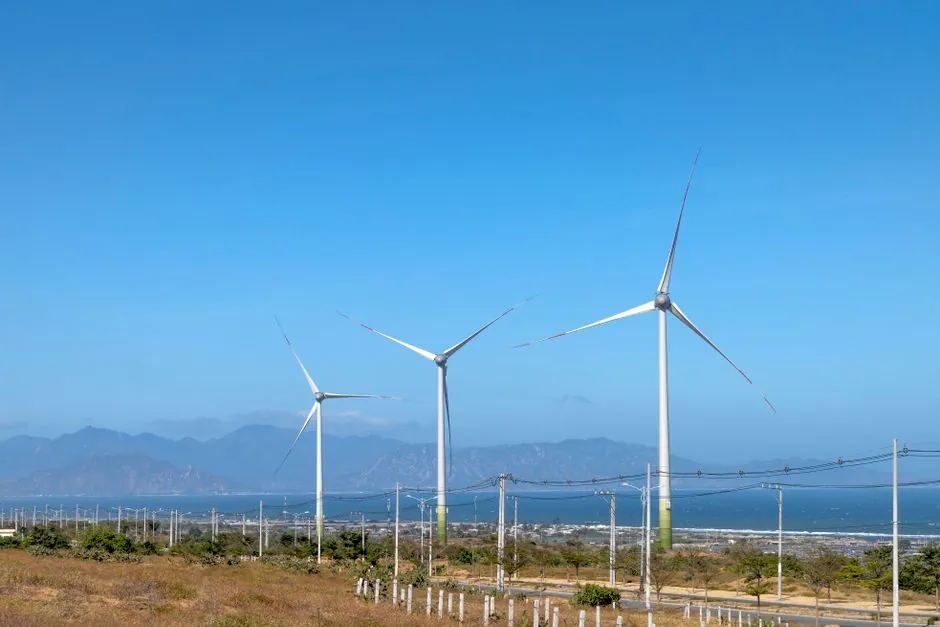
China supplied the world's largest single-unit floating offshore wind platform in May 2026, rated for wave heights above 20 m and wind speeds up to 73 m/s, and a Chinese yard handed over an A-class jack-up wind installation vessel to a Danish operator in July 2026, the two data points that frame what "Made in China offshore wind" actually means to a buyer in 2026 [S4][S2].
The market context is equally concrete: data analytics firm Energy Solutions Intelligence, cited in July 2026 reporting, put 2026 new-project offshore wind LCOE at $40-50/MWh, level with new natural gas and below new coal, across an analysis of 247 projects [S2]. China's Three Gorges (CTG) commissioned the giant floating platform offshore Yangjiang in May 2026, and the COSCO Qidong yard delivered the Wind Ace to Cadeler on 17 July 2026 for deployment on ScottishPower Renewables' 64-turbine East Anglia TWO project [S4][S2].
What is in scope when you "source offshore wind from China"
The Chinese offshore wind supply base in 2026 is not a single product line, it is a stack of seven engineering packages, each with its own spec sheet, its own certification regime, and its own risk profile for a non-Chinese buyer [S1][S2][S4]:
(1) Utility-scale wind turbines in the 8-18 MW class, with prototype 20 MW+ units already announced. (2) Fixed-bottom and floating foundations, including the CTG Yangjiang single-unit floater rated to Hs 20 m and V 73 m/s, a Typhoon-class envelope more aggressive than typical North Sea metocean data [S4]. (3) Substations and HVDC converter platforms, the heavy-fabrication scope historically served by Chinese state shipyards. (4) Array and export cables, where Chinese XLPE and dynamic-cable capacity has scaled rapidly, and where the European CBAM regime is now a live compliance variable [S6]. (5) Service operation vessels (SOVs) and wind turbine installation vessels (WTIVs), where COSCO Qidong's Wind Ace is the A-class reference ship, with a hybrid foundation-and-turbine installation crane [S2]. (6) Onshore and offshore balance-of-plant electrical equipment: MV/LV switchgear, pressure transmitters, flow meters, and SCADA I/O. (7) Project finance, insurance, and after-sales service, where the Carbon Trust's March 2026 Taiwan report treats financing framework design as a parallel engineering problem to the hardware [S8].
Selection criteria: what to specify before you RFQ
CTGs Yangjiang floater is built for Hs > 20 m and V up to 73 m/s, that is a Typhoon-class design envelope, and it is the headline reference for any buyer's "harsh-environment" spec question on Chinese floating foundations [S4].
For a buyer writing a 2026 RFQ to a Chinese yard, four criteria filter the supply base faster than any price negotiation: (a) certification against IEC 61400-1 design classes (Class I, S, or T for the target site) and DNV/ABS/TCCS type approval for the foundation or vessel, (b) electrical and I&C compliance, with industrial valve and pressure sensor packages that must accept Foundation Fieldbus or PROFIBUS PA on the digital segment and 4-20 mA + HART on the analog segment (HART is FSK overlaid on a 4-20 mA loop, it is not a fieldbus), (c) project-finance compatibility, where the Cabo-Rodriguez et al. 2026 systematic literature review of 61 studies finds that real options analysis outperforms life-cycle costing and multi-criteria decision analysis when the goal is to value project-stage flexibility, and (d) CBAM exposure, where the May 2026 WeBridge guide identifies embedded-emissions reporting for steel, aluminium, and cement in foundations and substations as the primary documentation burden for European offtakers [S5][S6].
Decision matrix: Chinese supply options lined up against four buyer criteria
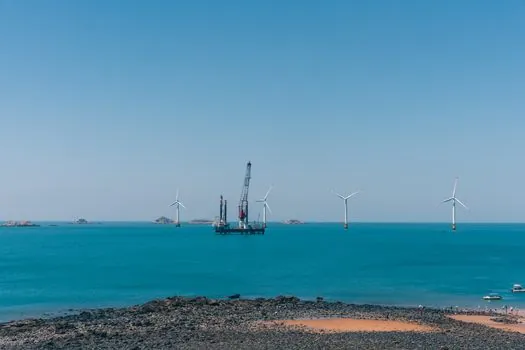
Offshore wind LCOE in 2026 sits at $40-50/MWh, level with new natural gas and below new coal, and that single range is the economic gate every Chinese-supply option has to clear [S2].
Comparison on the four criteria that actually drive award for a non-Chinese buyer (data anchored to S2, S4, S5, S6, S8):
1. Turbines (8-18 MW class). Criteria: capacity per unit, IEC 61400-1 class, DNV type approval. Chinese OEMs now ship utility-scale units that compete on $/MWh; LCoE sits at the $40-50/MWh ceiling the 2026 market is using. Lead-time: typically 12-18 months for a frame agreement.
2. Fixed and floating foundations. Criteria: Hs and V design envelope, fatigue life, fabrication yard track record. Reference: CTG Yangjiang floater, Hs > 20 m, V up to 73 m/s, the most aggressive single-unit envelope publicly disclosed in 2026 [S4]. Lead-time: 18-30 months for prototype, faster for serial production.
3. Installation and SOV vessels. Criteria: crane capacity (tonnes at radius), jack-up leg length, transit speed, hybrid (foundation + turbine) capability. Reference: Wind Ace, A-class jack-up, hybrid foundation-and-turbine installation, second A-class in Cadeler's fleet, with a third (Apex Wind) scheduled for 2027 delivery [S2].
4. Electrical BOP, valves, instruments, cables. Criteria: digital protocol support (Foundation Fieldbus / PROFIBUS PA on the segment, 4-20 mA + HART on the analog segment), hazardous-area certification (ATEX 2014/34/EU, IECEx), and CBAM documentation for steel-intensive skids [S6]. Lead-time: 6-12 months for instrument skids, 12-24 months for array cable.
Who this is for, and who it is not for
The Carbon Trust's March 2026 Taiwan financing report treats bankability as an engineering deliverable: tariff floor, FX hedging, and step-up rights are modelled alongside wind class and soil [S8].
Chinese offshore wind supply in 2026 is a strong fit for: (a) European utilities and developers building 0.5-1.5 GW projects that want to import turbines, floating foundations, or WTIVs and can absorb the CBAM paperwork overhead [S6], (b) Southeast Asian, Taiwanese, and Middle-East offtakers where Cadeler-class WTIVs are already mobilising and the financing framework is being designed in parallel with the hardware (per the Carbon Trust Taiwan study) [S8], and (c) African and Latin-American first-mover developers who need turnkey packages, vessel slots, and project-finance structuring in one contract. It is a weaker fit for: (a) US offtakers subject to federal procurement restrictions on Chinese-flagged or Chinese-built heavy equipment, where the policy headwind is structural, not cyclical, (b) small distributed-wind buyers (under 1 MW), since the entire supply stack is sized for utility-scale [S1], and (c) projects with tight CBAM documentation deadlines and no in-house emissions accounting, where the WeBridge 2026 guide flags the highest rejection risk [S6].
Engineering and certification constraints you will hit
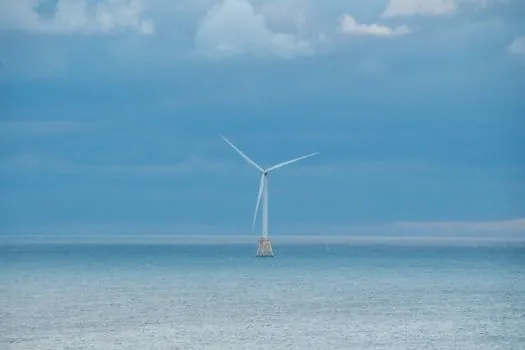
Cabo-Rodriguez et al. (2026) reviewed 61 offshore wind valuation studies published 2010-2025 and ranked real options analysis highest for valuing investment flexibility across project stages, life-cycle costing second, project finance third, and multi-criteria decision analysis fourth, a hierarchy that should drive your own uncertainty-modelling choice before contract signature [S5].
Five constraints are the recurring cause of late-stage RFQ failure for Chinese offshore wind packages. First, typhoon versus North Sea metocean mismatch: the CTG Yangjiang envelope of Hs > 20 m and V up to 73 m/s does not auto-translate to a Class-I North Sea turbine; site-specific DNV certification is still required [S4]. Second, CBAM documentation for steel, aluminium, and cement in foundations and substations is now a contractual deliverable under the WeBridge 2026 guide, not a post-shipment formality [S6]. Fourth, vessel slot scarcity: with 11 Cadeler vessels in the fleet as of July 2026 and a 12th on order, A-class jack-up slots for 2026-2027 are pre-allocated, so installation scheduling is part of the procurement decision, not after it [S2]. Fifth, project-finance blind spots: the Cabo-Rodriguez review finds that traditional NPV and DCF methods systematically undervalue flexibility in staged offshore wind investments, so lenders who insist on a static DCF alone are pricing risk incorrectly [S5].
Real use cases in 2026
Cadeler's Wind Ace will install 64 turbines and their foundations on ScottishPower Renewables' East Anglia TWO in the UK, a working example of a Chinese-built A-class vessel deploying on a European project immediately on delivery [S2].
Three documented 2026 deployments anchor the buyer's mental model. Case 1: CTG's Yangjiang floating platform, the largest single-unit floater disclosed in 2026, built for Hs > 20 m and V up to 73 m/s, the design reference for any subsequent Chinese floating-foundation RFQ [S4]. Case 2: Cadeler's Wind Ace, handed over by COSCO Qidong on 17 July 2026, hybrid foundation-and-turbine installation, booked straight onto East Anglia TWO with 64 turbines, the first vessel of its generation to clear sea trials and go on hire in the same quarter [S2]. Case 3: Taiwan, where the Carbon Trust's March 2026 report lays out a financing-framework blueprint designed for an offshore-wind pipeline that is scaling faster than its bankability conventions, useful as a template for any Southeast Asian or Middle-East developer buying Chinese hardware and needing parallel financial engineering [S8].
How to run a 2026 sourcing engagement
Energy Solutions Intelligence's December 2025 analysis of 247 projects, published again in July 2026 reporting, found new-project offshore wind LCOE at $40-50/MWh in 2026, the range to use as your cost ceiling when scoring Chinese bids [S2].
A pragmatic 2026 workflow: (1) freeze the metocean and IEC 61400-1 design class for the site before talking to yards, (2) split the RFQ into seven packages (turbines, foundations, substation, cables, vessels, BOP electrical, financing) and run them in parallel, not sequentially, (3) require DNV/ABS/TCCS type certificates for the floater or WTIV package, ATEX 2014/34/EU and IECEx for hazardous-area instruments, and IEC 62443 for SCADA, (4) require Foundation Fieldbus or PROFIBUS PA on the digital segment and 4-20 mA + HART on the analog segment, written as two separate requirements, (5) build CBAM documentation into the supply contract using the WeBridge 2026 guide as the reference, with steel, aluminium, and cement emissions data delivered per shipment, (6) use a real options analysis layer over a baseline DCF to value vessel-slot optionality and tariff-floor flex, per Cabo-Rodriguez et al. (2026), and (7) lock a vessel slot (A-class jack-up capacity is the 2026-2027 bottleneck) before signing the foundation contract, since installation scheduling is now on the critical path [S2][S5][S6].
Two trackable signals for the next sourcing cycle: COSCO Qidong's handover of Apex Wind (Cadeler's third A-class vessel) in 2027, and the next round of CBAM embedded-emissions audits on European offshore wind projects, both of which will reset the cost and compliance baseline for any Chinese-package RFQ [S2][S6].
Background reading: Lightweight Partition Panel Selection for Hospitals: Spec Map.