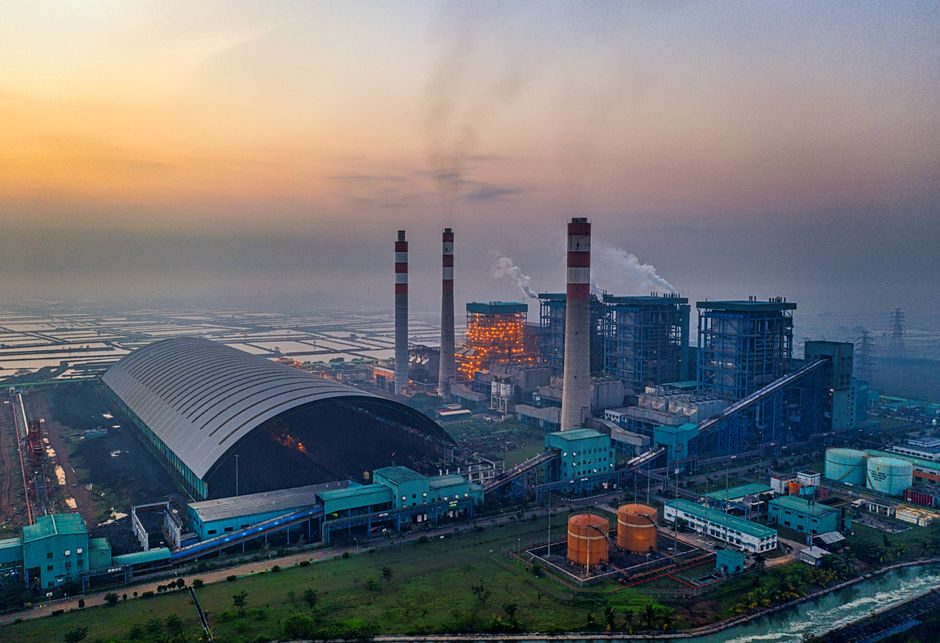
Commercial nuclear power production technology is the engineering chain from mined uranium through fuel fabrication, fission-based steam generation, turbine-generator conversion, and grid dispatch, with the U.S. Internal Revenue Service's §45U Zero-Emission Nuclear Power Production Credit acting as the single largest operating-cost lever for the existing U.S. fleet as documented on the IRS credit page [S1].
GE Vernova Hitachi Nuclear Energy (GVH), with more than 60 years of nuclear technology experience, is advancing the BWRX-300 small modular reactor (SMR) as part of its carbon-free power generation portfolio [S5].
Reactor Classes and the Physics Behind Them
Most electricity-producing reactors are thermal-neutron systems using a low-enrichment uranium oxide (UOX) fuel with 235U enriched to 3–5 wt%; typical discharge burnup runs 40–60 GWd/tHM, and thermal efficiency lands in the 33–37% band depending on steam conditions [S2].
Boiling Water Reactors (BWR) and Pressurized Water Reactors (PWR) together account for the bulk of installed capacity; heavy-water CANDU reactors use natural uranium (0.7% 235U) and on-power refuelling; gas-cooled, sodium-cooled, molten-salt, and lead-cooled fast reactors (Gen-IV) target higher outlet temperatures (500–800 °C) and closed fuel cycles with breeding ratios above 1.0, though commercial deployment of Gen-IV remains pre-commercial as of mid-2026 [S2][S5].
Fuel Cycle, Spent-Fuel Storage, and Transport Cask Engineering
The open (once-through) fuel cycle is still standard: UO2 pellets, ~10 mm diameter × ~13 mm height, are stacked into Zircaloy-4 cladding tubes assembled into 14×14 to 17×17 PWR or 8×8 BWR fuel bundles; after 4–6 years in-core, assemblies are transferred to on-site spent-fuel pools (NFPA / IAEA storage-density rules apply) or to dry cask storage using dual-purpose NRC-licensed canisters [S2].
The University of Nevada, Reno has run an externally-funded program since 1992 covering fire-accident response of spent-fuel transport casks and advanced-reactor material performance, funded by the Nuclear Regulatory Commission, the U.S. Department of Energy, the National Laboratories, and the State of Nevada — a good proxy for the cask thermal/pressure-load envelope that transport-package vendors must satisfy [S3].
For procurement engineers, the relevant transport-cask codes are 10 CFR 71 (U.S.) and IAEA SSR-6, with drop, fire (800 °C / 30 min), and immersion test sequences; the engineering reference for adjacent power-transmission equipment is covered in helical gear reducer vs gearbox sizing, because large cask-handling cranes are often geared-motor driven.
SMR Sourcing, Modularity, and Site Footprint
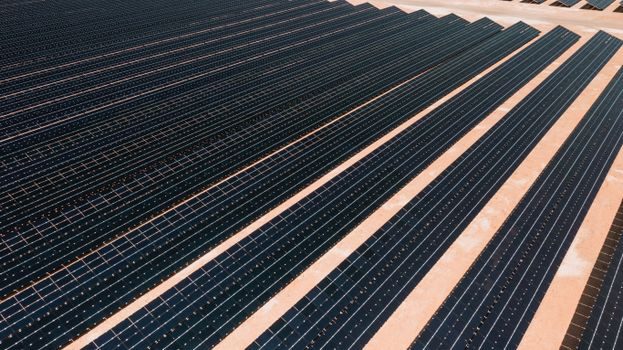
Small Modular Reactors are conventionally defined as units under ~300 MWe with factory-fabricated modules shipped to site; the BWRX-300 site footprint is roughly 50 acres including the safety-related buildings versus ~500+ acres for a 1,000 MWe AP1000, and the module count drops to a handful of large structural assemblies [S5].
Active SMR developers as of mid-2026 include GE Hitachi (BWRX-300), NuScale (VOYGR, 77 MWe modules), Holtec (SMR-160, 160 MWe), X-energy (Xe-100, 80 MWe HTGR), Rolls-Royce SMR (470 MWe UK design), and Terrestrial Energy (IMSR molten salt); only a small subset has reached NRC 10 CFR 50/52 combined license review stage, with the BWRX-300 cited by GE Vernova as their lead carbon-free baseload design [S5].
For EPC buyers, the meaningful SMR spec gates are rated thermal power (MWth), rated electric output (MWe), design lifetime (currently 60 years for Gen-III+, 80 years under subsequent license renewal), enrichment cap (current HALEU bottleneck for some advanced designs, 235U up to 20%), passive-cooling duration (typically 72 hours), and source of the steam-generator tubing alloy (e.g., Inconel 690 for PWR steam-generator U-tubes).
Economics, the §45U Credit, and Capacity-Factor Reality
Capacity factor is the single most important operating KPI for nuclear generation; the U.S. fleet averaged ~93% in 2023–2024 versus ~40% for combined-cycle gas and ~25% for onshore wind, giving baseload revenue that few renewables can match without storage [S1][S2].
The §45U Zero-Emission Nuclear Power Production Credit is a production tax credit available to existing nuclear facilities placed in service before 2025 and earning gross receipts from electricity produced and sold, with the credit structured to phase in based on the facility's revenue per MWh and a statutorily defined 'reference price' — a direct link between commodity power prices and federal subsidy per IRS guidance [S1].
For utility procurement, the working break-even LCOE envelope for new nuclear in 2026 is widely cited in the $80–$140/MWh range without §45U and $55–$95/MWh with the credit and DOE loan guarantees, though these numbers depend heavily on construction duration and discount rate assumptions rather than published GE Vernova or NRC documents [S1][S5].
Standards, Safety Codes, and Workforce Pipeline
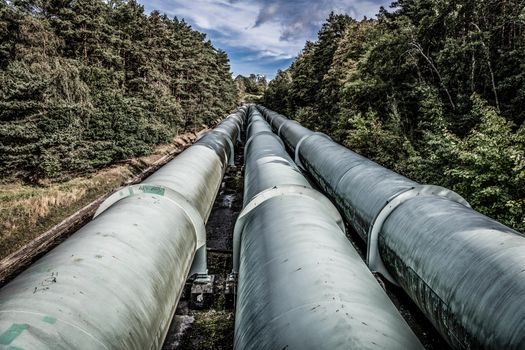
The governing standards stack for U.S. nuclear power is 10 CFR 50 (operating licenses), 10 CFR 52 (combined licenses / design certifications), 10 CFR 71 (packaging and transport of radioactive material), ASME Section III (nuclear-grade components), and IEEE 603 (safety-system criteria); reactor designers also target IEEE 308 (Class 1E power systems) and IEEE 497 (post-accident monitoring), all of which feed the qualification chain for power transformer main output and unit auxiliary equipment. [S1]
The academic pipeline is comparatively thin: UNR's nuclear-power graduate fellowship is one of a small number of U.S. programs feeding NRC, DOE, and National Laboratories staffing; nuclear engineering graduate enrollment in the U.S. is materially below the 1970s peak despite recent SMR-driven upticks in admissions [S3].
For balance-of-plant procurement, the SMR-grade power meter class is typically a 0.2S or 0.5S revenue-accuracy feeder unit, while the power cable spec for safety-related feeders defaults to IEEE 383-qualified, Class 1E qualified, with 60-year thermal-life basis as a default design target.
Comparison Pass: BWRX-300 vs AP1000 vs NuScale VOYGR vs Xe-100
On rated output per unit, the BWRX-300 delivers ~300 MWe passive BWR, the AP1000 ~1,100 MWe active-passive PWR, NuScale VOYGR modules ~77 MWe each (typical 6-module plant ~462 MWe), and X-energy Xe-100 ~80 MWe per pebble-bed HTGR module (4-module plant ~320 MWe), giving very different grid-entry sizes and EPC-financing models [S5].
On fuel form, BWRX-300 and AP1000 use UO2 in Zircaloy, NuScale uses UO2 in Zircaloy (5 wt% enrichment), while Xe-100 uses TRISO-coated UO2 / UCO kernels in graphite pebbles loaded continuously; on outlet temperature, BWRX-300 is ~286 °C saturated, AP1000 ~321 °C, NuScale ~310 °C, and Xe-100 ~750 °C — a step change that opens process-heat and hydrogen co-generation use cases.
On passive-safety duration, BWRX-300 is engineered for 7 days of passive cooling, AP1000 for 72 hours, NuScale for indefinite natural circulation, and Xe-100 for inherent TRISO + pebble-bed conduction; the dominant commercial-license variable as of 2026 is which design has cleared NRC 10 CFR 52 design certification review, where the BWRX-300 is the most-advanced passive BWR under active review [S5].
Construction and finance: the BWRX-300 targets ~$2,000–$3,000/kW overnight capital in published estimates, modular assembly, and a 24–36 month build target versus the AP1000's 60+ month first-of-a-kind history; the practical reality is that all first-of-a-kind SMRs carry cost-overrun risk until at least three units of the same design are built.
Limitations, Open Issues, and Trackable Signals
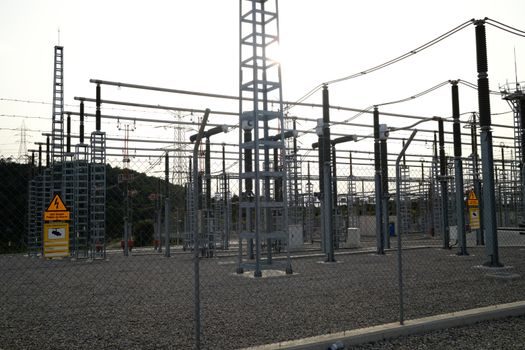
Three structural constraints dominate the 2026 nuclear outlook: a HALEU (high-assay low-enrichment uranium, 5–20% 235U) supply gap for several advanced-reactor designs, a ~5–7 year NRC licensing horizon for first-of-a-kind SMRs, and unresolved high-level waste disposition (Yucca Mountain remains legally and politically contested). New-build capex overruns of 2–4× are historically common for first-of-a-kind light-water builds, and SMR unit-cost claims should be discounted until second-of-a-kind data is published [S5].
Trackable signals over the next 6–12 months: NRC progress on the BWRX-300 10 CFR 52 design certification, DOE award decisions under the Advanced Reactor Demonstration Program, and the Treasury Department's published §45U reference-price / credit-rate tables for the 2026 tax year, all of which materially move SMR project finance [S1][S5].