Nylon (polyamide, PA) is the highest-volume member of the five major engineering plastics, supplied as extruded and cast stock in diameters 1-200 mm and sheet formats 500-2000 mm [S2][S5]. Density of unfilled grades sits at 1.15 g/cm³, while the broader aliphatic family runs 1.04-1.36 g/cm³ across PA6, PA66, PA46, PA11 and PA12 variants [S2][S3].
Mechanical strength, self-lubrication, dielectric strength, and chemical resistance make PA the default bearing, gear, and insulating material in machinery, automotive, electrical, textile-equipment, chemical, aerospace, and metallurgical builds [S1][S2]. The flip side is a saturated water uptake above 3 wt%, which swells moulded parts and shifts tolerances after machining [S2].
Grade Map: PA6, PA66, PA46, Glass-Filled
PA6 (white) is the general-purpose workhorse, delivering balanced tensile strength, stiffness, toughness, damping, and wear resistance, plus good electrical insulation and chemical resistance, which is why it dominates machined mechanical-structural and maintainable parts [S5]. PA66 (cream) raises stiffness, heat resistance, creep resistance, and wear life versus PA6, but drops impact strength and damping, suiting it to automatic-lathe turned parts running under sustained load [S5].
High-crystallinity PA46 holds mechanical properties at 150 °C long-term, and glass-fibre reinforced PA66 pushes heat-deflection temperature above 250 °C, opening under-hood and bearing-housing slots that PA6 cannot reach [S2]. Cast nylon (MC grade, red-brown) retains rigidity and creep resistance across a wider temperature window, with better thermal-ageing behaviour than PA6/PA66, and is used as a higher-modulus substitute for both [S5]. Aromatic and semi-aromatic PAs extend the upper-temperature ceiling further but trade cost and processability.
Property Envelope: Density, Melting Point, Water Uptake
Family-wide, melting points span 180-280 °C and density 1.04-1.36 g/cm³ depending on monomer carbon count and filler loading [S3]. Saturated water absorption above 3% is the defining limitation of neat aliphatic PA: dimension changes on moisture conditioning are the root cause of post-machining tolerance drift, and any tolerance tighter than ±0.05 mm on a finished part must be specified on dry-as-moulded (DAM) or conditioned stock, not on "as extruded" [S2][S3].
Electrical performance is the other reason PA sticks around in switchgear and connector blocks: high volume resistivity and high dielectric breakdown strength, paired with the same wear resistance, let one material cover both insulating and sliding functions in motor and breaker hardware [S2]. For dynamic seals and chemically aggressive media, the PTFE vs Industrial Rubber selection frame covers the cases where PA's chemical envelope is too narrow.
Selection Gates: Temperature, Load, Wear, Moisture, Dielectric
Five gates decide whether PA is correct, and which grade: (1) continuous service temperature (PA6 ≈ 80-100 °C, PA66 ≈ 100-120 °C, PA46 ≈ 150 °C, glass-filled PA66 ≥ 250 °C HDT); (2) sustained load and creep (higher stiffness/creep resistance pushes selection toward PA66 or cast MC over PA6); (3) wear and PV limit (PA's self-lubrication, low friction coefficient, and long gear/bushing life suit unlubricated conveyors and textile machinery); (4) moisture exposure and tolerance (water uptake above 3% means dimensional stability, not strength, is the binding constraint) [S2][S3][S5].
Gate (5) is dielectric and chemical: high volume resistivity and breakdown voltage make PA an insulator of choice in electrical and electronic uses, while resistance to oils, greases, and many solvents extends the envelope to gearboxes and pump housings [S1][S2]. Where the duty cycle is abrasive or temperature exceeds 200 °C, glass-fibre or MoS₂-filled grades, or a move to engineering plastic vs polyurethane elastomer, should be on the table.
Comparison Frame: PA6 vs PA66 vs PA46 vs Cast MC
Side-by-side against four decision criteria — stiffness/creep, impact/damping, heat resistance, and moisture sensitivity — the trade-off reads cleanly. PA6 wins on toughness, damping, and cost, with the highest water-uptake-driven dimensional drift. PA66 trades impact and damping for higher stiffness, creep resistance, and a ~20-30 °C higher continuous-use ceiling. PA46 stretches continuous service to 150 °C, while glass-fibre reinforced PA66 reaches 250 °C+ HDT and is the right answer for hot-side brackets and bearing retainers [S2][S5].
Cast MC nylon keeps rigidity and creep resistance across a wider temperature window and resists thermal ageing better than PA6/PA66, sitting between PA66 and PA46 on the cost/performance curve [S5]. Where the duty is sliding wear under marginal lubrication, MC and oil-filled variants extend service life versus neat PA6. For chemically aggressive or high-purity service, PTFE-based materials dominate and are covered in the PTFE 2026 cost guide.
Application Clusters: Bearings, Gears, Housings, Insulators

Mechanical-structural and maintainable parts — bearings, bushings, gears, wear strips, rollers, cams, spacers — are the core PA6 use case, with PA66 taking the higher-load automatic-lathe turned parts [S5]. Electrical and electronic housings, terminal blocks, switchgear insulators, and connector bodies exploit PA's high volume resistivity and dielectric strength, often in glass-filled PA66 for dimensional stability under heat [S1][S2].
Automotive under-hood, textile machinery, chemical equipment, aerospace trim, and metallurgical process parts round out the spread, and the same moisture-driven tolerance caveat applies to any precision-machined component [S1][S2]. For the broader resin-class decision between engineering plastics and rubber or polyurethane, the industrial rubber vs engineering plastic spec frame gives a structured cross-material view.
Failure Modes and Design Pitfalls
Moisture-driven dimensional change is the headline failure mode: a 3% saturated uptake shifts dimensions enough to jam precision fits unless parts are specified dry-as-moulded or sealed, and the same absorption drops glass-transition margin in hot environments [S2][S3]. Under sustained load above the design creep limit, neat PA6 relaxes faster than PA66, and the part that was within tolerance on day one drifts out by mid-life — MC or glass-filled grades are the corrective move [S5].
At continuous temperatures above PA6's ceiling, oxidative and thermal ageing embrittle unfilled grades; a grade jump to PA66, PA46, or glass-fibre reinforced PA66 is required rather than a derate [S2]. In strongly acidic or strongly oxidising media, PA's chemical envelope is too narrow, and stainless or nickel alloys are the right escalation — see the nickel alloy vs stainless steel selection frame for that decision.
Sourcing and Standards
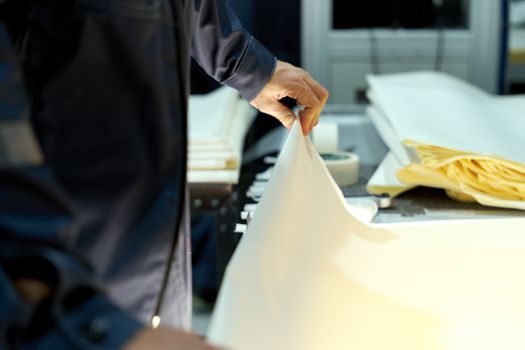
Stock shapes ship as extruded sheet, cast plate, and rod in diameters 1-200 mm and sheet sizes 500/1000 × 1000/2000 mm, with grade (PA6, PA66, MC) and filler (glass, MoS₂, oil) called out on the certificate [S2][S5]. Material designation follows ISO 1043 (polyamide = PA, with a numeric suffix for the monomer, e.g. PA6, PA66, PA46); mechanical and thermal property test methods follow the corresponding ISO 527 / ISO 75 / ISO 62 family for tensile, HDT, and water-absorption data [S2][S3].
For procurement, the binding inputs are grade, filler/colour, stock form and tolerance, dry-as-moulded versus conditioned moisture state, and any regulatory or flammability rating (UL 94 is the usual North American baseline for electrical enclosures). Buyers should also confirm lot-level traceability and request the manufacturer's full property datasheet rather than relying on generic family numbers, since glass-fibre and lubricant additives shift the property envelope by tens of percent versus neat resin.
Trackable signals for the next planning cycle: monitor the spread between PA6 and PA66 spot prices for signs of supply tightening in caprolactam versus adipic acid chains, and watch for new bio-based or recycled-content PA6/PA66 grades entering the engineering-plastics channel as automotive and electrical OEMs push recycled-content targets.
For component-level specifications, see nylon, pressure transmitter, and flow meter.