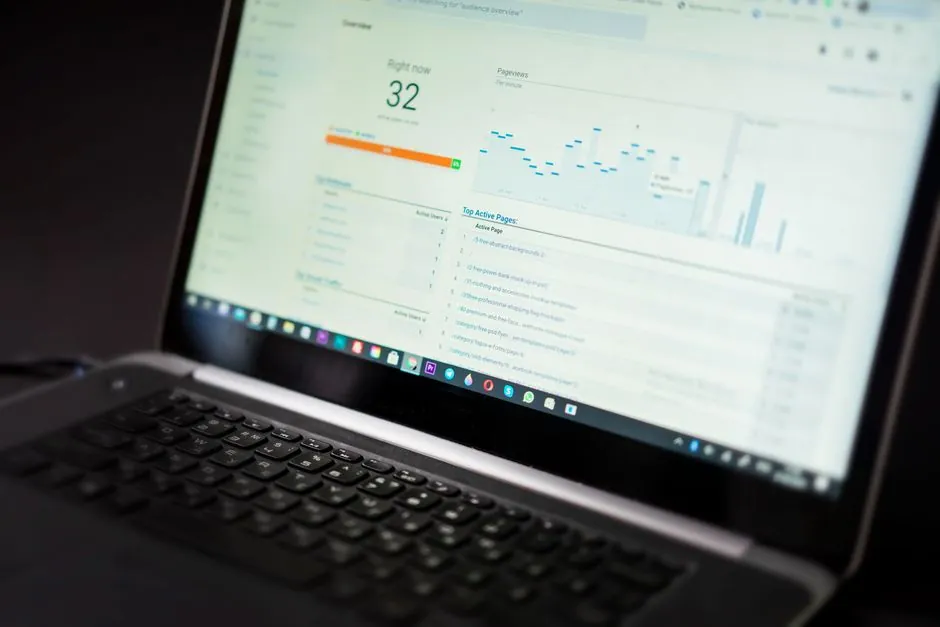
OEE monitoring software typically costs $30–$150 per machine per month, with one-time sensor hardware required for many deployments [S1].
A five-machine pilot typically costs $3,000–$10,000 per year in software plus $1,000–$5,000 in hardware, while a 50-machine plant typically costs $30,000–$90,000 annually at list prices [S1].
Per-machine price by measurement depth
Entry pricing for power-inference sensors starts around $30–$100 per machine per month, while sensor platforms that include loss classification generally run from $50–$150 per machine monthly [S1]. Power inference establishes machine-state availability, but it cannot distinguish a jam from a changeover, so it should not be compared with controller-level or classified monitoring as if the data depth were equivalent [S1].
Alternative line-based SaaS pricing ranges from $500–$5,000 per line per year for entry-level to mid-market platforms, normally including software access, updates, hosting, support and, depending on the package, hardware [S2].
What moves a quoted price
Every OEE quote should be separated into recurring subscription, one-time project work and hardware, because machine count, signal source, integrations and site count determine the commercial model [S3]. Per-machine and per-line contracts fit pilots and phased rollouts, while per-site contracts suit a plant monitoring multiple lines and shifts, and per-user pricing can become expensive when operators and technicians need direct access [S3].
PLC, sensor and camera systems create materially different installation scopes [S3]. PLC-based measurement can read existing controls where a compatible PLC can share data; IoT sensors use power draw or part count on older assets and may require operator-entered stop reasons; camera-based monitoring can cover manual stations but carries different equipment and installation requirements [S3].
Additional cost items include ERP or MES connectors, protocol or controller licences, onboarding, training and support [S1][S3]. Direct CNC connectivity, including protocol-specific licences, can therefore raise the price independently of the base per-machine fee [S1]. For factory-floor visibility, SCADA software can be relevant where supervisory control and production-data integration are already part of the plant architecture.
Hardware, installation, and operating costs
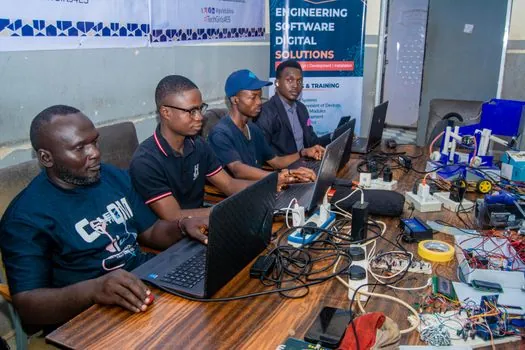
One machine-monitoring cost model uses $240–$1,200 per machine per year for software and $500–$2,000 per machine upfront for hardware, although these figures are explicitly model inputs rather than universal market prices [S8]. The gap between this annual model and published subscription ranges reflects different assumptions about measurement depth, deployment size, and what the quoted software fee includes [S1][S8].
Installation scope can add controllers, counters, sensors, gateways, cellular connectivity, IT configuration, training and change management [S3][S4]. These items should not be hidden inside an opaque annual total, particularly when deciding whether the next line or plant will add predictable cost [S3]. A production monitoring system may also feed an HMI panel for operator interaction, but the HMI is a separate project layer rather than proof that the OEE subscription includes display hardware.
Plug-and-play monitoring versus legacy MES
An illustrative mid-market model for a plant with 25–50 production lines and about 70% legacy equipment puts plug-and-play OEE at approximately $52,000 upfront, $85,000 per year ongoing and $476,000 over five years, versus $395,000 upfront, $137,000 annually and $1.08 million over five years for legacy MES OEE [S5]. The same model places deployment at 4–8 weeks for plug-and-play monitoring and 6–12 months for legacy MES data to become live [S5].
Legacy MES can support order management, batch records and audit trails, while a focused OEE layer is designed around machine-state capture, loss categorization and daily shift analysis [S4]. The comparison is not universal because the figures are illustrative benchmarks for a defined plant profile, but the operating distinction is concrete: legacy MES licenses may represent only 15–25% of actual total cost, with integration, configuration, training and delayed use accounting for much of the balance [S5].
That delay can postpone corrective action even when the licence itself is not expensive.
Who should buy each pricing model

Per-machine or per-line SaaS is suitable for a single-line pilot, a phased rollout, or a plant that needs OEE visibility without full manufacturing execution capability [S2][S3]. Hardware-plus-SaaS suits operators that can absorb capital expense to reduce recurring platform charges, provided the organization accepts hardware obsolescence risk [S2]. A priced pilot on one line can validate signal quality, operator adoption and the measurable benefit before a larger agreement [S3].
Calculate value and total cost before purchasing
The operating calculation is: annual ROI equals OEE points gained multiplied by hourly added value and annual production hours, minus annual platform cost [S2]. A line producing 4,000 hours per year at $200 of added value per hour creates $8,000 of annual value from each one-point OEE improvement [S2]. Published added-value ranges run from $50 per hour for simple assembly to $500 per hour for precision machining or pharmaceutical production [S2].
Total cost must include subscription, hardware, installation, API integration, ongoing IT, support, and the time before usable data appears [S7]. Factory Metrics reports typical deployments recovering 5–15 OEE points during the first 12–18 months, while a structured programme is conservatively modelled at 10–15 points in year one [S1][S2]. These ranges are outcome claims, not guaranteed savings, so a purchase should be tied to a measured baseline and a pilot.
Questions that expose the real quote

Ask whether the quote covers software, sensors, gateways, installation, integrations, training, support, ERP or MES connectors, and protocol licences, and request each as a separate line [S1][S3]. Confirm whether a line, machine, user, site, module, or enterprise agreement drives the price, because each model changes when the next machine or plant is added [S3].
Check data export rights, implementation responsibility, machine-signal validation, and the process for changing downtime codes and dashboards [S1][S4]. Pilot one line against a defined baseline for availability, performance, and quality, then compare the measured change with the five-year cost of installation, operation, configuration, and delayed improvement [S3][S4][S7].
Track three commercial signals in any OEE procurement: the per-machine recurring fee, the separate hardware and implementation total, and the time required to deliver validated production data. A quote with a low subscription but high integration labor or delayed configuration may deliver a higher five-year cost than a focused monitoring deployment.