
For B2B energy storage buyers in 2026, OEM vs ODM is no longer a branding question; it determines factory test scope, design freeze timing, spare parts planning, software access, and who owns corrective action when field issues occur, as framed in commercial ESS sourcing guidance [S8].
China-based BESS manufacturers now offer three engagement tiers: pure OEM (brand and assembly), ODM (design and manufacture), and turnkey EPC packages that include engineering, procurement, construction, and commissioning support, alongside lifecycle services such as field service, spare parts, remote diagnostics, firmware updates, and preventive maintenance [S2]. That menu exists because scale plus an integrated lithium-ion, BMS, PCS, and thermal management supply chain lets a single supplier hold the whole stack from cell to commissioning.
How the Two Service Models Actually Differ on a Factory Floor
OEM energy storage manufacturing means the supplier produces systems to specifications provided by the buyer, which keeps design ownership, brand control, and product consistency across markets with the buyer, while the factory executes against a frozen build pack [S2][S4]. This is the model EPC contractors and distributors default to when they already hold certifications, cell sourcing, and firmware IP, and just need volume assembly under their label.
ODM energy storage manufacturing flips that: the supplier owns battery pack design, system architecture engineering, thermal design, BMS/EMS configuration, and certification paperwork, and the buyer adapts branding, capacity, communication protocol, and enclosure styling on top of a mature platform [S3][S10]. The trade is real ownership of architecture for a longer design freeze cycle and tighter dependence on the supplier's engineering team, which is why ODM partnerships are most common when the buyer's in-house BESS team is thin or the target market is new.
Decision Matrix: OEM vs ODM vs Turnkey, Criteria by Criteria
On upfront unit cost, OEM typically wins on a like-for-like 5–10 kWh C&I unit because the bill of materials and assembly hours are already locked, while ODM carries NRE amortisation across an initial batch that is smaller than the platform's reference volume. On time-to-market, ODM pulls ahead for any product not already on the buyer's shelf: the supplier's reference platform can drop a project from concept to first articles in 8–14 weeks if cell supply is stable, versus a full custom OEM path that can run 6–9 months once cell sourcing, BMS tuning, and certification cycles are included [S2][S8].
On certification scope, ODM is usually the safer bet for buyers entering UL 9540, IEC 62619, or UN 38.3 markets for the first time, because the factory has already burned the test slots on its reference design, while OEM buyers must re-prove the build with their own paperwork. On lifecycle control (firmware, spare parts, warranty administration), OEM gives the buyer direct authority but obliges them to maintain a service organisation, whereas ODM contracts usually bundle remote diagnostics and preventive maintenance into the supply agreement, which lowers headcount cost but locks the buyer into the supplier's update cadence [S2][S4].
What a Capable Chinese BESS OEM/ODM Must Demonstrate
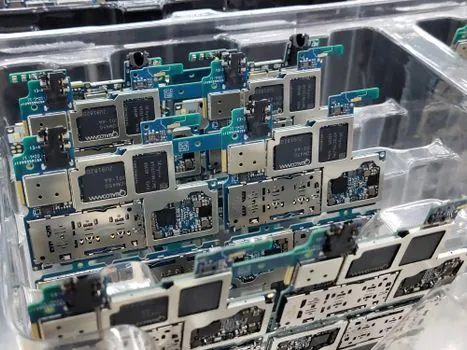
Buyers evaluating Chinese energy storage OEMs should expect in-house testing facilities and certification laboratories that validate safety and performance at every lifecycle stage, on top of third-party certification, to cover the regulatory patchwork buyers face across regions [S2]. The same factory should be able to point to active deployments across C&I, residential, and utility-scale use cases, because the supply chain maturity that drives competitive kWh pricing comes from cross-segment volume.
For ODM specifically, ACE Battery and other suppliers list engineering capability, international safety certification experience, manufacturing scalability, and system integration expertise across commercial energy storage, EV charging, marine battery systems, and UPS backup as the four capabilities a serious partner must evidence, with poor thermal management and weak after-sales engineering called out as the most common downstream cost drivers in commercial deployments [S3][S4]. Voltsmile and similar tier-1 ODM shops extend that to grid stability, peak shaving, and energy independence for residential, commercial, and industrial users, which is the operational range a buyer's spec sheet has to cover [S7].
Engineering Spec Gates B2B Buyers Should Run Before Signing
Cell traceability is the first gate: ask for cell lot data, UN 38.3 reports, and IEC 62619 or UL 1973 certificates tied to the exact BOM the factory will ship, not a generic platform certificate. Second, force a written design freeze clause with revision control on BMS firmware, PCS parameters, and EMS logic, because most field disputes trace back to undocumented post-signoff changes that the factory treats as ODM scope and the buyer treats as OEM scope [S8]. Third, lock the software access model: who can read the BMS logs, push firmware updates, and integrate with the buyer's SCADA or energy management layer, and whether that access survives the warranty period.
Fourth, agree the factory acceptance test (FAT) scope in writing: capacity in Ah at the stated C-rate, round-trip efficiency at 0.5C, thermal performance at the project's ambient temperature, and protective function tests on overcharge, over-discharge, over-current, and overtemperature. Fifth, plan storage handling and on-site storage rack interfaces before shipment, because a containerised BESS arriving without matched racking or HVAC clearances burns commissioning weeks. Buyers who skip this step usually discover the gap during the site acceptance test, when change orders cost three to five times the same fix in the factory [S2][S4].
Cost, Lead Time, and Risk Profile by Project Type

For utility-scale projects above 100 MWh, the OEM model with a China-based contract manufacturer usually wins on cell pricing because the buyer can pool volume across multiple projects, but only if the buyer already holds grid-code approvals and a working BMS/EMS stack. For C&I projects in the 100 kWh to 5 MWh band, which is the bulk of EPC contractor activity in 2026, ODM is the dominant path because most EPC firms do not have the depth to design a BESS from the cell up and instead adapt a reference platform to the site load profile, tariffs, and energy meter data [S2][S4].
For residential and small commercial SKUs sold through distributors, white-label OEM on a factory's existing platform is the lowest-risk route, because the platform's certifications, transport UN classifications, and installer documentation are already paid for. A common mistake is treating OEM and ODM as a branding decision only, which is the framing that gets buyers into trouble when field issues surface; the sourcing model influences factory test scope, design freeze timing, spare parts planning, software access, and corrective action ownership, and a procurement contract that does not address each of those will fail under warranty [S8].
Who OEM Is For, and Who ODM Is Not For
OEM fits EPC contractors, energy brands, and distributors that already own a firmware stack, hold certifications in the target market, and can commit to a multi-project volume that makes the BOM engineering worthwhile; it is the wrong model for a one-off project because the design, certification, and tooling costs will never amortise. ODM fits project developers, EV charging operators, and industrial equipment manufacturers that need a working system quickly, accept that they will not own the architecture IP, and have the order book to justify a platform adaptation rather than a from-scratch design; it is the wrong model for any buyer whose differentiator is proprietary battery management logic, because the ODM factory's reference BMS will cap what they can customise without leaving the platform [S3][S4].
For buyers still uncertain, the practical filter is: if the project's value comes from hardware cost and brand, OEM; if the project's value comes from deployment speed, integrated certification, and a partner that shares liability for the system's behaviour in the field, ODM. The factory's willingness to put corrective action ownership in writing, not just marketing language, is the single best predictor of which side of that line they actually sit on.
Standards, Documentation, and Lifecycle Service Discipline
Regardless of OEM or ODM, the underlying cell, pack, and system standards do not change: UN 38.3 for transport, IEC 62619 for industrial lithium applications, UL 1973 for stationary storage, UL 9540 for system-level safety, and IEC 62933 for grid-tied system performance are the documents a serious Chinese BESS supplier should already have on its reference platform [S2][S3]. A buyer who takes a platform certificate at face value without confirming the exact BOM and firmware version that was tested will find the certification does not cover their shipment when an inspector asks.
Lifecycle service is the second discipline: site service, spare parts supply, remote diagnostics, software updates, and preventive maintenance plans are how Chinese suppliers extend system life and optimise performance over a 15–20 year operating horizon, and these should be priced and scoped during sourcing, not added after commissioning [S2]. For additive manufacturing material and rapid prototyping of balance-of-plant brackets or busbar shields, the same ODM partner will often run a hybrid additive plus conventional line; this is worth confirming up front for projects that need custom non-critical parts without tooling investment.
Trackable signals to watch over the next two quarters: Chinese BESS OEMs publishing UL 9540A large-scale fire test data on their reference platforms, and ODM suppliers disclosing BMS firmware escrow terms in standard contracts. A second signal is the appearance of standardised ODM-to-OEM migration clauses, which would let a buyer start on a supplier's reference platform and progressively take over design ownership as their in-house team grows, closing the gap that currently forces buyers to choose a model before they have the data to choose well.
This topic is covered further in BESS Production Line Design: STEP Prize, Assembly Workflows, and Greenfield Sizing.