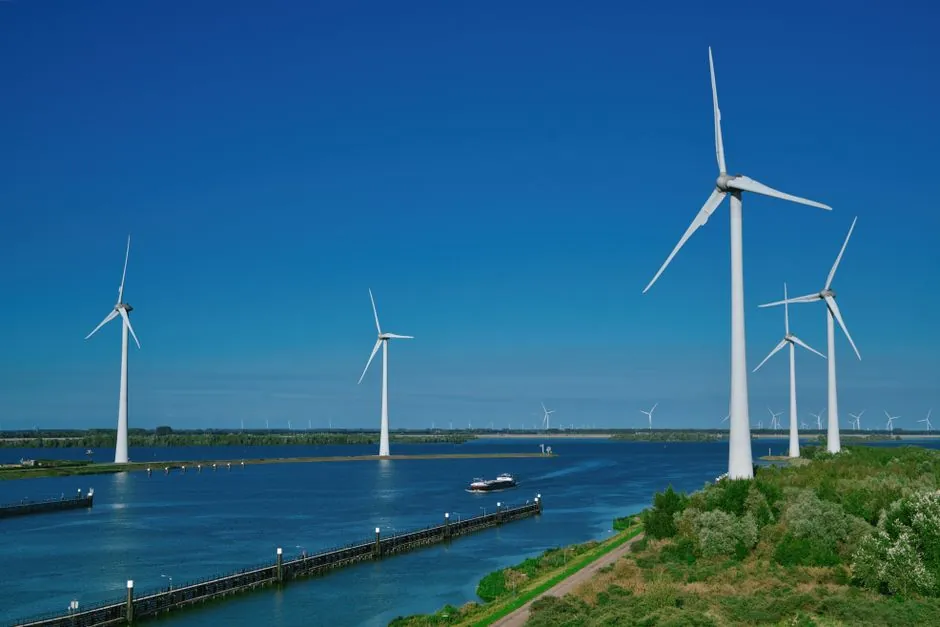
Offshore wind foundation manufacturing is the single largest non-turbine cost block in a fixed-bottom project, and the single largest block overall once floating substructures are added. The 2024 NREL Cost of Wind Energy Review estimates the fixed-bottom offshore LCOE at $117/MWh, with 5.6% production sensitivity and 0.5% wind resource sensitivity [S1].
Within that envelope, a representative UK bottom-fixed build published in 2025 splits costs into inbound transport at £87,000/MW, foundation installation at £165,000/MW, monopile installation vessel at £75,000/MW, and transition-piece installation vessel at £41,000/MW [S2]. Floating projects amplify every line: structure alone runs £1,103,000/MW, secondary steel £53,000/MW, connectors and joints £43,000/MW, with the floating substructure itself at £1,313,000/MW [S4]. The cost gap between fixed and floating is the central reason procurement and foundation vehicle spec decisions are now made on a per-tonne, per-vessel-day basis, not on a per-MW basis.
Material and fabrication drivers: steel tonnage, weld hours, plate grade
Foundation steel cost scales with monopile or jacket tonnage, and tonnage scales with water depth and turbine rating. A 15 MW class monopile in 40 m water is in the 1,500–2,500 t range; the same rating at 60 m typically pushes past 3,000 t once wall thickness is increased to manage fatigue at the mudline [S2].
Plate grade selection is the second material lever. S355 is the historical default for transition pieces and boat landings; S420 and S460 are now common in the monopile can and the jacket brace nodes to shave wall thickness at the same fatigue life.
Fabrication throughput, not raw plate, is the binding constraint on delivered cost. Heavy-plate rolling, circumferential welding, and post-weld heat treatment for thick monopile cans require large-diameter fabrication halls that only a handful of yards operate. Capacity tightness, not steel price, is what has held delivered monopile cost in the €800,000–1,200,000 per foundation band for 12–15 MW ratings through 2024–2025, even with normalising steel prices. Tier-1 yards in the UK, Germany, and Denmark are booked 18–30 months out, which is why Chinese fabricators have entered the European order book at sub-€700,000 delivered prices on select tenders [S6].
Installation vessel day-rates and the $800–2,500/kW installation band
Installation cost, not steel, is the most volatile line in the foundation budget. A 2023 vessel-economics study by Thunder Said Energy benchmarks offshore wind installation at roughly $1,000/kW across a typical project, on top of about $1,500/kW of turbine cost, implying a full installed project of $2,500/kW [S3].
The realistic band is wider: $800–2,500/kW depending on water depth, distance from shore, soil conditions, and the share of specialized vessels in the fleet [S3]. The highest day-rates are earned by wind turbine installation vessels, cable lay vessels for both intra-array and export runs, and foundation installation vessels that drive monopiles or pin jackets into the seabed [S3]. A modern wind turbine installation vessel in 2025 contracted at €200,000–300,000/day, and foundation installation vessels at €120,000–200,000/day, with utilization in the 60–80% band once weather windows are netted out.
The vessel count per project is itself a project-shaping parameter. Studies cited in the 2023 vessel breakdown put the deployed fleet between 25 and 100 vessels for a single 1 GW build, with roughly 10% being the highly specialized class [S3]. That spread, by itself, can swing installation CAPEX by several hundred million euros on a 1 GW project, and it is the reason developers now lock foundation installation and transition-piece industrial valve hookup scopes under single contracts rather than splitting procurement.
Fixed-bottom vs floating: a 4-criterion cost comparison
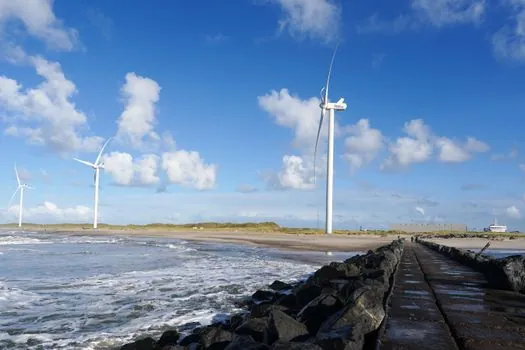
Direct capex, install method, Opex, and supply chain maturity are the four decision criteria that line up fixed-bottom monopile/jacket against floating semi-submersible and spar designs. [S2]
On direct CAPEX, the bottom-fixed foundation package (monopile + TP + secondary steel + scour protection) typically lands at £300,000–500,000/MW, while the equivalent floating line (mooring lines, anchors, semi-submersible or spar hull, secondary steel, connectors) is in the £1,300,000+/MW band [S2][S4]. On install method, fixed-bottom relies on piled or jacketed solutions driven or lowered by foundation vessels with a jack-up rig; floating shifts the heavy lift to wet-tow and hookup, with mooring pre-lay becoming a significant cost in its own right [S3].
On OPEX, floating pays a 10–20% premium in access and mooring-line inspection over its first 10 years because offshore service operations demand either SOV weeks-at-sea or dynamic positioning work near mooring connections in deep water. At roughly 60 km from shore, the SOV model overtakes CTV shuttling as the lowest-downtime option [S4]. On supply chain maturity, monopile and jacket fabrication is a commodity at this point: four to six yards can bid, including Chinese suppliers at sub-€700,000 delivered prices on some tenders [S6]. Floating hull fabrication is still a custom-build market with limited yard slots and a handful of qualified mooring-system suppliers.
Use cases by water depth and seabed
Monopile remains the default at sites under roughly 35–40 m with sandy or stiff-clay seabeds, because installation vessel day-rates are the lowest and the manufacturing base is mature. Jacket enters the picture between 40 m and 60 m, where monopile wall thickness starts to dominate tonnage and fatigue life at the mudline becomes harder to certify. [S2]
Floating is the only credible option past roughly 60 m water depth unless piled or suction bucket foundations are feasible; site conditions matter as much as depth, since easy ground (dense sand, stiff homogeneous clay, few boulders) opens the door to cheaper anchoring, while boulder fields or weak layered clay push designers toward suction or drilled anchors that add cost and schedule [S4].
Tidal range and typhoon-class wind regimes add a localized premium. Sites in Japan and South Korea need typhoon-rated mooring and nacelle designs; large tidal ranges force a higher blade-tip clearance and more flexible mooring, which feeds back into hull, mooring, and pressure sensor count for ballast control [S4].
Total cost of ownership: 25-year view beyond the steel order
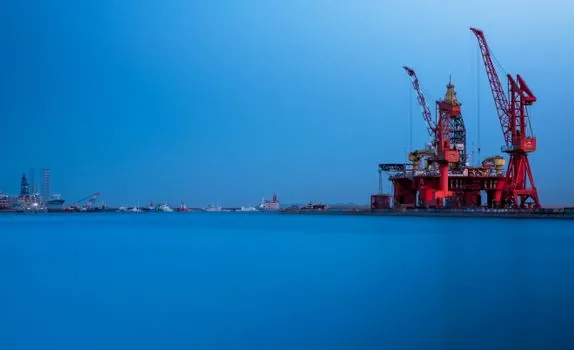
Purchase price on the foundation is roughly 40–55% of the 25-year levelized cost contribution for fixed-bottom offshore wind, with the rest split across financing, O&M, and decommissioning.
Financing is the lever that magnifies every other cost line. Higher CAPEX front-loading combined with elevated WACC pushes LCOE disproportionately. Reducing project risk is the single biggest way to affect financing cost, which is why developers pay premiums for proven fabrication yards and tier-1 installation contractors even when a lower-bid supplier is available [S4].
On the manufacturing side, the two biggest near-term signals to track are (a) commissioning of the next tranche of heavy-plate monopile fabrication halls in China and the UK through 2026–2027, and (b) the day-rate trajectory of wind turbine installation vessels as the order book for next-generation hulls delivers. A 10% drop in foundation installation day-rates translates to roughly a 5–8% drop in project LCOE, which is the same order of magnitude as the entire fixed-bottom production sensitivity NREL reports [S1][S3].
For a parallel engineering view on how actuators and moving parts are spec'd for similar harsh-environment duty, the 10-year cost breakdown in pneumatic actuator TCO is a useful reference; for adjacent structural procurement, storage rack load paths covers comparable steel-spec logic at much smaller scale.