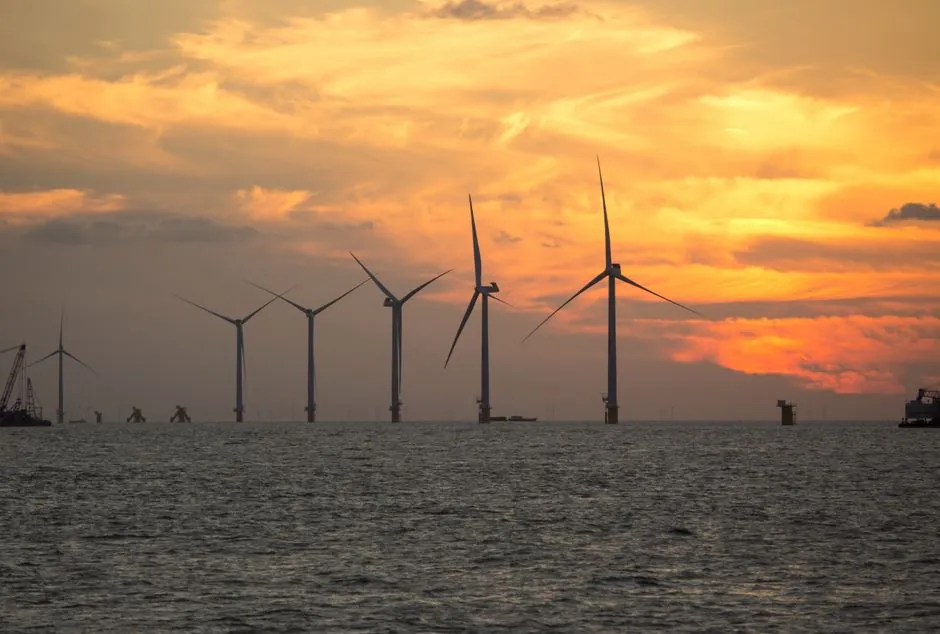
An offshore wind foundation vehicle program that runs OEM will carry the foundation designer as the IP owner and the fabricator as a build-only partner, while an ODM run puts both the design and the welding/assembly know-how in the supplier's hands, per Wevolver's 2025-05-30 engineering guide [S1].
For monopile, jacket, and floating-substructure programs sized 8 MW to 18 MW turbines, that distinction drives three engineering numbers: design-cycle months, per-tonne cost, and exclusivity of the fatigue-rated joint detail, all of which are decision criteria rather than vendor branding [S1][S2].
Definition and Scope: What Counts as OEM vs ODM Offshore
OEM in offshore wind means the developer or its engineering procurement contractor holds the monopile or jacket geometry, the wall-thickness taper schedule, the weld procedure specification, and the fatigue S-N curves, and contracts a steelwork fabricator to build to those drawings [S1][S2]. ODM means the fabricator offers a pre-engineered foundation vehicle platform (typical diameters 7-10 m for monopile, 4-6 leg jackets) that the developer rebrands and orders with limited configuration choices, comparable to a private-label or white-label supply [S2][S3].
The Wevolver engineering guide draws the line at "client designs, manufacturer builds" for OEM and "manufacturer handles both design and production" for ODM, a phrasing that maps cleanly onto foundation procurement because the monopile is a one-off engineered structure per project [S1]. Contract manufacturing, by contrast, only describes who runs the welding robots and does not say who owns the joint detail, so it sits orthogonal to the OEM/ODM choice rather than as a third tier [S3].
Decision Criteria: Six Variables That Drive the Choice
Six variables decide the model on a fixed-bottom project: (1) who owns the fatigue S-N curves and weld procedure spec; (2) per-tonne fabrication cost in USD; (3) design-cycle duration in months; (4) exclusivity of the joint geometry; (5) minimum order quantity in foundations per year; (6) certification liability under DNV ST-0126 or equivalent [S1][S2][S3].
Wevolver's 2025-05-30 guide lists IP ownership, development cost, brand differentiation, and business-model flexibility as the four pillars, which translate for foundations into the six variables above once the welding qualification and serial-production context are layered on [S1]. Seacomp's OEM/ODM hardware breakdown adds "longer time to market" and "higher upfront investment" as the two recurring OEM costs, expressed for foundations as extra 6-12 months of engineering and a tooling/qualification line item that ODM buyers avoid [S2].
The cost structure is asymmetric: OEM demands substantial upfront design and development investment, ODM spreads the same engineering across multiple buyers, which is the single largest reason ODM can undercut OEM per-tonne pricing on a catalog transition piece [S9]. JLCCNC's 2026-06-23 comparison confirms that OEM tooling and development costs are higher, ODM MOQ tendencies are often lower, and OEM time-to-market is longer because design and validation work sit on the critical path [S3].
Comparison Matrix: OEM vs ODM on Foundation Procurement Criteria
On the four criteria that move a procurement award, the models line up as follows, all sourced to public OEM/ODM engineering literature rather than to a specific foundation project [S1][S2][S3][S5][S9]:
Design authority: OEM puts the developer's EPC engineer in charge of the geometry and weld prep; ODM keeps both inside the fabricator's catalog platform [S1][S3]. IP ownership: OEM typically retains rights with the brand or developer, ODM typically retains rights with the supplier, which constrains exclusivity on the joint detail [S2][S3]. Time to market: OEM is slower because sampling, fatigue testing, and DNV witnessing sit on the critical path; ODM is faster because the design and qualification are already on the shelf [S2][S5]. Upfront investment: OEM is higher in engineering hours and qualification cost, ODM is lower because the buyer avoids the full R&D line item and only pays tooling amortization [S3][S5][S9].
Importivity's 2026-03-30 sourcing brief adds that OEM MOQ tendency is often higher and ODM MOQ tendency is often lower, which for a serial monopile or jacket program means ODM fabricators will accept a 10-20 foundation order while an OEM fabricator typically wants a multi-year pipeline before amortising dedicated jigs [S5]. The same source flags ODM IP risk as higher because the supplier may sell a similar product to competing developers, a real concern for floating-substructure geometry where 3-4 buyers may be evaluating the same semi-submersible [S5].
Who Should Pick Which: Developer, Tier-1, and New-Entrant Profiles
Established European developers with an in-house foundation engineering team and a 5+ GW pipeline are the natural OEM buyers, because the per-project R&D cost amortises across tens of foundations and the IP stays in-house for the next lease area [S1][S2]. Tier-1 fabricators that want to defend margin on welding and coating will also push for OEM contracts, since the higher upfront engineering spend is offset by specification control on the weld procedure and the pressure sensor instrumentation ports [S1][S5].
New-entrant developers and Asian EPCs chasing a 1-2 GW project are the natural ODM buyers, because they accept a catalog transition piece or jacket to keep the first project bankable and avoid a 6-12 month design and qualification loop [S3][S5]. Smaller fabricators entering offshore wind from onshore wind or bridge steelwork will likewise offer ODM platforms, since they already hold DNV ST-0126 fatigue data on a generic jacket and can resell it to multiple buyers [S2][S9].
Importivity's 2026-03-30 piece is explicit that ODM is "often attractive for companies entering a market quickly or testing demand before committing to full product development", which describes a developer's first offshore wind project almost word for word [S5]. The same source warns that ODM "price competition" and "limited differentiation" push the program toward competing on schedule and CapEx rather than on a unique fatigue-rated joint, which is acceptable for a 1 GW demonstrator but punishing on a 5 GW follow-on [S5].
Real Use Cases by Foundation Type
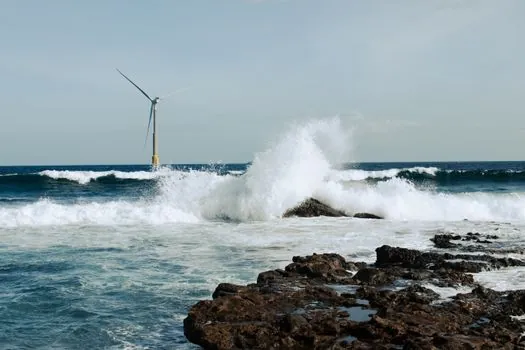
Monopile in shallow water (under 35 m): typically OEM, because the wall-thickness taper and the grouted connection are project-specific and protected as developer IP; ODM monopile platforms exist but compete on a narrow diameter band of 7-8 m [S1][S2]. Jacket in transitional water (35-60 m): split, with OEM dominant on U.S. and Taiwanese projects where the developer carries the fatigue certification, and ODM appearing in Chinese and Korean serial builds where the fabricator offers a catalog 4-leg or 6-leg jacket [S3][S5].
Floating substructure (semi-submersible or spar): heavily ODM for first-of-kind projects because only 3-4 semi-submersible designs have meaningful DNV-class track record, and the developer typically takes a license or a warranty pass-through rather than commissioning a new design from scratch [S2][S5]. For the related additive manufacturing material supply chain on cast nodes and transition-piece inserts, the OEM/ODM split mirrors the foundation: OEM when the chemistry and heat-treatment cycle are developer-owned, ODM when the foundry offers a qualified wire-arc additive weld procedure on its standard node casting [S1][S9].
Limitations, Failure Modes, and What the Models Do Not Solve
Neither model replaces DNV ST-0126 fatigue certification, ISO 19902 geotechnical verification, or the project-specific soil-pile interaction analysis, all of which sit with the developer regardless of OEM or ODM [S1][S2]. OEM does not eliminate fabrication risk; it transfers welding and dimensional-tolerance risk to the contract manufacturer, but the developer still carries the fatigue S-N and weld-procedure liability [S3]. ODM does not eliminate schedule risk; it compresses the design phase but cannot shorten the steel plate procurement, the grit-blast and coating cycle, or the loadout window, which dominate the monopile critical path [S5][S9].
The most common failure mode on OEM runs is design freeze slipping into the fabrication phase, which forces expensive re-tooling on the welding line and rewitnessing of the pressure transmitter calibration ports embedded in the transition piece [S1][S3]. The most common failure mode on ODM runs is the supplier selling the same platform to a competitor in the same lease auction, which collapses any margin the developer expected from a "unique" foundation geometry [S2][S5]. For industrial valve and instrumentation buyout on the foundation, the OEM/ODM choice is largely neutral, because valve sourcing is a separate package that follows API 6D or equivalent and is not bundled with the structural IP [S1].
Sourcing, Standards, and Trackable Signals
The relevant standards layer is DNV ST-0126 for fatigue design of offshore wind steel structures, ISO 19902 for fixed steel structures, and EN 1090-2 for execution class welding, all of which sit above the OEM/ODM commercial choice and apply equally to both [S1]. For buyer-side due diligence, the practical checklist is: (1) who owns the weld procedure specification and the fatigue S-N curves; (2) who holds the DNV certificate of fitness for the joint detail; (3) what is the exclusivity clause on the platform geometry; (4) what is the per-tonne price and the MOQ in foundations per year [S1][S2][S3].
Trackable signals for the next 6-12 months include: any new DNV ST-0126 certificate issued to an Asian fabricator offering a catalog jacket, any developer disclosure of an ODM license fee line item in an FIDs filing, and any serial monopile order above 50 units that signals an OEM-to-ODM shift on a future project [S2][S5][S9]. A useful adjacent read is this Fluoropolymer OEM vs ODM: Spec Control, Lead Time, and IP Tradeoffs for 2026 Buyers breakdown, which applies the same OEM/ODM framework to fluoropolymer seals and bushings used inside the foundation's cathodic-protection and grouting subsystems. For a parallel view on adjacent industrial parts, this Marine Engineering Metal Powder Selection: Spec Map for Offshore Parts piece is a useful cross-check on the additive manufacturing material side of the same supply chain.