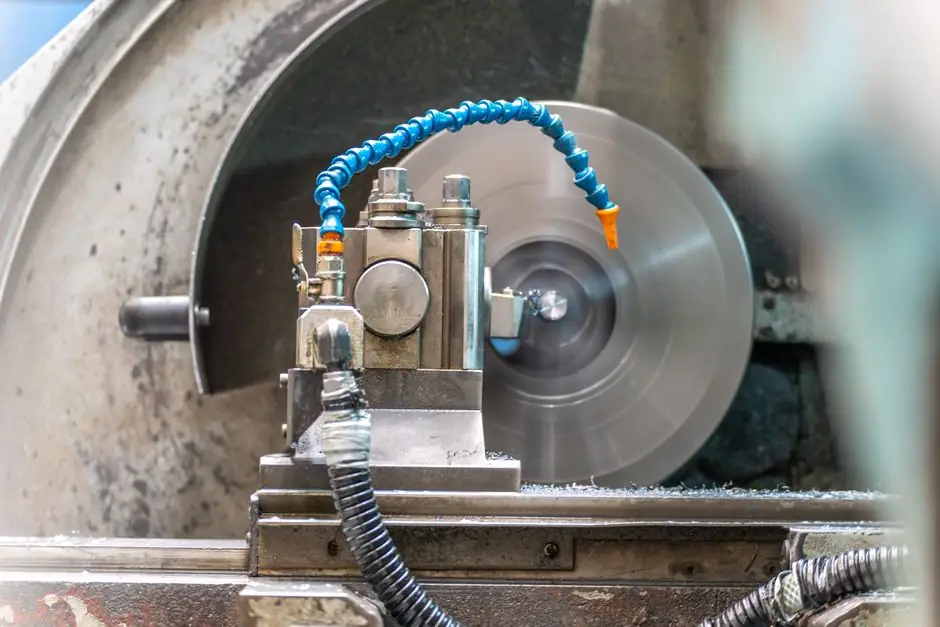
Molybdenum's 2,623°C melting point, low thermal expansion, and corrosion resistance against non-oxidizing acids make it the refractory of choice for high-heat carriers, grid components, and precision electronics, with the metal typically gold-plated for bonding [S1].
Process-engineering equipment built around that property falls into three families: rotary kilns for MoS₂-to-MoO₃ conversion, single-chamber vacuum sintering furnaces rated 1,100–1,400°C, and photochemical etch lines for thin-gauge aerospace and medical stock (DFARS-compliant) [S1][S3][S4].
Roasting Rotary Kilns: From Concentrate to MoO₃
Internal-combustion rotary kilns for molybdenum concentrate calcination fire direct coal, flue gas, coal gas, or natural gas into a 1,500–1,800 mm-diameter drum running 18–28 m long, sized for a 2,000 t/yr single-line MoO₃ output [S4]. Drying the feed MoS₂ to roughly 5% moisture with a Sider dryer upstream is the standard pre-step before oxidation calcination [S4].
Key process targets reported for this equipment class: residual sulfur in the calcined MoO₃ meeting the standard's specification, coal consumption at 400–450 kg per ton of MoO₃, kiln service life of 5–10 years, and MoO₃ recovery as high as 99% when paired with internal-combustion calcination and tail-gas capture (rhenium and copper are recoverable from the same off-gas) [S4]. Exhaust gas recovery uses bag-type capture rather than wet scrubbing in the published reference line [S4].
Single-Chamber Sintering Furnaces: Molybdenum-Belt Vacuum
Horizontal single-chamber sintering furnaces built around a molybdenum-strip heating element routinely rate to a maximum of 1,400°C with continuous working at ≤1,300°C, a 200×200×200 mm work zone, 22 kW adjustable heating power (25 kW total installed), and three-phase 380 V (±10 V) at 50 Hz [S2][S3]. A typical heat-up from room temperature to 1,300°C runs under 150 minutes on an empty load [S3].
Vacuum performance is what separates these furnaces from atmosphere sintering: ultimate vacuum ≤6.67×10⁻⁴ Pa (no load, cold, post-purge), working vacuum ≤6.67×10⁻³ Pa, measured with a ZDF5227BV01 compound gauge spanning 1.0×10⁵ down to 1.0×10⁻⁵ Pa, and pumped by a 4.5 kW train (mechanical + molecular + high-vacuum butterfly valve) [S3]. Insulation stacks combine two molybdenum heat shields with two 310S and two 304 stainless layers separated by 99% corundum ceramic, with PID/PLC control editing 30 heating segments and storing 20 process recipes on a 10-inch LCD HMI [S3].
Vacuum Atmosphere Options and Process Fit
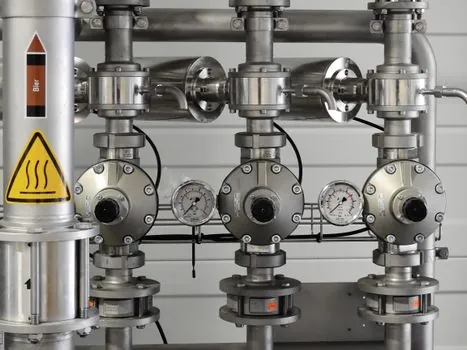
Rated-temperature tiers for vacuum/refractory furnaces land at 500°C, 800°C, 900°C, 1,100°C, 1,300°C, and 1,400°C, supporting applications from vacuum welding and brazing through titanium-alloy sintering, tantalum annealing, X-ray tube degassing, and 3D-printed metal post-processing [S3]. Process gases cover reducing atmospheres, inert atmospheres, and H₂/N₂ mixtures, with the equipment safety chain interlocking water stop, over-temperature, heating over-current, rotary vane pump, and diffusion pump faults [S3].
Selection between an air-atmosphere rotary kiln and a vacuum molybdenum-belt furnace is driven by the chemistry: the rotary kiln oxidizes sulfide to oxide at atmospheric pressure with internal combustion [S4], while the vacuum furnace runs dewetted or inert-atmosphere metallurgical cycles where carbon and oxygen pickup must stay below spec, a contrast that mirrors the broader tungsten manufacturing quality framework for refractory procurement where atmosphere control gates final purity.
Precision Etching and Thin-Gauge Molybdenum Parts
For thin-gauge flat stock, photochemical etching is the dominant process because molybdenum's combination of high elastic modulus, low thermal expansion, and 2,623°C melting point lets etched carriers, shadow grids, and electrical contacts hold tolerance in vacuum-tube and satellite applications [S1]. Molybdenum-rhenium and molybdenum-copper alloys extend the property envelope for components that need matched thermal expansion or enhanced conductivity at high temperature [S1].
Etched parts are commonly gold-plated after fab to support wire and die bonding, and aerospace/defense supply chains typically require DFARS-compliant stock plus full lot traceability [S1]. The same etch-and-plate workflow is also used for sputtering target selection on refractory-metal targets, where flatness, grain size, and purity drive yield.
Selection Criteria: Kiln vs. Vacuum Furnace vs. Etch Line
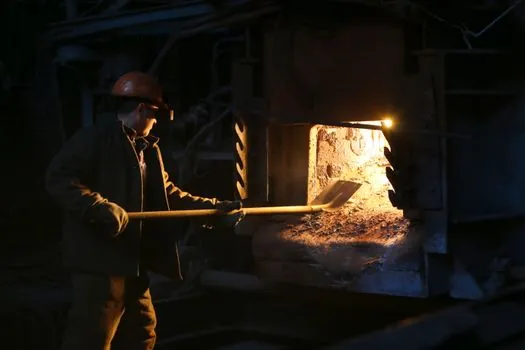
Use a self-heating rotary kiln when the input is wet MoS₂ concentrate, the goal is oxidation to technical-grade MoO₃ at multi-thousand-ton scale, and you can pair the kiln with bag-type exhaust capture for rhenium/copper byproduct recovery [S4]. Use a single-chamber molybdenum-belt vacuum furnace when the workpiece is pre-reduced metal or alloy, the cycle needs ≤1,300°C continuous with 10⁻⁴ Pa-class vacuum, and PID/PLC recipe storage is required for repeatable metallurgical results [S3]. Use a photochemical etch line when the deliverable is a thin, flat, tolerance-tight part (carrier, grid, contact) in DFARS-compliant Mo or Mo-alloy, finished with gold plating for bonding [S1].
Typical Sizing, Power, and Footprint Reference
Reference line for a 2,000 t/yr MoO₃ kiln: 1,500–1,800 mm diameter × 18–28 m long, internal combustion, 400–450 kg coal per ton MoO₃, 5–10 year service life, up to 99% MoO₃ recovery [S4]. Reference line for a lab/pilot Mo-belt vacuum furnace: 200×200×200 mm hot zone, 22 kW heating, 25 kW total, 50 Hz three-phase 380 V, 4.5 kW vacuum train, 6.67×10⁻⁴ Pa ultimate vacuum, ±1°C control, <150 min ramp to 1,300°C [S3]. Reference line for a CE/ISO 9001/ISO 14001/OHSAS 18001-certified sintering furnace build: customizable single-chamber horizontal, 100–120 working-day delivery, 1-unit MOQ [S2].
Process Indicators and Trackable Signals
Two signals to monitor when qualifying a molybdenum line: (1) sulfur spec and coal rate on the kiln side, with 400–450 kg/t MoO₃ and 99% recovery as the current benchmark from the reference builder [S4]; (2) ultimate vacuum and temperature accuracy on the furnace side, with ≤6.67×10⁻⁴ Pa and ±1°C as the published reference [S3]. For thin-gauge parts, confirm DFARS-compliant stock and a documented gold-plating bond test before release [S1].
Track the next revision of ISO 9001 / ISO 14001 certifications on the sintering-furnace builder's audit trail, the kiln-bag-house dust-loading trend against local emission caps, and any change in molybdenum-rhenium or molybdenum-copper alloy stock availability for high-temperature carrier work [S1][S2][S4].
For the relevant spec sheets and selection criteria, see additive manufacturing material, linear guide, and crossed roller guide.