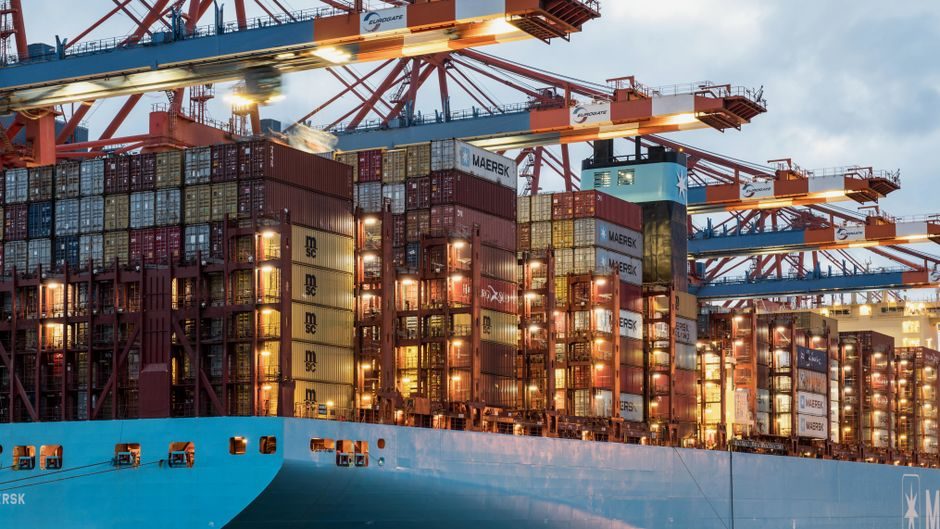
Europe's installed offshore wind fleet reached 25 GW after 20 years of build-out, and the European Commission's Offshore Renewable Energy Strategy sets a 60 GW-by-2030 and 300 GW-by-2050 trajectory, requiring roughly 4.5 GW added per year through 2030 and 9.5 GW per year thereafter [S1].
The supply chain bottleneck is no longer the turbine; it sits below the waterline in foundations. Average European offshore wind water depth is 44 m and average distance-to-coast is 52 km, putting most current sites inside the 15–60 m band where monopiles dominate [S1].
Foundation types and the depth band that drives selection
Monopiles with transition pieces are the most widely used offshore wind foundation, specified for water depths of 15 to 60 m and consisting of a steel cylinder embedded up to 30 m into the seabed, with current production monopiles weighing up to 2000 t and reaching 10 m in diameter [S1].
Jackets (lattice steel structures) are specified for deeper sites beyond roughly 60 m where monopile diameter and wall thickness become uneconomical. Transition pieces link either foundation type to the wind tower and carry the grouted or bolted connection detail that has become a focal point for fatigue-driven certification work [S1].
Selection is depth-first, soil-condition second, fabrication-port logistics third: a project on a 35 m site with firm sandy soils and a quayside capable of handling 2000 t lifts will be built around monopiles, while a 70 m site with soft clay pushes procurement toward jackets, which require more welds, more nodes, and a different fabrication yard profile.
Installed-base and pipeline numbers that frame the capacity gap
Country share of the 25 GW European installed base breaks down as United Kingdom 42 %, Germany 31 %, Netherlands 10 %, Belgium 9 %, Denmark 7 %; Europe added 2.4 GW during 2020 alone, the baseline against which the 4.5 GW/yr and 9.5 GW/yr trajectories must be measured [S1].
The Offshore Wind Foundations Alliance states an objective to strengthen European offshore wind foundation production capacity in order to meet EU Green Deal targets and to ensure sector and supply-chain resilience and competitiveness in line with the Net-Zero Industry Act, framing capacity expansion as a policy deliverable rather than a market side-effect [S1].
Translated into steel tonnage, the capacity gap is not subtle. Going from 2.4 GW/yr (2020) to 4.5 GW/yr (2026–2030) implies a near-doubling of foundation output in roughly six years, and the working hypothesis inside the OWFA coalition is that European yards must hold the majority of that incremental tonnage or the import bill will scale with it.
Manufacturing standards and certification under the OWFA mandate
The OWFA coalition objectives include ensuring foundation suppliers take the lead in setting standards and defining certification processes, alongside establishing a level playing field for sustainable manufacturing and affirming ESG commitment by advocating non-price selection criteria in tenders [S1].
For process engineers specifying foundations, the practical consequences are three-fold: (1) certification scope is being pulled back toward fabricator-controlled schemes rather than developer-internal qualification; (2) ESG and non-price criteria (carbon content of steel, weld traceability, yard HSE record) are now weighted alongside tonnes-per-day throughput; (3) the Net-Zero Industry Act alignment gives EU-yard procurement a regulatory tailwind when tendering against non-EU fabricators [S1].
Non-price selection is not a slogan; it changes bid evaluation. A fabricator quoting a 24-month monopile delivery with EN 1090-2 EXC3 weld traceability and a documented Scope 1+2 steel carbon footprint will score against a lower-tonnage bid that cannot evidence the same, and OWFA has explicitly tied its coalition work to making that scoring mandatory rather than optional [S1].
Comparison: monopile vs jacket vs floating foundation on decision criteria
On four decision criteria drawn from the OWFA foundation description and current project practice [S1], the three structural families rank as follows:
Water-depth suitability: monopiles own 15–60 m; jackets take over from roughly 60 m to several hundred metres in jacket-configured fixed-bottom designs; floating concepts address very deep sites but are not addressed in the OWFA foundation brief. Steel mass per MW: monopiles are heaviest in absolute tonnes per foundation (up to 2000 t, 10 m diameter) but have the lowest fabricated-tonnage-per-MW in shallow water; jackets carry a higher fabricated-tonnage-per-MW penalty due to tubular nodes and bracing. Fabrication yard profile: monopiles need heavy plate rolling, thick-wall welding, and large-diameter paint/grout workshops; jackets need stickier node-casting or forging supply and more complex fit-up. Supply-chain maturity: monopiles are the most widely used and therefore have the deepest fabricator pool; jackets have fewer European yards at the required node size; floating foundations are at pre-commercial scale.
Hull 2026 signals: the conference circuit as a capacity gauge
Offshore Wind Connections 2026 ran 29–30 April 2026 at the Doubletree by Hilton in Hull under the theme "Offshore Wind and Beyond: New Markets, New Funding, New Partnerships", with the explicit supply-chain aim of letting Humber-based businesses "strengthen supply chain assurance, cyber readiness and data resilience" and "collaborate with Tier 1 developers, primes, innovators and public-sector partners" [S2].
The attendee list functions as a capacity signal: RWE, Ørsted, The Crown Estate, RenewableUK, Global Underwater Hub, Humber Freeport, CATCH UK, Norwegian Offshore Wind Cluster, Maersk, and the Port of Blyth all appeared alongside fabricator-adjacent names such as Pipeshield, SIEVI, Hove A/S, Atlantas Marine, and Pentagon Marine, indicating that the UK Humber cluster is being positioned as a cross-supply-chain integration point rather than a single-fabricator hub [S2].
Adjacent-sector convergence is the explicit framing. The OWC2026 brief states that offshore wind assets, infrastructure and operations are "converging with defence, security, cyber resilience, digital and dual-use technologies" and that government priorities around "national resilience, secure energy systems, maritime capability and innovation-led growth" are driving that convergence [S2].
For a process engineer tracking foundation supply, the read-through is that dual-use shipyard capacity (Damen-class hulls, GWO-certified offshore crews) is being treated as a fungible asset, which loosens the bottleneck on assembly-line welders but does not solve heavy-plate rolling, where the constraint is the rolling mill itself rather than the workforce.
Material and process constraints that gate throughput
Monopile fabrication is bounded by three physical assets: heavy-plate rolling mills capable of producing 10 m diameter sections in single-piece cans, weld-positional capacity for circumferential seams on thick-wall S355/S420 plate, and quayside lifting gear rated above 2000 t for load-out. The OWFA description confirms 2000 t / 10 m as the current production envelope, which means any project specifying larger monopiles for deeper sites immediately drops into a much smaller fabricator pool [S1].
Jacket nodes are the recurring bottleneck: cast or forged tubular nodes at the brace-to-chord intersections drive both cost and lead time, and node forging capacity in Europe is concentrated in a small number of mills. A procurement officer who treats jackets as "more steel, same supply chain" will misread the lead-time risk, because the gating constraint is forged-node output, not plate tonnage.
Related industrial commodities follow the same pattern. Heavy-plate chain conveyor lines feeding monopile can-rolling shops run hot continuously during campaign periods, and the roller chain drives inside plate-straightening and stacking stations are a known wear item that fabricators stock against campaign schedules. The conveyor chain loop that moves plate between roller and fit-up bay is similarly uptime-critical, and a single failed drive on that loop can idle a 2000 t/month line.
Workforce, HSE certification and the labour supply gate

OWFA projects the European offshore wind workforce growing from 77,000 jobs to 200,000 jobs by 2030, a 2.6x expansion in under a decade that is at least as hard to deliver as the steel tonnage [S1].
Offshore ecology and monitoring providers working on the same sites hold GWO Basic Safety plus OPITO BOSIET and Medical w/Chester step certification, and project managers carry IPMA-D plus CAD credentials (Autodesk Inventor) as a baseline, indicating that even adjacent (non-fabrication) roles have a multi-certificate entry bar that constrains how fast a new yard can be staffed [S3].
For fabricators, the practical bottleneck is the pool of thick-wall welders qualified to EN 1090-2 and the NDT technicians who can sign off welds on fatigue-sensitive nodes; a yard cannot simply hire up against a 4.5 GW/yr target if the qualified-person register does not exist regionally.
Sourcing signals a process engineer can track through 2026
Three trackable signals stand out for a process engineer monitoring foundation supply through 2026: (1) The OWC2026 conference theme of "New Markets, New Funding, New Partnerships" and its explicit dual-use convergence language signal that defence and offshore wind shipyard capacity will increasingly be co-utilised, which should be visible in yard-utilisation disclosures [S2]. (2) OWFA's stated objective of ensuring foundation suppliers take the lead in setting standards and defining certification processes will surface as fabricator-led certification scheme updates through 2026, and any change to the non-price selection criteria in EU tenders is a direct procurement signal [S1]. (3) The 77,000-to-200,000 workforce expansion target is the most falsifiable metric: if qualified-welder registrations do not scale at roughly 2.6x by 2030, the 4.5 GW/yr trajectory slips regardless of steel supply [S1].
For a spec engineer building a sourcing shortlist, the near-term actions are concrete: confirm whether candidate fabricators can evidence 2000 t / 10 m monopile output within stated delivery windows; verify EN 1090-2 execution class and NDT traceability on jacket node welds; and weigh adjacent-capacity fabricators with industrial UPS backed heavy-plate lines over single-product yards whose switching power supply infrastructure is not sized for continuous rolling-mill duty. The dc power supply chain feeding weld-positioners and NDT benches is similarly uptime-critical, and a fabricator without documented ride-through capacity on those lines is a campaign risk.
For deeper context on the blade-side squeeze that sits above these foundations, the Wind Turbine Blade Supply Chain 2026 spec map covers failure modes and sourcing signals, and the Wind Turbine Blade Suppliers and Manufacturers 2026 sourcing map gives a parallel supplier-side view that a foundation buyer can cross-check against yard capacity claims. The next data point to watch is the post-OWC2026 award flow out of the Humber cluster and the first OWFA-issued certification-scheme update through Q3–Q4 2026.