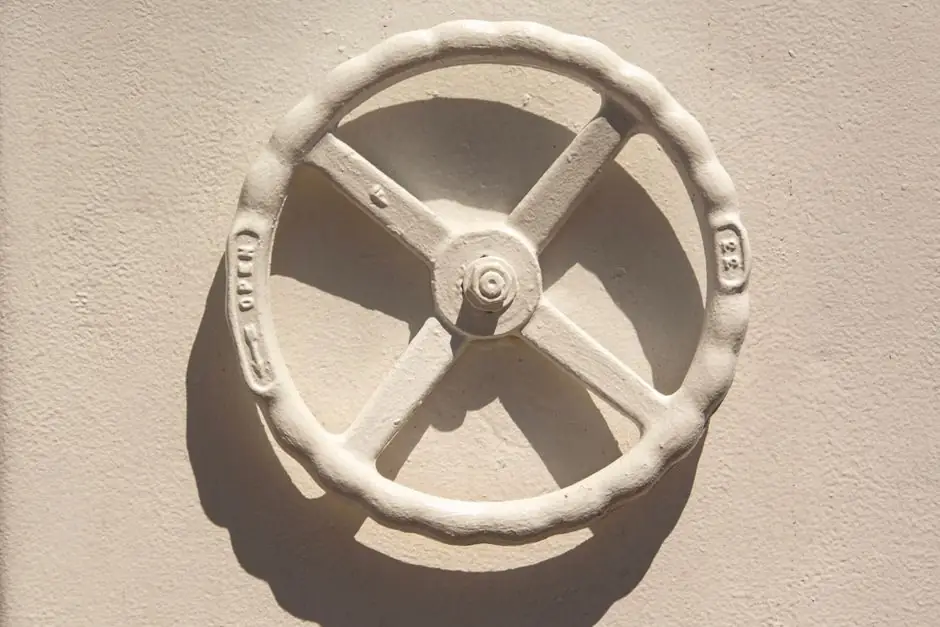
A butterfly valve stem is either a single shaft passing through the disc or a two-piece (split-stem) assembly, and the two layouts trade structural strength against maintainability in a predictable way [S3][S4].
In a one-piece stem the shaft runs continuously through the entire disc and forms an integrated structure with it, giving high structural strength and uniform torque transfer; the two-piece (split-stem) layout uses a stub shaft on each side of the disc held together by the disc hub, which is the common resilient-seated configuration in water, HVAC, and chemical service [S4]. For a broader primer on the butterfly valve family and quarter-turn behaviour, see the encyclopedia entry.
One-Piece Stem Construction and Mechanical Behaviour
One-piece stems are defined as a single shaft that passes through the disc and is keyed, pinned, or splined to it, with the shaft supported in both body bosses; the assembly is treated as one rigid member for torque and bending calculations [S4]. This monolithic path concentrates the bending load into the shaft material itself, typically 17-4PH, 410, 316 stainless, or monel in corrosion service, and the disc-stem interface is locked against relative rotation [S4].
Because the disc cannot be removed independently, the seat and all body internals must be serviced from the piping side, which pushes most users toward the two-piece (split-stem) layout on resilient-seated valves; however, the one-piece design dominates in metal-seated, high-temperature, and high-cycle service where shaft deflection under differential pressure is the controlling failure mode [S3]. In butterfly valves the stem is also typically isolated from the media in resilient-seated designs, which is why the stem material can be selected on mechanical and cost grounds rather than chemical compatibility [S3].
Two-Piece (Split-Stem) Stem Construction and Service Logic
Two-piece or split-stem butterfly valves use two stub shafts, one entering each side of the disc hub, and the disc is clamped between them with retainer pins or bolts; the disc, both stubs, and the seat can be removed from the body without disturbing the pipeline [S3][S4]. This disassembly path is the principal reason split-stem designs are the default in resilient-seated water, wastewater, and chemical service: the elastomer or PTFE seat, which is bonded, pressed, or locked into the body, can be replaced with the valve still in the line [S3][S4].
Split-stem shafts must be matched in length and pinned so that no relative rotation occurs under torque, otherwise the disc edge will offset inside the seat and leak at partial open positions; design guidance is that stem design shall prevent galling potential between similar corrosion-resistant materials where the two halves interface [S5]. Practically, split-stem layouts also accept different shaft materials on each side (e.g. corrosion-resistant wetted side, lower-cost drive side), which broadens the material grade options the engineer can write into a datasheet. The trade-off versus a ball valve in the same line is that the butterfly disc always straddles the flow, so the split-stem cannot match a full-bore ball valve for pig-passability or unrestricted Cv.
Selection Criteria: Pressure, Temperature, Media, Maintenance Access
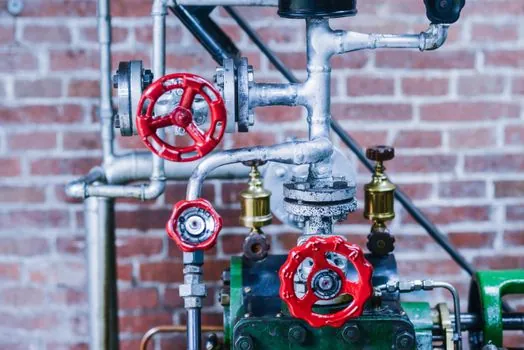
Four criteria resolve most one-piece versus split-stem spec calls in practice: pressure class, temperature, media compatibility, and maintenance access. The comparison is laid out criterion by criterion in the table below. [S4]
One-piece stem: rated for higher pressure classes in metal-seated service (typical metal-seated butterfly valves are published up to ANSI Class 600 in small sizes, with most commodity wafer and lug bodies supplied in Class 150/300); shaft deflection is the limiting factor and the rigid one-piece path keeps disc-to-seat alignment within tighter tolerances. Two-piece (split-stem) stem: dominates Class 125/150 resilient-seated service up to roughly 200 °F (93 °C) for EPDM, 250 °F (121 °C) for Buna-N, and around 400 °F (204 °C) for PTFE seats, with the trade-off that the clamped hub introduces a small compliance at the joint [S3][S5].
Media compatibility: one-piece metal-seated valves are common in steam, hot oil, and abrasive slurry service where elastomer seats cannot survive, while split-stem resilient-seated valves cover the bulk of chemical, water, and HVAC duty thanks to the wide range of elastomer and polymer seat materials (EPDM, Buna-N, FKM, PTFE) that can be bonded, pressed, or locked into the body [S3][S5]. Maintenance access: split-stem wins in any plant where seat replacement frequency exceeds the plant turnaround interval, because the disc and both shafts come out without breaking the pipe joint [S4]. One-piece wins where the seat is rated for full life-of-valve service and any internal failure means a body cut-out anyway. For control valve duty on modulating service, neither layout is excluded, but the characteristic curve and disc geometry drive selection, not the stem count alone.
Use Cases: Where Each Layout Is Specified
One-piece stem butterfly valves are specified in metal-seated high-temperature steam, hot-oil, and high-pressure gas service, in fire-protection and offshore systems where vibration and shock loading rule out split hubs, and in any application where the seat is rated for the full design life of the valve [S3]. The shaft also has to take the full actuator reaction torque directly, so gear-operated and pneumatic-actuated Class 300+ valves are almost universally one-piece in published OEM catalogues.
Two-piece (split-stem) butterfly valves are the workhorse in municipal water and wastewater, HVAC and chilled-water lines, chemical dosing, pulp-and-paper stock lines, and general process isolation, with elastomer or PTFE seats as the wear item; the design is also dominant in food and pharmaceutical hygienic service, where the disc and seat must be removed for clean-in-place [S3][S5]. For applications where the valve sits on a check valve function, the disc return must be spring-assisted, which is independent of the stem-count choice and is handled by the seat profile.
Failure Modes, Limits, and Design Pitfalls
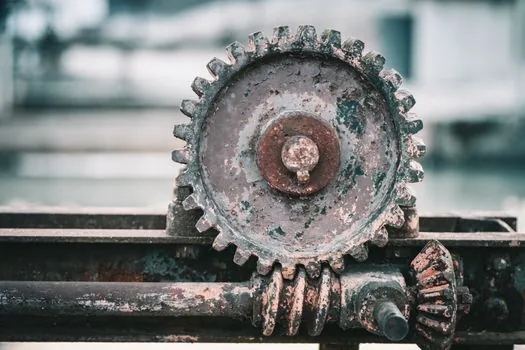
One-piece stem failures concentrate at the shaft-to-disc key or pin under repeated cycling and at the upper and lower body bearings under differential pressure; the bending moment is set by the disc offset from the shaft centreline, so a heavier disc or higher pressure class demands a larger shaft diameter rather than a stronger material alone [S3][S4]. Shaft deflection is also the controlling mode for the rated Cv, because any disc tilt changes the clearance to the seat and the published flow characteristic drifts.
Two-piece (split-stem) failure modes are different: loosening of the disc-hub retaining pins, galling where the two stub shafts meet inside the disc hub, and seat compression set after thermal cycling are the typical field issues [S5]. Pin loosening shows up as disc-edge scoring and a step-change in seating leakage rather than a slow rise in Cv drift, so plant condition monitoring should track seat leakage per cycle as the leading indicator, not actuator current. For very large diameters the split-stem layout also requires matched shaft lengths on each side, otherwise disc eccentricity against the seat becomes visible above roughly DN 600 and the published shutoff class drops one bubble.
Sourcing, Standards, and Material Notes
Most resilient-seated butterfly valves to ASME B16.34 and API 609 are supplied with two-piece stems as the default, while metal-seated high-class valves to the same body standards are offered as one-piece with the disc-shaft joint pinned or splined; for a deeper dive on the two-hand control safety logic that sometimes interfaces with butterfly actuators, see the encyclopedia entry. Body materials follow the usual butterfly menu: cast iron and ductile iron for water, carbon steel for higher temperature, stainless steel (CF8/CF8M) and exotic alloys for chemical service, and plastics (UPVC, CPVC, PP) for aggressive chemicals where metal seat ratings are not required [S4].
For dynamic balancing of the disc in modulating service, or when the butterfly valve is used as a flow-split element on a parallel line, the balancing valve comparison is the relevant cross-reference, since both products use a characterised disc to set flow but differ in shutoff class. Stem design shall also prevent galling potential between similar corrosion-resistant materials where the two halves of a split stem meet, which is a direct material-trim requirement that surfaces in most OEM datasheets [S5].
Track the seat-versus-stem alignment as the leading reliability indicator on installed split-stem valves, and require the disc-hub pinning method to be called out on the datasheet for any Class 300 or higher order, since pin retention is the single most common field failure described in vendor failure analyses.
See also our earlier report, UHMWPE sheet price per kg vs standard HDPE: 2026 cost breakdown.