
Online oil sensors can monitor condition continuously, but laboratory analysis remains the stronger option for detailed chemistry, wear-metal identification, and baseline documentation.
For critical engines, gearboxes, hydraulic systems, and compressors, the practical choice is usually a hybrid program: installed sensors for time-sensitive trends and periodic laboratory analysis for confirmation.
Measurement scope and operating model
Online oil analysis sensors measure selected properties while the machine is operating, producing a continuous trend or an application-specific condition index. Depending on the technology and model, available outputs can include dielectric constant, water content, metal accumulation, temperature, particle concentration, viscosity, relative humidity, oxidation, additive depletion, base-number change, and soot estimation [S3][S4][S5].
Laboratory oil analysis removes a sample from an engine, gearbox, hydraulic system, or compressor and tests it for parameters such as viscosity, oxidation, water, wear metals, additive levels, and contamination. A typical laboratory turnaround is 24 to 72 hours, so the result represents the sampled condition at collection rather than the machine's condition at report time [S3].
An overall oil-condition index is not interchangeable with a laboratory concentration. Procurement should identify each output, unit, measurement method, fluid compatibility, and application limit before comparing quotations. The same distinction applies to an angle-seat valve specification: a generic category label cannot establish suitability without operating and material data.
Accuracy, detail, and response time
Laboratory analysis generally offers greater precision across a broader range of condition markers, while online sensors provide continuous, repeatable trends and faster response to a changing condition [S7]. Online monitoring can expose a water-ingress event, particle excursion, or viscosity shift between scheduled samples, while laboratory analysis identifies what happened in molecular and elemental terms [S3].
Online data is not automatically a more representative sample of the machine. Bottle sampling can introduce contamination through the sample point, container, and tools, and the laboratory may analyze only a small fluid volume. In contrast, an in-line instrument can draw a larger volume and repeatedly flush its flow path.
Repeatability and reproducibility are the governing criteria for judging a trend, not absolute agreement with a bottle result. A successful installation therefore needs its own trend and alarm limits. If online and laboratory measurements are used together, retain the sensor configuration, oil identity, operating conditions, sample point, and maintenance events so that a shift can be investigated rather than simply correlated.
Cost, lifetime, and maintenance decisions
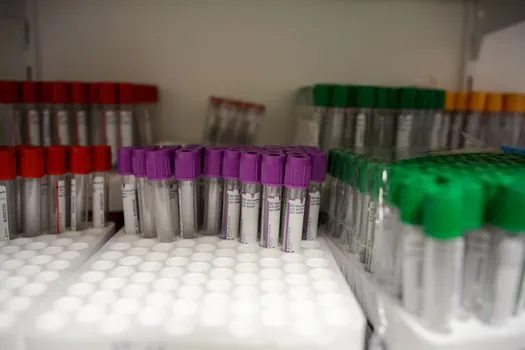
Laboratory sampling has a recurring commercial cost per sample, and increasing sampling frequency raises total program cost [S1]. An installed sensor adds acquisition, installation, calibration, communications, and maintenance costs, so its business case depends on the number of assets monitored, event frequency, response time, and avoided failures or unnecessary oil changes.
This is an application result, not a general savings guarantee, but it demonstrates the decision value of replacing fixed drain intervals with condition trends.
Online monitoring supports earlier intervention, optimized oil-change timing, and detection of short-duration events between samples [S2]. Laboratory analysis is still the better tool for root-cause work, end-of-life evaluation, compliance documentation, initial baseline assessment, and unexpected-failure investigation [S3].
Application selection by decision criterion
For response speed, continuous sensors win because they sample operating behavior continuously, while laboratory reports arrive after roughly 24 to 72 hours [S3]. For diagnostic breadth, laboratory analysis wins because it can report specific wear metals, viscosity, oxidation, water, additives, and contamination in one snapshot [S3][S7].
For lifecycle economics, a sensor becomes more attractive when continuous data prevents oil changes before condemning limits are reached or detects an event that would otherwise develop between sampling intervals [S2][S5]. For representativeness, neither method wins automatically: online measurements depend on flow, location, and configuration, while laboratory results depend on representative sampling [S1][S4].
For a critical gearbox with monthly or quarterly samples, a sensor is justified if the required decision is rapid detection of water, particle, temperature, viscosity, or overall-condition change. Laboratory analysis is justified when the required decision is identification of the failing component, confirmation of additive depletion, or formal baseline and end-of-life assessment. If neither requirement is defined, the procurement comparison is premature.
Installation and data quality
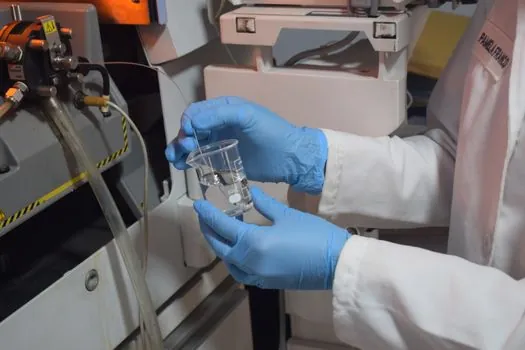
The sensor must be installed where the measured oil represents the condition of the machine. Ask which oil reaches the sensing head during normal operation, startup, standby, and bypass conditions. Mark the sensor point and laboratory sample point on the same drawing, because two points in different treatment circuits may observe different conditions [S4].
Confirm the selected lubricant, configuration, calibration range, flow requirement, operating-temperature limit, output units, communication protocol, and alarm logic. Multi-sensor systems can detect oxidation, additive depletion, total base number changes, water, soot, and fuel dilution [S2], but the list must be tied to the selected model and fluid rather than accepted as a generic platform capability.
Operational records are part of measurement quality. Log top-ups, oil changes, filter work, sensor adjustments, and changes in operating load. If a trend moves after a documented top-up, the event record allows maintenance personnel to review the cause and schedule the relevant laboratory checks [S4].
Program design and failure modes
A hybrid program assigns each method a defined job: online sensors detect and trend condition, while laboratory analysis confirms chemistry and diagnoses the cause. Laboratory testing can then be triggered by an abnormal sensor trend rather than performed only on an inflexible calendar [S2]. Baseline samples should establish the lubricant and equipment state before online thresholds are finalized.
Common failure modes are poor bottle-sample contamination, unrepresentative sampling location, sensor installation outside its flow or application limits, confusing an overall index with a chemical concentration, and changing equipment or oil without updating the configuration [S1][S4]. Another limitation is the risk of reading a status color without knowing the underlying output, units, method, and action threshold [S4].
Do not use an online sensor to make a laboratory-only decision without confirming that it measures the required variable. For example, dielectric or condition-index trends do not by themselves identify a specific wear alloy. For instruments whose connection choices are evaluated in plant networks, the sensor architecture can be compared with the approach in LoRaWAN vs NB-IoT vs Wi-Fi for Plant Sensors, but the oil measurement specification remains the first acceptance criterion.
Standards, procurement criteria, and audit trail
No single standard cited in the research makes online monitoring interchangeable with laboratory oil analysis. Procurement should therefore specify the measurement requirement, not only the product category. For each proposed instrument, require the exact model, application calibration, fluid list, measurement principle, output, units, resolution, alarm thresholds, installation constraints, and communication method [S4].
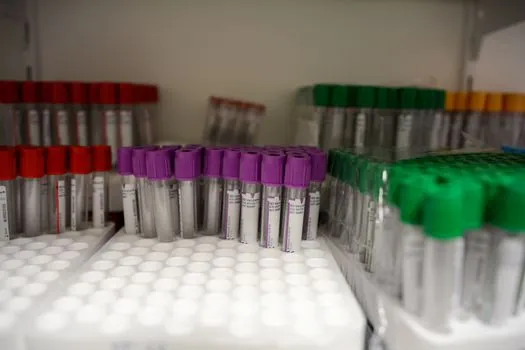
For laboratory work, retain sample identification, collection point, collection time, container, lubricant identity, and operating context with the report. For online monitoring, retain configuration, oil identity, operating conditions, trend history, maintenance events, and available laboratory findings [S4]. This evidence allows an engineer to distinguish a real lubricant change from an installation, calibration, or sampling artifact.
The acceptance test should compare the selected online output against the decision it supports, not against every laboratory parameter. A practical review includes baseline lab analysis, defined installation conditions, sensor trend response, alarm logic, data retention, and a written action for each trigger. This closes the gap between detecting a change and knowing what maintenance action to take.