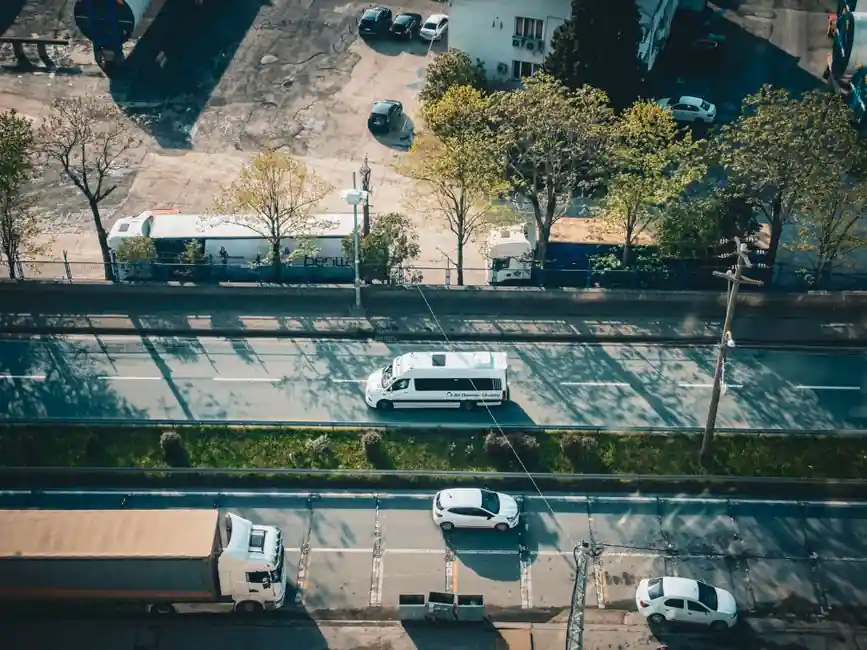
Route-based vibration monitoring can screen dozens or even hundreds of machines per analyst visit at lower hardware and labor cost [S1][S2].
Online monitoring permanently instruments selected assets, closes the interval between visits, and captures transient events, but it adds sensors, communications, power, software, and maintenance effort [S4][S5].
Cost and coverage comparison
Route-based collection is the lower-cost option for broad screening because one portable analyzer can cover many assets during scheduled monthly or quarterly rounds [S1][S2]. Its weakness is temporal coverage: a monthly route leaves roughly 29 days between readings, and a quarterly route leaves most of the 90-day interval unwatched [S1][S4].
Online monitoring costs more because each protected asset needs a permanent measurement point, a signal path, and an analysis destination [S4]. Its advantage is continuous surveillance, including startup, coast-down, load-change, and overnight transients that occur after the analyst has left [S4].
What each method is for
Route-based vibration monitoring is for plants with a large asset population, limited monitoring budget, and faults that generally develop over weeks or months [S1]. It is also for maintenance teams that need an experienced person to inspect sounds, smells, leaks, visible damage, loose fasteners, and other conditions that a sensor does not directly measure [S1][S2].
Online monitoring is for assets whose failure consequence or fault-development speed makes route intervals unacceptable [S2]. Suitable applications include machines exposed to sudden lubrication loss, rotor-bar cracking, coupling failure, process upsets, or operating conditions outside the design envelope [S1]. Permanent sensors are particularly useful where measurements are hot, elevated, hazardous, or difficult for an analyst to reach [S5].
The two methods are not mutually exclusive. A condition monitoring system can cover a small critical population online while a vibration data collector handles routine screening across a much larger fleet.
Failure exposure between routes
An analysis of 60,898 breakdowns across North American plants found that 57% occurred before the next scheduled visit was due [S2]. Tractian analyzed 60,898 real-world breakdowns across several North American plants and found that 57% occurred before the next scheduled visit [S2].
That gap matters because a route program may include inspection and work-order steps before failure, leaving an asset formally checked even though lubrication, bolt preload, coupling condition, load, speed, or another operating factor changes afterward [S2]. For a non-critical machine with a suitable spare and planned shutdown window, that exposure may be acceptable; for a high-consequence machine, it may dominate the business case for online instrumentation [S1][S2].
Route-based systems can still support long-term trending when collectors download measurements into centralized software [S3]. The limitation is not data storage by itself. It is the infill between collection dates and the absence of observations during transient operating states [S4].
Installation, integration, and operating constraints
A route collector needs a portable data collector, permanently attachable or temporary sensors, cables, magnets, and backup hardware [S3][S5]. CTC recommends using a cable with a break-away feature for route-based data collection [S5].
Online systems use permanent accelerometers or velocity transducers connected through wired or wireless communications to a central processing system [S4]. A functional architecture can include edge aggregation, preprocessing to reduce bandwidth, spectrum analysis, alerting, and work-order transfer, but permanent installation requires access during an equipment outage and physical space for sensors, cables, gateways, and power [S4][S5].
Lifecycle cost and selection criteria

The route-based cost model is driven by route frequency, travel time, measurement-point count, analyst labor, data-collector amortization, and the number of assets covered per visit [S1][S2]. Route economics become less favorable when frequency rises to weekly or daily because collection labor and travel repeat more often [S8].
The online cost model adds sensor and gateway hardware, installation, communications, power, platform fees, configuration, calibration, battery or wiring maintenance, alarm review, and replacement of failed components [S4][S5][S9]. The correct comparison is total cost per protected machine, including analysis labor and the consequences of uncovered failure intervals, not sensor price alone [S4].
Build a practical business case by ranking assets against four criteria: downtime and collateral-damage consequence, fault-development speed, access difficulty, and route frequency. Apply online monitoring to the highest-ranked critical assets first, use routes for broad lower-risk screening, and keep manual inspections for defects that vibration sensors cannot diagnose [S1][S2].
Recommended operating model
A hybrid program usually provides the best coverage-to-cost balance: permanent or wireless online monitoring for high-consequence, fast-changing, hazardous, or inaccessible assets, combined with monthly or quarterly routes across lower-risk equipment [S2][S7]. Monthly or quarterly routes also retain the human inspection advantage for sounds, smells, leaks, and visible defects [S1][S2].
Do not treat the installation date as the end of commissioning. Define measurement points, operating states, trigger rules, alarm thresholds, review ownership, work-order routing, sensor-maintenance intervals, and response expectations before approving permanent coverage [S2][S4]. For interpretation of collected vibration values, the relationship between ISO 10816 and ISO 20816 limits is explained in Compare ISO 10816 and ISO 20816 Vibration Limits.
Track route completion rate, percentage of breakdowns between visits, alarm false-positive rate, alarm-to-work-order conversion time, and online sensor availability. These measures show whether increased spending has actually reduced the exposure created by missed visits [S2].