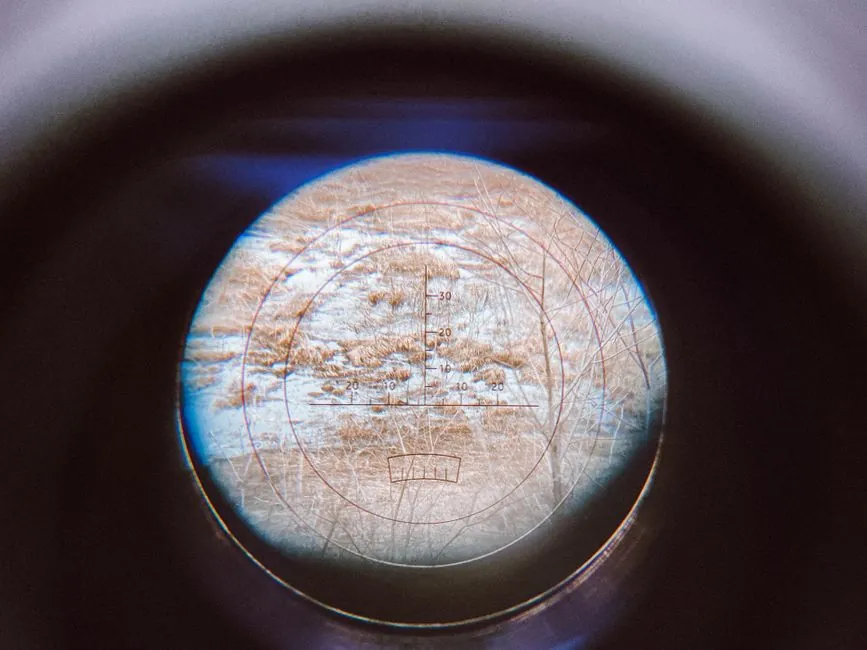
Optical comparators (also called profile projectors) list between US$6,000 and US$15,000 per piece on 2026 Chinese B2B sourcing pages, with cutter-specific horizontal units starting at the lower end and general-purpose optical measuring comparators at the upper end [S1][S3].
Entry-level horizontal profile projectors (model CPJ-3020W) post an FOB of US$6,000 per piece with a 1-piece MOQ and 1-year warranty, while general-purpose optical measuring comparators (Guangdong Haida Equipment, Diamond Member, Audited Supplier) quote US$8,500 to US$15,000 per piece on a 1-piece MOQ basis [S1][S3].
Three Price Tiers Seen on 2026 Sourcing Pages
Budget horizontal cutter comparators (CPJ-3020W, CPJ-4025W) ship at US$6,000 per piece, with X-axis travel of 200 to 250 mm and an X-Y indication error of E1xy = (2.5 + L/100) µm, where L is measured length in mm [S3].
Mid-tier vertical optical measuring comparators from Guangdong Haida Equipment Co., Ltd. list at US$8,500 to US$15,000 per piece, with the spread driven by screen diameter, stage travel, and whether a digital readout or a CNC axis is fitted [S1].
Spec-only negotiations are common for custom builds, with suppliers such as Leader Measuring accepting "Negotiable" pricing on a 1-set MOQ with T/T payment terms from Guangdong, China, indicating that engineered configurations (larger stage, higher magnification, rotary encoder tables) move well past the US$15,000 mark once options are added [S2].
Cost Drivers That Move the Number
Stage travel size and indication accuracy are the two mechanical cost levers on a profile projector: the CPJ-3020W pairs a 200 mm X-axis with a 2.5 µm base error, while the CPJ-4025W extends X to 250 mm for the same US$6,000 list price, and an unspecified 175 x 100 mm stage on a competing model pairs with 0.5 µm resolution at US$8,000 per piece [S3].
Optics and illumination drive the second tier of cost; magnification, lens turret count, telecentric vs. standard objectives, and the lighting equipment and electric lamps package (LED profile lamp vs. halogen) shift pricing between the entry floor and the Haida mid-range ceiling [S1].
Digital readout vs. full CNC is the third lever: DRO-only comparators stay at the low end, while units with motorised X-Y stages, edge-detection software, and optional rotary indexers cross the upper threshold, because they require additional encoders, servo drives, and a fixture for inline shop-floor use [S2].
Spec Comparison Across Common Configurations
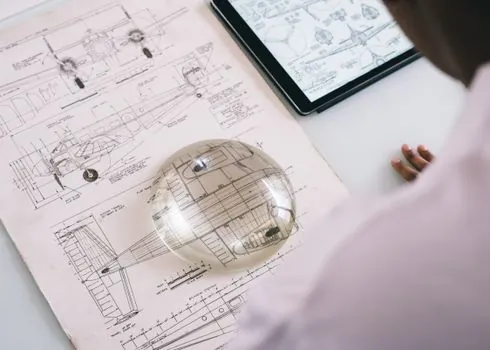
The CPJ-3020W and CPJ-4025W (Huizhou Tianzhuo Chuangzhi Instrument, ISO 9001) both target cutter-contour measurement, with a 1-year warranty and an 18-month after-sales option; the second quoted supplier offers 100 x 50 x 90 mm XYZ travel at 0.5 µm resolution for US$8,000 per piece, which suits small-geometry cutter teeth better than the larger 200 to 250 mm horizontal units [S3].
Buyer-relevant criteria line up as follows: (1) stage travel: 100 x 50 x 90 mm (US$8,000) vs. 200 to 250 mm X-only (US$6,000); (2) indication error: 0.5 µm resolution (US$8,000) vs. E1xy = (2.5 + L/100) µm formula (US$6,000); (3) warranty: 1 year standard vs. 18 months extended; (4) MOQ: 1 piece or 1 set across all three listings, so there is no volume break on the 2026 sourcing pages surveyed [S1][S3].
What a Buyer Actually Pays Beyond the Sticker
FOB China pricing excludes seaworthy crating, CE/UL certification for US/EU end use, and on-site installation, so landed cost typically adds 12 to 25 percent depending on Incoterm and destination port, per standard sourcing-logistics practice; the comparators themselves are not safety-certified devices, so buyers handle EMC conformity and calibration paperwork separately [S1][S2].
Total cost of ownership over a 10-year service life is dominated by lamp replacement on halogen units and by annual calibration: a LED retrofit generally halves the lighting-related maintenance budget versus halogen, while a yearly calibration contract (NIST-traceable or equivalent) is the typical recertification route, neither figure quoted by the catalogue pages but both well established in metrology practice [S3].
Where Optical Comparators Fit, and Where They Don't
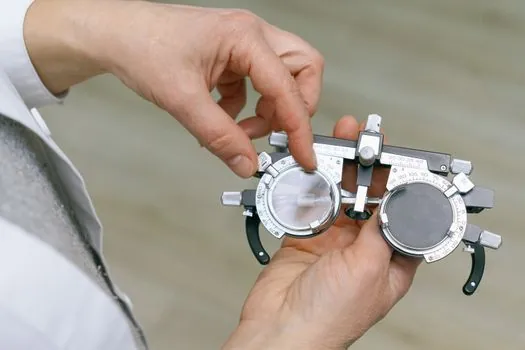
Optical comparators are the right tool for 2-D contour inspection of stamped, turned, and cutter-ground parts in the 5 to 250 mm range, where a magnified shadow on a ground-glass screen is faster than a touch-probe scan and tolerates non-magnetic, non-conductive materials that defeat eddy-current or video edge tools [S3].
They are not the right tool for full 3-D feature capture; for that, a CMM buying guide 2026 covers bridge, gantry, handheld, and vision variants, with vision systems edging into optical-comparator territory but adding motorized Z and stitched-field software at a higher price point [S3].
For machine-shop buyers cross-shopping measurement instruments, the flow meter price 2026 reference uses the same FOB-and-MOQ pattern, and the manometer price and cost guide follows an identical 1-piece MOQ structure; together they give a procurement engineer a sense of where optical comparators sit inside a metrology and process-instrument budget envelope.
Standards, Calibration, and Sourcing Red Flags
Optical comparators in this price range are not explosion-protected instruments, so ATEX 2014/34/EU and IEC 60079-series certification is not a procurement criterion; buyers should instead verify the manufacturer's ISO 9001 quality system status and whether the indication-error formula (for example E1xy = (2.5 + L/100) µm) is documented on the nameplate data or the calibration certificate [S3].
A red flag on the 2026 Made-in-China listings is the absence of published stage accuracy figures on some vendor cards: the Haida US$8,500 to US$15,000 entry does not publish a specific indication-error formula, while the Huizhou Tianzhuo entry states E1xy = (2.5 + L/100) µm and a 0.5 µm resolution on its smaller stage, so a spec-first buyer should request the calibration certificate before releasing the purchase order [S1][S3].
Track the following 2026-to-2027 signals before signing: (1) supplier-level movement of FOB prices on the CPJ-3020W and CPJ-4025W lines, which have held at US$6,000 per piece for the cutter-segment listings; (2) any introduction of CNC-motorised stages below the US$15,000 ceiling, which would compress mid-tier pricing; (3) revisions to the ISO 9001 audit scope of Guangdong-based optics manufacturers, which influences export-grade acceptance into the US, EU, and Southeast Asia [S1][S2][S3].
The underlying component specifications are covered under optical comparator, and linear guide.